People keeping an eye on salt above all
You want to be able to check the salt content and, if needed, would rather cook and season the rice yourself than choose a ready-made recipe.


If you’re looking to limit salt in a meal for Music Day, compare the ‘salt’ figure per 100 g with the amount you’ll eat. A recipe’s name alone doesn’t show that it is ‘reduced in salt’. Plain rice that you cook yourself lets you choose the seasoning, but needs to be prepared before you leave. Ready-cooked rice saves time, provided you check the label and, if it’s chilled or frozen, keep it at the stated temperature.
You want to be able to check the salt content and, if needed, would rather cook and season the rice yourself than choose a ready-made recipe.
You’re looking for rice that’s quick to prepare or heat up. If you choose a seasoned recipe, the time saved doesn’t mean you can skip checking the ingredients and nutrition information.
If your meal will be away from home for a while, how it needs to be stored becomes crucial. Anses recommends limiting how long temperature-sensitive foods are kept at room temperature.
First decide whether you’ll be able to cook the rice before you leave or heat up a meal. Then check the salt, ingredients and transport requirements for the product you choose.
| Criteria | What to check | Who it matters to |
|---|---|---|
| Salt | Compare the ‘salt’ figure per 100 g, then consider the amount you expect to eat per portion. Check the product itself for any ‘reduced in salt’ claim. | If I want to choose the seasoning myself, a ready-made recipe may not meet my needs. Around 40% of consumers would prioritise control over salt. |
| Preparation | Check the cooking or reheating instructions and the time shown on the packaging. | When it’s nearly time to leave, I might choose rice that’s quick to serve, while still checking the label. Around 30% of consumers would put quick preparation first. |
| Storage | Distinguish unopened dry rice from chilled or frozen meals, and follow the stated storage temperature. | If I’m taking my meal with me and can’t rely on having access to a cool place, I need to choose a format that’s suitable for the journey. Nearly 20% of consumers would put this constraint first. |
| Ingredients | Read the ingredients and declared allergens on the pack you buy, especially if you’re sharing a ready-cooked rice dish. | If several people are eating the dish, I want to know what’s in it before serving. Ingredients would be the main concern for around 10% of consumers. |
The egg-fried rice options listed by Carrefour and E.Leclerc include seasoned ingredients or cured meat, among other things. The recipe alone doesn’t prove that the rice has a reduced salt content.
Read the salt figure and check the packaging for any claim that matters to your choice.
Packs of different sizes won’t necessarily contain the same amount of rice as you’ll actually eat.
Start with the figure per 100 g, then work it out for the portion you plan to eat.
Carrefour states that its frozen egg-fried rice must be stored at −18 °C. Anses recommends limiting the time temperature-sensitive foods are kept at room temperature.
Before taking it with you, check that you can follow the storage instructions until mealtime.
You may need an insulated bag and suitable freezer packs for this option.
Depending on the recipe, it may also contain ingredients such as egg, soya or fish.
If you’re sharing the meal, keep the packaging and check the ingredients and declared allergens for that specific product.
The 500 g quick-cook wholegrain rice listed by Auchan is plain rice to cook, rather than a ready-made meal.
Riz à la Cantonaise 1min30 is a 250 g express pouch designed to be reheated.
The 400 g egg-fried rice listed by E.Leclerc is a prepared recipe, rather than plain rice to season yourself.
The 900 g pouch of frozen egg-fried rice is suitable for preparing several portions, provided it can be kept at the correct temperature.
These two dried basmati rice options are bases that you can cook and season yourself before your meal. They’re not a substitute for ready-cooked rice that you can simply reheat. Check the ‘salt’ figure, any nutrition claims and the instructions on the pack you buy.
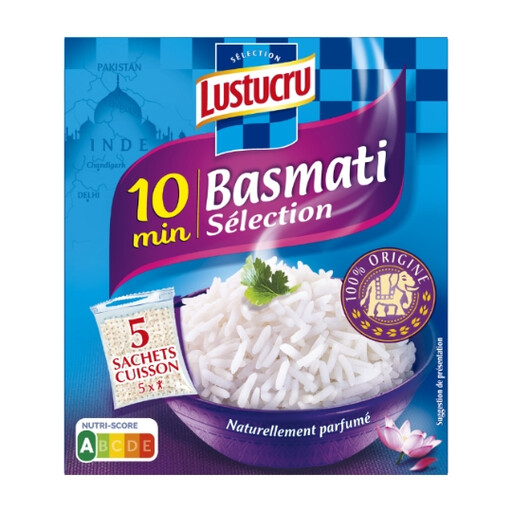 Image unavailable
Worth considering if you can cook and season the rice before setting off, rather than reheating a prepared dish.
Long-grain basmati rice, 450 g pack. Check the cooking time and nutrition information on the packaging.
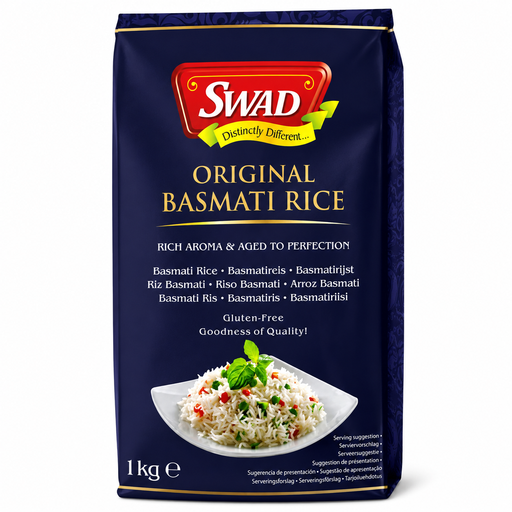 Image unavailable
Worth considering if you want to prepare the rice yourself and choose the seasoning before heading out. This isn’t a quick ready-made meal.
Basmati rice, 1 kg pack. See the packaging for cooking instructions and nutrition information.
No. Taste alone isn’t enough to justify this claim. The DGCCRF notes that nutrition claims are regulated by Regulation (EC) No 1924/2006. Check the claim on the product and compare the stated salt values.
Choose an unopened product whose packaging says it can be stored at room temperature, and take into account any preparation needed before eating it. Don’t take a chilled or frozen meal if you can’t follow its storage instructions. Anses recommends limiting how long temperature-sensitive foods are kept at room temperature.
Yes. Depending on the product, the recipes listed by Carrefour and E.Leclerc include ingredients such as omelette, soya sauce or fish sauce. Read the allergen information on the specific pack you’ll be serving.
No. It doesn’t replace the ‘salt’ figure in the nutrition information. To compare plain rice with ready-cooked rice, first look at the figure per 100 g, then consider how much you’ll actually eat.