Anyone looking for a “sugar-free” claim
You want to tell this claim apart from “no added sugars”. Read the exact wording, the “of which sugars” line and the ingredients list, especially if the recipe contains sweeteners.


If you’re specifically looking for a rice cake labelled “sugar-free”, check the exact wording on the packaging: “no added sugars” does not mean the same thing. If you’re putting together a lunch to fill, a rice paper wrapper may suit a different need, as long as you take its preparation, portion size and allergens into account. Nutri-Score is voluntary in France, according to Santé publique France; check the nutrition information too.
You want to tell this claim apart from “no added sugars”. Read the exact wording, the “of which sugars” line and the ingredients list, especially if the recipe contains sweeteners.
Individually wrapped portions can work well for a packed lunch. However, Gerblé’s dark chocolate rice cake is described as having “no added sugars”, which is different from a product labelled “sugar-free”.
A plain rice wrapper lets you choose separately what to serve with lunch. Depending on the product, check whether it’s ready to eat or needs preparing.
Start with the claim you’re looking for, then decide whether you want a rice cake to eat as it is on the go or a base to prepare for lunch.
| What matters to you | What to check | Who it’s for |
|---|---|---|
| Sugar claim | The exact wording, “sugar-free” or “no added sugars”, then the “of which sugars” figure per 100 g. | If I’m looking for a “sugar-free” claim, I don’t want to confuse it with a recipe with no added sugars. This would be a priority for around 40% of shoppers. |
| Lunch format | Whether it’s packed in individual portions and whether you may need to add a filling or prepare the rice cake. | When I’m eating away from home, I want to know whether I can carry and eat the rice cake as it is, or whether I need to prepare lunch around it. Around 40% of shoppers would prioritise this convenience. |
| Reading the label | Nutrition information per 100 g and per portion, ingredients and allergens; and Nutri-Score if it’s displayed. | A sugar claim alone isn’t enough for me to choose: I also want to check the rest of the label. This would be the priority for around 20% of shoppers. |
In France, Nutri-Score is a voluntary label, according to Santé publique France and the DGCCRF. So its absence isn’t enough reason to rule out a rice cake.
If it appears on the pack, use it as an additional guide and check the nutrition information, ingredients and allergens too.
A recipe with no added sugars can still contain sugars. Gerblé describes its dark chocolate rice cake as having “no added sugars”.
If a “sugar-free” claim is what you’re looking for, check for those exact words on the product and consult the “of which sugars” line.
A low sugar figure in the nutrition information doesn’t, on its own, confirm that the packaging carries this claim.
Check the sugar content per 100 g separately from the claim actually displayed on the rice cake you choose.
The products mentioned also differ in their ingredients and allergens: the Karéléa biscuit-style rice cakes featured by Carrefour contain wheat and butter, among other ingredients, while Gerblé’s dark chocolate rice cake contains soya.
Read the ingredients list and allergen information on the pack; if polyols are listed, take their quantity into account too.
The brand describes its dark chocolate rice cake as having “no added sugars”. It comes in four sachets, each containing two rice cakes.
Carrefour describes its biscuit-style rice cakes as “sugar-free”. They’re biscuits, not rice cakes to fill.
Its wholegrain rice cake with sesame is a non-chocolate base to serve with other ingredients for lunch.
This rice paper wrapper is for preparing a base to fill for lunch. It needs to be rehydrated and isn’t a substitute for a ready-to-eat crispy rice cake.
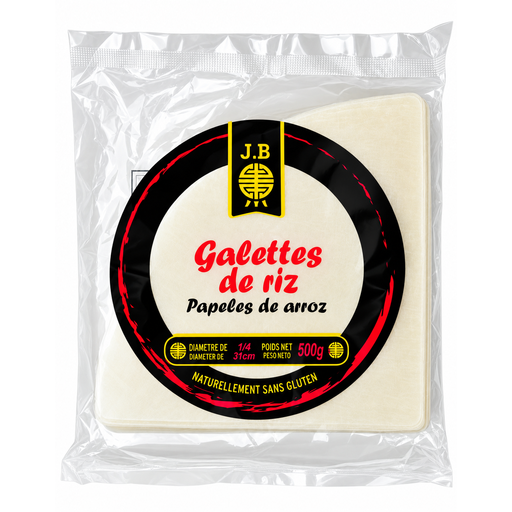 Image unavailable
Worth considering if you’re preparing a rice base to fill: this wrapper needs to be rehydrated before use. Check the sugar claim on the packaging and the actual quantity being sold before choosing this pack size.
No. According to Santé publique France and the DGCCRF, Nutri-Score is voluntary, while a nutrition declaration is generally compulsory for pre-packed foods. So you can check the nutrition information even if the logo isn’t shown.
No. A recipe with no added sugars can still contain sugars. Gerblé uses the first claim for its dark chocolate rice cake; if you’re looking for the second, check the exact claim and the “of which sugars” line.
No. The J.B. rice paper wrapper featured here needs to be rehydrated to make a base you can fill; it isn’t a crispy rice cake to eat as it is. Check how to use it before planning your packed lunch.
Check their names in the ingredients list, the amount of polyols if it’s stated, and the allergen information. Gerblé’s product information for its dark chocolate rice cake lists soya and warns that it may contain traces of gluten, milk and nuts.