
Livraison le jour même ou le lendemain

Qualité garantie

Débloquez vos offres de bienvenue: Livraison GRATUITE | Jusqu'à -80 % | 30 jours d'essai gratuits à JoyPlus
Téléchargez l'application
Whether you’re taking notes in lectures, attending meetings, sketching plans or drawing technical diagrams, a Rhodia A4 5 × 5 mm grid notepad is far more than just an orange or black cover. The size, paper quality and tear-off system all have a direct impact on how comfortable it is to use.
Yet some details can easily slip under the radar when you’re buying. Here are the key points to check so you don’t end up with a model that doesn’t suit your needs.
A notepad advertised as A4 may measure 21 × 29.7 cm, while an A4+ model is slightly larger. This difference can matter if you use a folder, bag or standard ring binder. Always check the dimensions listed on the product page.
Paper that’s too thin can let ink show through or crease easily, especially during heavy note-taking. Clairefontaine 80 g paper is a versatile choice for everyday pens, pencils and mechanical pencils. However, don’t confuse it with drawing paper designed for heavily inked markers or wet techniques.
Without a rigid backing, a notepad quickly becomes awkward to use when you’re on the move, visiting a site or taking notes standing up. Simply tearing out sheets can also leave a ragged edge. Micro-perforated sheets tear out more cleanly, while a rigid cardboard back gives you a stable writing surface.
A 5 × 5 mm grid makes it easy to align tables, structure your notes and draw proportioned diagrams. The A4 notepad with a violet grid offers good readability, helping you organise the page without it feeling visually cluttered with overly heavy lines.
In architecture, engineering or maintenance, this grid helps you arrange annotations and sketch simple shapes. However, it doesn’t replace a regulated drawing surface when professional precision is required.
When stated on the product page, Clairefontaine 80 g/m² vellum-finish paper is perfect for everyday use at the office or in class. Also check the number of sheets: a Rhodia stapled pad with 80 sheets offers a comfortable volume without becoming too bulky.
The PEFC-certified paper label means the paper comes from a controlled supply chain linked to sustainable forest management. This certification relates to the fibre source and forest management, not to the notepad having an unlimited lifespan.
A stapled pad is easy to carry and opens quickly. Micro-perforated pages can be removed when a note needs to be handed in or filed. Some models also come with binder holes, making archiving simpler after you’ve torn out the page.
So before you order, check:
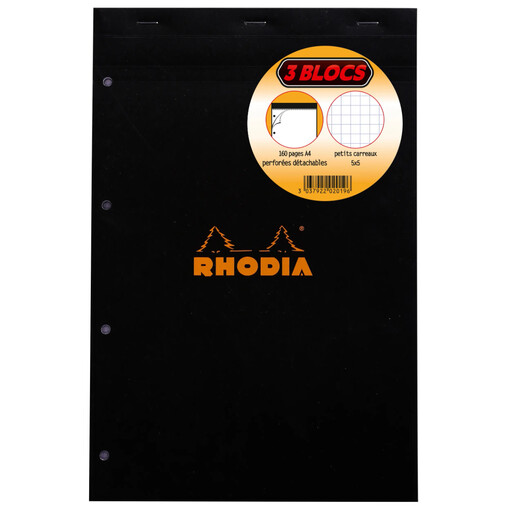
Why this choice suits this profile: this pack of three pads is ideal for a student or household wanting to spread their notepads between classes, the office and travel.
The listing mentions three pads, micro-perforated sheets and a cardboard backing. That saves you from having to buy several accessories separately.
Clairefontaine 80 g paper, violet 5 × 5 mm grid, cardboard back and matching orange and black colours.
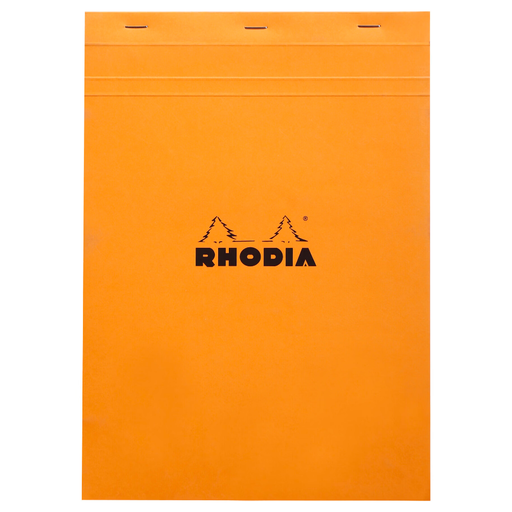
Why this choice suits this profile: this A4 format is aimed at users who value a classic look, clearly identified paper and a large working surface for neat notes.
The specifications detail the size, paper weight, micro-perforations and rigid back, rather than relying solely on the cover’s appearance.
80 sheets of 80 g vellum-finish paper, violet 5 × 5 mm grid, PEFC certification and 21 × 29.7 cm size.
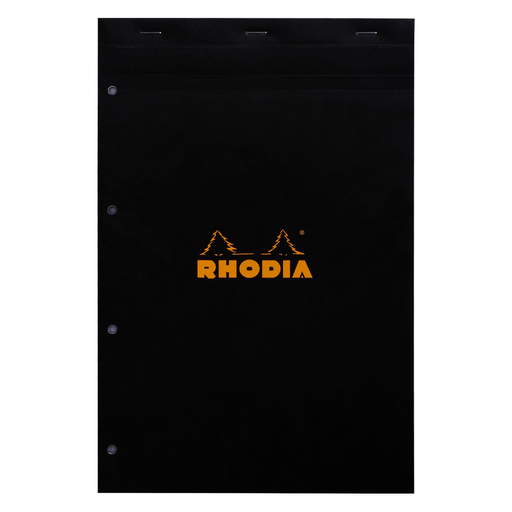
Why this choice suits this profile: engineers, technicians, architects and other professionals who file their sheets will appreciate its near-A4 size and four binder holes.
Pages can be torn out and then stored in a ring binder thanks to the four holes, rather than piling up in a well-worn pad.
80 micro-perforated sheets, 5 × 5 mm grid, 80 g PEFC-certified paper, rigid back and four-hole punching.
We’ve put together a comprehensive, real-time updated list of products that fully meet these strict selection criteria and European safety regulations.
To keep your grid notepad in good condition, store it flat or in a compartment that’s wide enough. Humidity can make the pages warp and damage the cover. When tearing out a page, fold it gently along the micro-perforation line, then remove it gradually rather than pulling sharply.
If you use a fountain pen, felt-tip pen or marker, test the ink on a page near the back of the pad first. The 80 g paper is designed for everyday use, but the result also depends on how much ink you apply.
Yes, the 5 × 5 mm grid makes it easier to align things, create tables and do preparatory sketches. However, for a plan that has specific precision or preservation requirements, check the medium required by your institution or company.
Micro-perforated sheets are designed to be removed along a pre-defined line. The resulting edge is generally neater than with a standard tear. If you need to file your notes, also choose a model with holes that are compatible with your ring binder.
It all depends on how often you write in it, how you transport it and the storage conditions. A notepad kept dry, away from creases and direct light, can remain usable for a long time. For important documents, file the torn-out sheets in a folder or ring binder to limit wear and tear.