
Livraison le jour même ou le lendemain

Qualité garantie

Débloquez vos offres de bienvenue: Livraison GRATUITE | Jusqu'à -80 % | 30 jours d'essai gratuits à JoyPlus
Téléchargez l'application
Whether you're an engineering student, an aspiring architect, or a technical professional, we can't stress this enough: choosing the right notepad is anything but trivial. Sloppy notes, illegible diagrams, pages that tear unevenly... frustration can build quickly. The market is full of promises, but not all are created equal. To avoid turning a simple purchase into a regret, here are the common traps to sidestep.
To find the ideal companion, you first need to master a few key technical specifications.
For a smooth, hassle-free note-taking experience, three parameters should be closely monitored. They guarantee a level of writing comfort and durability that makes all the difference in your daily work.
Paper weight, expressed in grams per square metre (g/m?), is the number one indicator of paper quality and opacity. For mixed use, combining writing and diagrams, an 80 g/m? paper like the famous silky smooth vellum from Clairefontaine, which equips most Rhodia pads, offers a perfect balance. Its glide is flawless and its opacity is sufficient to prevent ink from showing through (or barely) on the reverse side. For more specialised uses like technical drawing with markers, a higher weight (90 g/m? or more) is recommended.
The 5x5 mm grid ruling, the classic "graph paper," is the gold standard for diagrams, tables, and plans. It provides a precise visual guide without cluttering the page. In terms of size, the A4 stapled pad (21 x 29.7 cm), known at Rhodia by the reference Rhodia No. 18, is the quintessential all-rounder. It offers a comfortable working surface, whether in a lecture hall or a meeting room.
The practicality of a notepad often lies in the details. Micro-perforated sheets are a real plus for cleanly detaching pages and archiving them in a binder. Also, check for a sturdy, rigid cardboard back. This solid base will be a lifesaver for writing comfortably, even when standing or awkwardly seated in a crowded lecture hall.
There's an ideal notepad for every profile. Here are our recommendations, selected to meet specific needs while avoiding the classic pitfalls.
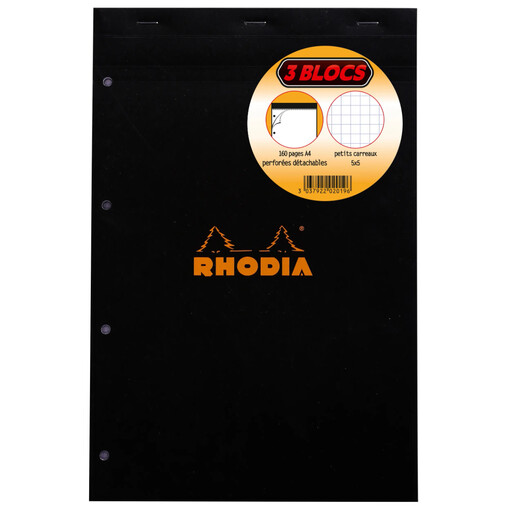
The Verdict: Perfect for the student who wants to stock up for the year without breaking the bank. This economical pack ensures a comfortable supply for several months. The A4+ size and 5x5 grid are the perfect combo for technical courses and on-the-fly diagrams.
Its 80 g/m? Clairefontaine paper handles ink well, its micro-perforations are reliable, and its cardboard back is rigid enough for taking notes on your lap in a lecture hall.
The 3-pack (often on a 2 + 1 free promotion) offers unbeatable value for intensive use throughout the academic year.
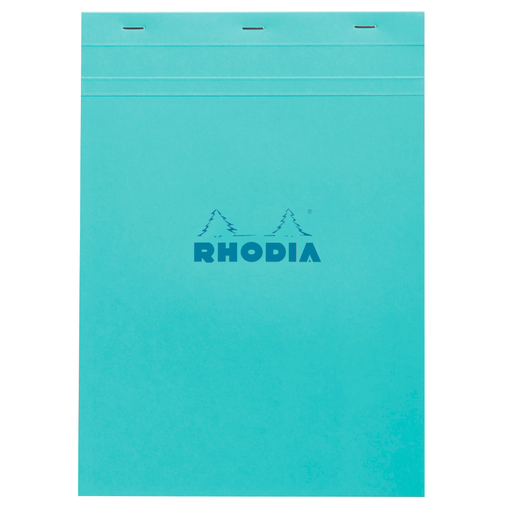
The Verdict: This combines Rhodia's legendary reliability with a touch of visual organisation. The coloured covers are perfect for assigning a notepad to each project or client. A real asset for staying organised at the office.
You'll find all the brand's fundamentals here: 80 g/m? paper, a rigid back, and flawless micro-perforations. No unpleasant surprises; this is far from cheap office supplies.
The Rhodia Colors range ensures you can colour-code your organisation without sacrificing the writing quality and robustness that made the brand famous.
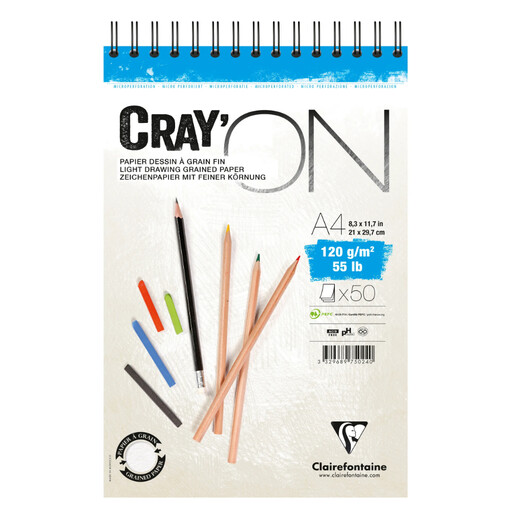
The Verdict: The solution for those whose notes often turn into sketches or technical drawings (architects, designers...). This pad features a thicker, more textured paper, ideal for dry media (pencil, charcoal...).
With its hefty 120 g/m? weight, there's no risk of ink bleeding through, even with markers. The paper withstands repeated erasing without tearing or pilling.
Its very fine-grain surface is wonderfully versatile, equally at home with a pencil, charcoal, or pastel. It's the missing link between a notepad and a sketchbook.
Explore our complete, up-to-date selection of products that meet our strict standards.
What's the difference between a Rhodia No. 18 pad and the A4 size? None! The "No. 18" reference is simply the name Rhodia gives to its standard A4 size (21 x 29.7 cm). It's a brand-specific designation, nothing more.
Is Rhodia 80 g/m? paper really suitable for fountain pens? Absolutely. The 80 g/m? silky smooth vellum paper from Clairefontaine, used in most Rhodia pads, is even a benchmark for fountain pen enthusiasts. Its ultra-smooth surface ensures a perfect glide for the nib, while its low porosity prevents ink from feathering (spreading) or bleeding through the sheet under normal use.
What's the trick to detaching a micro-perforated sheet without ruining it? The secret is to score the fold well. Firmly fold the sheet along the micro-perforation line, first one way, then the other. Only then should you pull gently but steadily, holding the rest of the pad securely. Above all, never pull sharply or at an angle.