
Same-day & Next-day Delivery

Quality Guaranteed

Unlock Your Welcome Offers: FREE Delivery | Up to 80% OFF | Free 30-day JoyPlus trial
Download the APP
Switching to a reusable freezer bag is a smart move for anyone looking to reduce waste and better preserve their food. However, the market is flooded with products that make tempting promises but often have disappointing durability. To prevent this good intention from turning into frustration, it's crucial to know how to spot the most annoying design flaws. Here are the key points to watch for before making your choice.
For a reliable and long-lasting investment, rely on objective technical criteria. Proper fridge and freezer organisation starts with the right container.
Forget basic, single-material bags. The highest-performing models rely on a composite structure, often PET + AL + PE.
This composition not only ensures better preservation of nutritional and taste qualities but also greater durability through freezing and washing cycles.
For a foolproof seal, opt for a zippered freshness bag equipped with a slider closure. Unlike a simple press-to-seal zip, the slider guarantees a complete and secure seal along the entire length. It prevents air from infiltrating, stops liquids from leaking, and contains odours. This is a non-negotiable feature for truly effective food storage bags.
A reusable freezer pouch must also be practical for daily use.
stand-up type) are much easier to fill, especially with liquids like soups or sauces.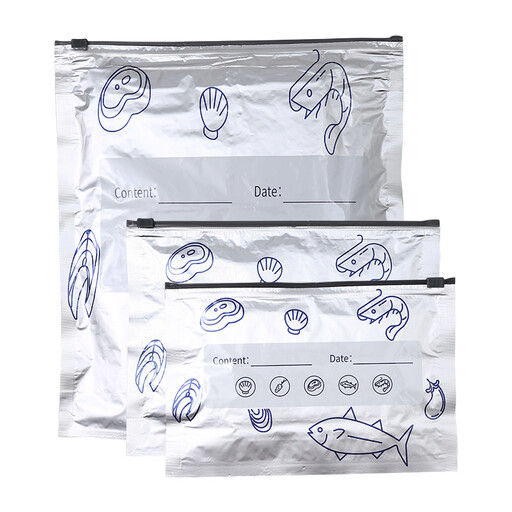
Why we chose it: This set is for those who prep their meals in large quantities. With 30 bags in three different sizes, it offers maximum flexibility for storing everything from individual portions to family-sized meals or bulk ingredients.
Its multi-layer PET/AL/PE structure is built for heavy use, far more robust than simple PEVA. The slider closure secures the contents, even in a jam-packed freezer.
The versatility of the pack (3 sizes) and the light-blocking aluminium barrier, guaranteeing long-term preservation.
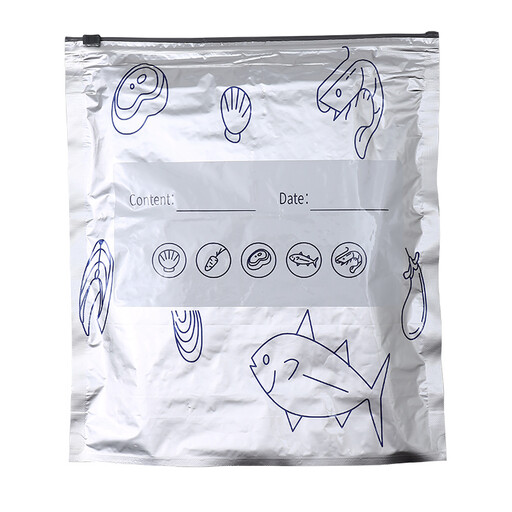
Why we chose it: Perfect for freezing the most delicate or odorous foods. The aluminium layer is a major asset for preserving the texture of meat and fish by blocking the light that accelerates fat rancidity.
It directly counters the pitfall of an unsuitable material. Its opaque barrier and airtight slider closure prevent odour transfer and degradation from light.
Superior protection against oxidation and odours thanks to the aluminium. Its stable base and large size (26x29 cm) are perfect for bigger cuts.
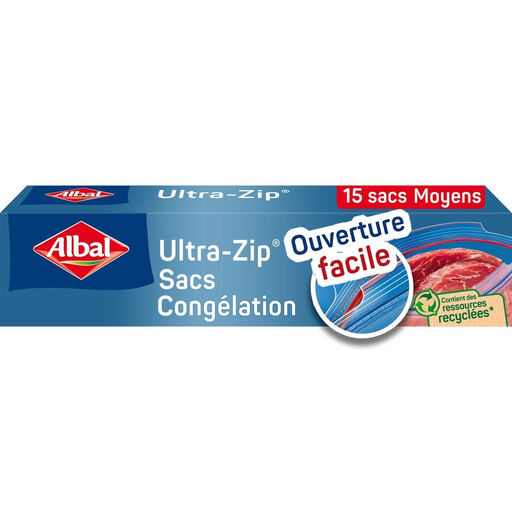
Why we chose it: For those who place environmental impact at the top of their priorities, this product from a recognised brand incorporates a significant portion of recycled materials, contributing to a more circular economy.
It avoids the unreliable seal trap with its double-zip system, which offers enhanced security compared to a single zip. A smart and functional compromise.
The eco-commitment: made with 70% recycled resources, a compelling reason to reduce your consumption of virgin plastic.
Discover our complete and up-to-date selection of products that meet our strict selection criteria and current safety standards.
Their longevity depends primarily on the material and care. A high-quality PET/AL/PE composite bag, washed carefully and kept away from sharp objects, can withstand dozens of freezing and washing cycles. Conversely, thinner PEVA models show signs of weakness after only a few uses. Always follow the manufacturer's instructions, especially the prohibition on microwaving.
Wash it by hand in warm water with a mild dish soap and a non-abrasive sponge. For stubborn odours, let a paste of baking soda and water sit inside for an hour before rinsing. The crucial step is drying: the bag must be perfectly dry inside before being stored. To do this, leave it open and upside down over a glass or a bottle drying rack to ensure optimal air circulation.
Yes, as long as they are multi-layer bags designed for this purpose. The aluminium foil (AL) is sandwiched between other layers, such as PET on the outside and PE (polyethylene) on the inside. It is this inner PE layer, a stable and widely used food-grade plastic, that is in direct contact with the food. Always check that the product is certified for food contact and follow the usage precautions.