
Livraison le jour même ou le lendemain

Qualité garantie

Débloquez vos offres de bienvenue: Livraison GRATUITE | Jusqu'à -80 % | 30 jours d'essai gratuits à JoyPlus
Téléchargez l'application
Adopting a reusable freezer bag is a smart move for anyone looking to reduce waste and optimise food storage. But with an overwhelming number of options and sometimes vague promises, it's easy to end up with a disappointing, impractical, or downright ineffective product. To avoid buyer's remorse, it's crucial to know the most common pitfalls.
This guide is here to help you see things more clearly, decode the essential criteria, and identify the food storage bag that will truly fit your lifestyle. Whether you're a batch cooking pro or simply looking for an alternative to plastic bags for freezing meat, just follow our lead.
To make an informed choice, you need to examine a few technical characteristics that make all the difference in performance and durability.
The choice of material has a direct impact on the protection of your food and the lifespan of the bag.
The reliability of an airtight freezer bag depends entirely on its sealing system.
Always check the supported temperature range. A good reusable food pouch must be able to withstand temperatures of at least -20°C. Dishwasher compatibility is a real bonus for simple and perfectly hygienic cleaning.
Rather than an exhaustive list, here are solutions tailored to specific user profiles, based on our criteria for durability and practicality.
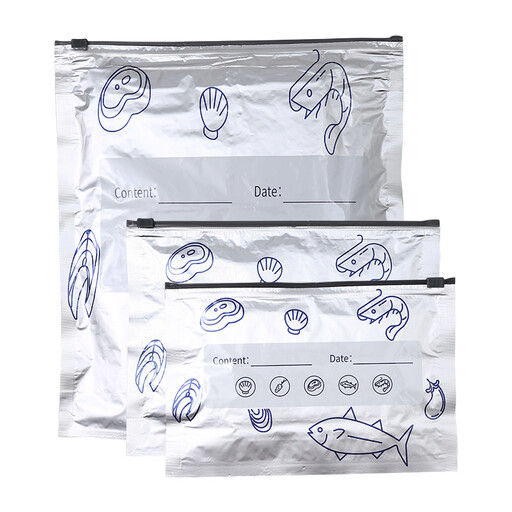
Why we chose it: This set of three different sizes is perfectly designed for families freezing various portion sizes. Its flat base allows the bags to stand upright, making them much easier to fill and organise in the freezer. Perfect for meat, fish, or vegetables.
The slider closure is far more reliable than a simple press-to-seal zip. The composite material (PET/AL/PE) is designed to withstand cold without becoming brittle and, most importantly, it blocks light—a decisive advantage over transparent bags.
Its light- and odour-proof barrier provides superior preservation of food's flavour and texture. The write-on label for noting contents and dates is a real plus.

Why we chose it: For those who prep their meals for the week, these stainless steel containers are the ultimate durable solution. The 316-grade stainless steel is food-safe, won't retain odours or stains, and its durability is practically infinite.
Here, the risk of plastic degradation is simply eliminated. The airtight lids guarantee a perfect seal, even for saucy dishes. It's an investment that will last a lifetime (or close to it).
Impeccable durability and hygiene. Stainless steel is non-porous, cleans in a flash (it's dishwasher-safe), and imparts absolutely no flavour to food.
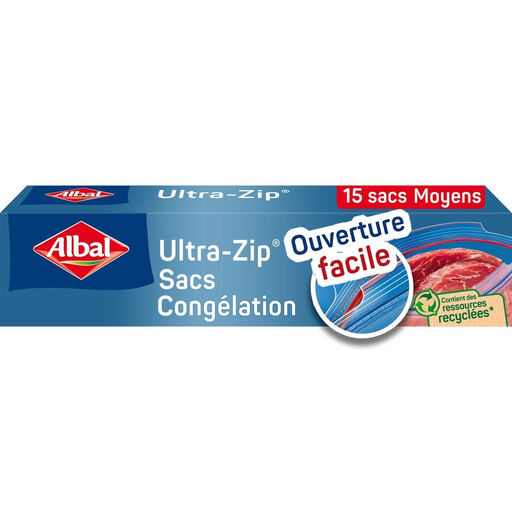
Why we chose it: For those not quite ready to make the leap to fully reusable bags or containers, this product is an excellent transitional step. The format is familiar, but the eco-conscious element is there: they are made with 70% recycled materials.
The double-zip closure is a proven system that greatly reduces the risk of leaks compared to low-end generic products. The manufacturing quality is consistent and reassuring.
Made with 70% recycled resources, they represent a first step towards more responsible consumption without sacrificing the convenience of a single-use bag.
We have curated a complete and up-to-date selection of products that meet our strict selection criteria and current safety standards.
After each use, wash the bag by hand with warm water and washing-up liquid. To ensure it dries completely and to prevent mould, turn it inside out and place it over a glass or a dedicated drying rack. If stubborn odours persist (garlic, fish, etc.), soaking it for a few hours in a mixture of water and white vinegar should do the trick.
It all depends on the material and how well you care for it. A well-made silicone or PEVA bag can withstand hundreds of uses. Aluminium composite bags are also very durable, provided they are not punctured. As for glass or stainless steel containers, their lifespan is measured in years, making them an excellent long-term investment.
It's always best to check the manufacturer's recommendations. While most bags are versatile, some are designed for specific uses. For example, aluminium-lined bags are particularly suitable for fatty or oxidation-sensitive foods (meat, fish). For liquids or saucy dishes, containers with clip-on lids offer unparalleled leak-proof security.