
Livraison le jour même ou le lendemain

Qualité garantie

Débloquez vos offres de bienvenue: Livraison GRATUITE | Jusqu'à -80 % | 30 jours d'essai gratuits à JoyPlus
Téléchargez l'application
Far from a relic of the past, film photography is making a major comeback. In the face of the sometimes clinical perfection of digital, a growing number of enthusiasts are rediscovering the pleasure of a more authentic ritual and the inimitable charm of film grain. However, disposable cameras, while convenient at first glance, pose a real environmental and financial problem. The reusable film camera therefore stands out as the clear alternative: more sustainable, more budget-friendly, and just as simple.
This guide is here to help you navigate the jungle of available models, especially if you're looking for your very first film camera. We'll break down the essential features for you and present a selection of cameras that perfectly blend simplicity, style, and the joy of shooting.
To make the right choice, a few simple criteria are all you need to guide your decision and ensure a successful first experience.
Most beginner cameras use the most common film format: 35mm. It's the universal standard, easy to find and to get developed. However, a clever alternative is gaining popularity: the half-frame camera. This type of camera only exposes half of a 35mm frame at a time. The benefit is purely financial: you double the number of photos on a single roll of film (for example, 72 shots on a 36-exposure roll). A smart option for those who want to shoot freely without breaking the bank.
For a smooth start, nothing beats an analogue point-and-shoot model. These cameras, equipped with a fixed-focus lens and almost no settings, are incredibly simple to use. Their philosophy is just three words: aim and shoot. They almost always include a built-in flash for low-light scenes. This minimalist approach allows you to focus on the essentials—composition and subject—without getting lost in the technical complexities of professional cameras.
Because the camera itself is as important as the picture, aesthetics are a criterion not to be overlooked. Many recent models play the nostalgia card, drawing inspiration from the vintage designs of the '80s and '90s. Beyond looks, weight and compactness are crucial. A lightweight camera that slips into a pocket or bag is one you'll actually take everywhere, always ready to capture the unexpected.
Here is our selection of cameras that are perfect for starting your film journey, chosen for their simplicity and excellent value for money.
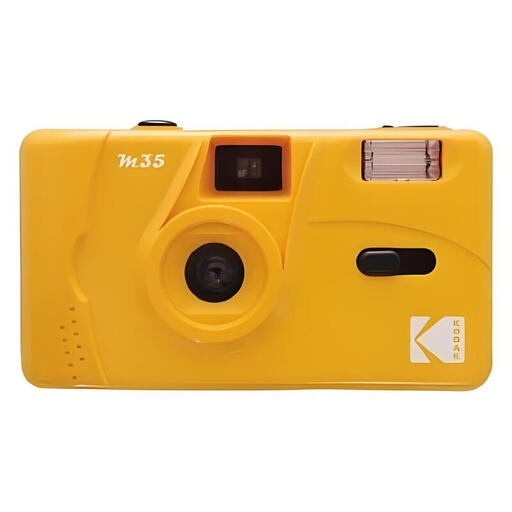
Why we love it: The Kodak M35 is the spiritual successor to disposable cameras. It retains their extreme simplicity but with the huge advantage of being reusable. Its colourful design and light weight make it a fun and practical travel companion.
The Pros:
Who is it for? Ideal for true beginners who want a hassle-free Kodak film camera to capture holidays, parties, and everyday moments with that distinctive "lomo" aesthetic.
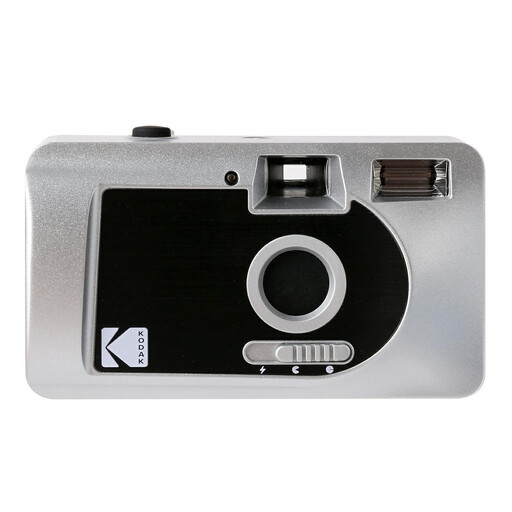
Why we love it: The Kodak S88 takes convenience up a notch with its motorised film advance. No more manual winding after each shot; the camera handles it all. Its two-tone black and silver design gives it a more understated and classic look.
The Pros:
Who is it for? For those who want the simplest analogue point-and-shoot experience possible, with ergonomics reminiscent of a digital compact camera.
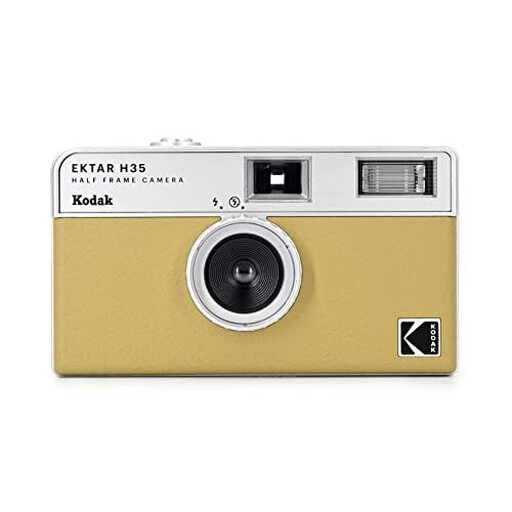
Why we love it: The Kodak Ektar H35 is the smart choice, both creative and economical. As a half-frame camera, it lets you take twice as many photos per roll. This feature becomes a fantastic creative constraint, encouraging you to compose diptychs or series for a highly original result.
The Pros:
Who is it for? For beginners who are budget-conscious, but also for creative minds. It's an excellent tool for developing your photographic eye without the fear of "wasting" film.
The ritual of film photography, with its share of anticipation and surprises, is a unique experience. But if you prefer the convenience of digital without sacrificing the retro look, other options are available.
To combine the best of both worlds, take a look at our selection of digital cameras with a film look.
For your first rolls, a medium-sensitivity colour film is the most versatile choice. Opt for a 400 ISO film (like Kodak Ultramax 400 or Fujifilm Superia X-TRA 400). This sensitivity will give you great flexibility, whether you're shooting in broad daylight or indoors with a flash. In bright sunlight, a 200 ISO film will also work perfectly.
Not at all! Entry-level models, like the ones in our selection, are specifically designed to be deceptively simple. They operate on the "point and shoot" principle, with a fixed focus and automatically managed exposure. Loading the film is the only step that requires a bit of concentration at first, but you'll get the hang of it very quickly.
Although they are less common than in the golden age of film, photo labs haven't disappeared. In most major cities, numerous independent labs offer high-quality developing and scanning services. There are also excellent online services: you mail in your film rolls and receive your scanned photos by email, then get your negatives back a few days later. Finally, some major retail chains continue to offer this service in-store.