
Livraison le jour même ou le lendemain

Qualité garantie

Débloquez vos offres de bienvenue: Livraison GRATUITE | Jusqu'à -80 % | 30 jours d'essai gratuits à JoyPlus
Téléchargez l'application
In today's all-digital world, film photography retains an undeniable charm. That special grain, the vibrant colours, and the joy of waiting for your photos to be developed… It's an experience that digital struggles to replicate. If this world appeals to you but the idea of constantly buying disposable cameras doesn't, a reusable film camera is the perfect solution.
Our mission? To help you make sense of it all. This guide presents concrete options and gives you all the keys to choosing the camera that will match your shooting style, all without any unnecessary technical jargon.
Before you dive in, a few simple criteria will guide your choice. These cameras are designed to be extremely accessible, but a few details can make all the difference in practice.
The majority of entry-level cameras use the standard 35mm format, also known as "full-frame" (24x36mm). Each photo then uses a full frame of the film.
Some models, like the Kodak Ektar H35N, opt for the half-frame format (17x24mm). The advantage is crystal clear: you double the number of photos on a single roll of film (meaning 72 shots on a 36-exposure roll). It's an option that is both economical and creative, opening the door to creating diptychs (two related images) directly on the negative.
This is the mechanism that readies the film for the next shot after each press of the shutter.
These cameras are almost all equipped with a fixed-focus lens (usually around 31mm) and a fixed aperture. In short: no zoom or focus to manage. Just aim, frame, and shoot. They also include a built-in flash, which is essential indoors or whenever light is scarce. It's the perfect formula for a beginner-friendly film camera.
Here are three models that cater to very different profiles, from the complete beginner to the photographer seeking a creative edge.
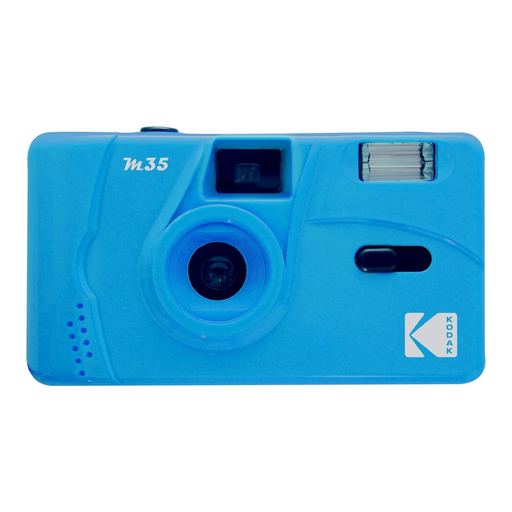
Why it stands out: The Kodak M35 is the epitome of a simple, stylish camera. With its colourful look and 100% manual operation (film advance and rewind), it offers a pure, hassle-free analogue experience. It's the perfect body to get a gentle introduction to film photography.
The pros:
Who is it for? For complete beginners, travellers, and anyone who wants a fun and stylish vintage camera to capture candid moments without worrying about settings.
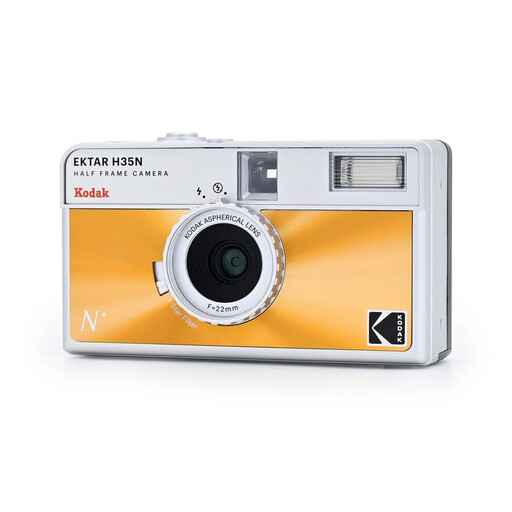
Why it stands out: The Kodak Ektar H35N steps things up a notch with more creative options. Its half-frame format doubles the number of shots per roll, while its lens, which includes a glass element, improves image sharpness. It even offers a built-in star filter and a Bulb shutter mode to unleash your creativity.
The pros:
Who is it for? For amateur photographers who already have some basics down, or curious beginners who want to go beyond a simple "point and shoot." It's an excellent choice for experimenting and starting to develop your own visual style.
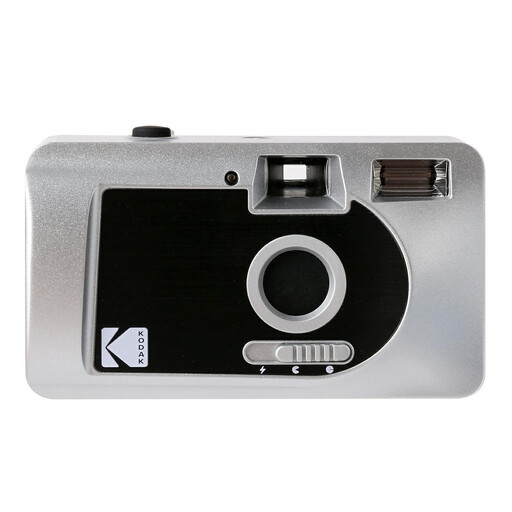
Why it stands out: The Kodak S88 is all about comfort and simplicity. Its key feature: motorised, automatic film advance. No more turning a dial after each shot; the camera handles everything. Its understated and classic black and silver design gives it a timeless look.
The pros:
Who is it for? For those who prioritise spontaneity and ease of use above all else. If you want to capture the moment without worrying about the technical side (and never miss a shot again because you forgot to advance the film), the S88 is the ideal companion.
Our selection is an excellent starting point, but the world of film photography is much broader. If these models haven't completely won you over, or if you're curious to discover other formats like instant cameras, feel free to take a look at our complete collection.
? Explore our complete collection of film and instant cameras
All the cameras in this guide use the most common film format: 135 film (or 35mm). To start, a colour film with a sensitivity of 200 or 400 ISO is a very versatile choice. 200 ISO is perfect for bright, sunny days, while the more flexible 400 ISO will perform better on overcast days or indoors with a flash.
Buying a reusable film camera is a small initial investment, but it pays for itself very quickly compared to compulsively buying disposable cameras. The main ongoing expense is purchasing film and having it developed at a lab. Opting for a half-frame camera like the Kodak Ektar H35N is an excellent trick to cut your film budget in half.
The key is to dare to experiment without fear. A few tips to get you started: