
Livraison le jour même ou le lendemain

Qualité garantie

Débloquez vos offres de bienvenue: Livraison GRATUITE | Jusqu'à -80 % | 30 jours d'essai gratuits à JoyPlus
Téléchargez l'application
Between promises of leak-proof performance, materials presented as “durable” and formats that are sometimes unsuitable, choosing a reusable bottle or food storage container deserves a few checks. A bottle intended for school does not need to meet the same requirements as a hiking bottle. Similarly, a container for pasta should not be chosen in the same way as one designed for storing leftovers that are still hot.
Here are the main criteria to review when comparing the models available in France and avoiding purchases that will end up at the back of a cupboard.
A screw cap or flip-top lid is not necessarily leak-proof. For a gym bag or schoolbag, check for a silicone seal, a genuine locking system or an explicit statement confirming leak protection. A poorly fitted lid can wet the items being carried and make the container impractical to use on the go.
A BPA-free bottle can be lightweight and perfectly suitable for cold drinks. That does not automatically mean it can withstand hot liquids, the dishwasher or the freezer. Plastic, aluminium, stainless steel and borosilicate glass each have their advantages, but also their limitations.
The “BPA-free” label only provides information about the product’s stated composition. It does not replace checking the manufacturer’s recommendations, particularly regarding maximum temperature, microwave use and care instructions.
Drinking spouts, valves and seals are more likely to retain residue than a standard cap. A bottle that is difficult to take apart may therefore be cleaned less thoroughly day to day. For containers, a removable seal makes washing easier, provided you leave it to dry separately before closing the container again.
For a school-age child, a children’s bottle of 450 to 700 ml may be suitable, depending on the length of the day and whether the bottle can be refilled on site. A sports bottle of 700 ml provides greater independence during a training session or outing, but it also takes up more room in a small bag.
For meal preparation, sizes from 0.25 to 1 litre are generally suitable for individual portions. A 2 litre container is more likely to be used for family meals or storing large quantities. Before ordering, measure the shelves and compartments in your fridge : product specifications do not always give an accurate impression of the actual space a container takes up.
An airtight food container should close evenly all the way around. In the kitchen, stackable containers with a stable lid help you save space in cupboards. Transparent jars also make it easier to identify rice, flour, cereals or dried fruit.
Do not fill a container beyond its usable capacity. For liquids placed in the freezer, leave enough room for them to expand. If you use a glass container in the microwave, remove the lid and follow the manufacturer’s instructions carefully.
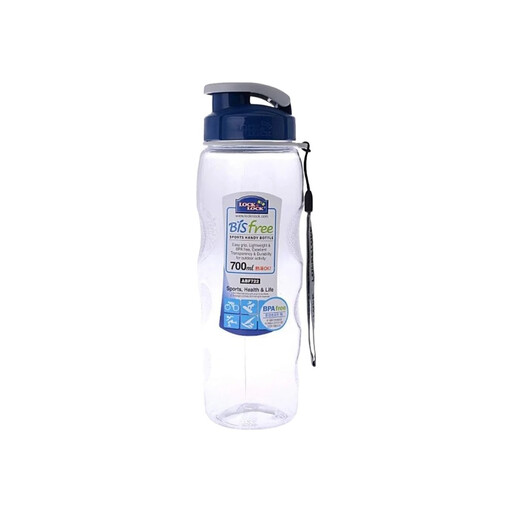
Why this choice suits this profile : With its 700 ml capacity and low weight, it is suitable for daily commutes as well as sport and outdoor activities.
Its lockable lid helps reduce the risk of leaks during transport. However, it must be hand-washed and extreme temperatures should be avoided.
Semi-transparent plastic, a 700 ml capacity, a reusable design and stated suitability for sport, hiking and outdoor activities.
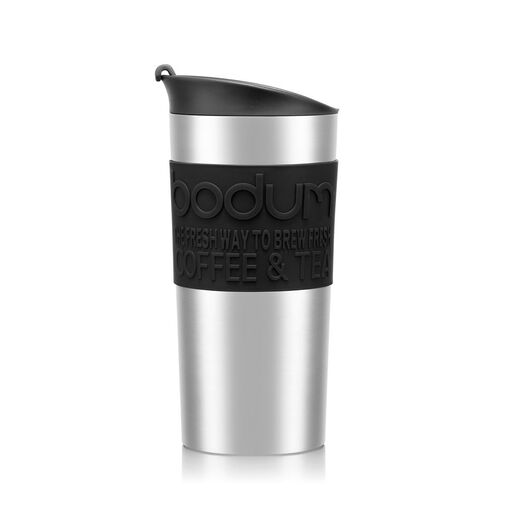
Why this choice suits this profile : Its 350 ml capacity is ideal for people who travel with an individual serving of a hot or cold drink.
The flip-top lid, fitted with a silicone seal, helps prevent leaks, provided it is closed correctly and the mug is not filled to the brim.
A double-wall vacuum-insulated stainless steel design, a compact format and a practical handle for carrying. Not suitable for microwave use.
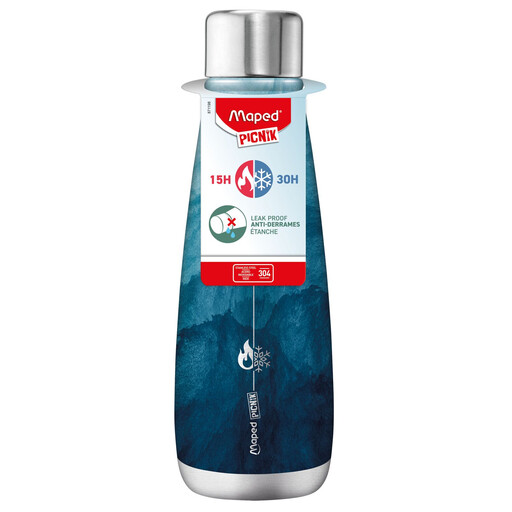
Why this choice suits this profile : Its 500 ml capacity is suitable for school, work, commuting and outdoor activities.
The closure, advertised as leak-proof, helps reduce the risk of leaks. However, the manufacturer recommends hand-washing and advises against using the microwave or freezer.
A double-wall stainless steel design, vacuum insulation and stated performance of up to 15 hours for hot drinks and 30 hours for cold drinks.
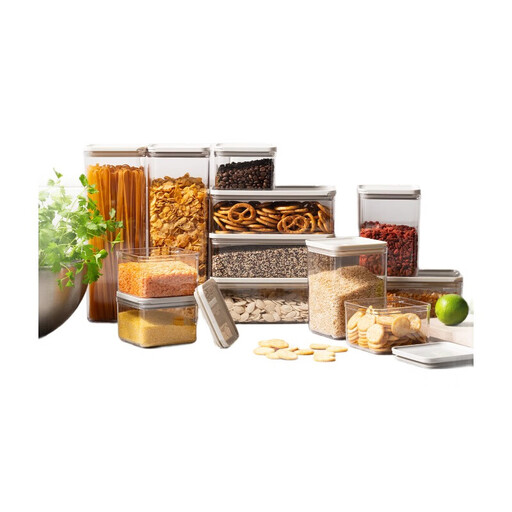
Why this choice suits this profile : The twelve jars, available in four capacities, make it easier to organise the kitchen, store dry food and prepare meals.
The lids with silicone seals and the stackable formats help reduce the risk of poorly closed bags and untidy cupboards.
Twelve containers of 0.5 l, 1 l, 1.2 l and 2.6 l, made from plastic stated to be BPA-free, transparent and dishwasher-safe according to the product information.
We have put together a complete, real-time updated selection of products that meet these demanding criteria and European safety standards.
Wash each bottle before using it for the first time, then after every use whenever possible. Take apart the seals and spouts according to the manufacturer’s instructions. A bottle or container with a crack, deformation, deep scratch or damaged seal should be replaced : damaged areas are more difficult to clean properly.
For food containers, dry the lids completely before closing them. Avoid abrasive products on printed surfaces, particularly on a Disney bottle or a model intended for children. Instructions for using the dishwasher, freezer and microwave vary from one product reference to another : always check the product information.
A 450 to 500 ml format helps keep a schoolbag light and is suitable for occasional drinking. A 700 ml bottle provides greater independence for a full day, an outing or a sports activity. Also consider the size of the bag and how easy it is for the child to open.
Not always. Some glass containers are designed to withstand specific temperature changes, while some plastic containers may become deformed. Before using them, check the guidance concerning hot liquids, microwave use and removing the lid.
Start by grouping products by type : pasta, rice, flour, sugar, cereals and dried fruit. Then choose stackable containers in consistent sizes. Label each one with its contents and opening date, then keep the products you use most often within easy reach.