
Livraison le jour même ou le lendemain

Qualité garantie

Débloquez vos offres de bienvenue: Livraison GRATUITE | Jusqu'à -80 % | 30 jours d'essai gratuits à JoyPlus
Téléchargez l'application
Preparing meals in advance, storing leftovers, or carrying a drink without the risk of leaks requires more than just a simple lid. Reusable airtight food containers need to suit your habits, the space available in your fridge, and your kitchen equipment.
With boxes advertised as leak-proof, materials presented as durable, and promises of temperature retention, certain details can turn a tempting purchase into an impractical accessory. Here are the criteria to examine before choosing your storage containers, jars, or reusable bottle.
A lid that is simply placed on top protects against dust, but it may not be enough for transporting a sauce, soup, or a dish in sauce. To slip your container into a work bag or rucksack, check for a silicone seal, clips, or a proper locking system.
Airtightness also depends on the condition of the seal. A lid that is difficult to take apart can trap residue and gradually lose its effectiveness. Models with a removable seal are generally easier to clean, provided you put it back correctly after letting it dry.
Mentions of "dishwasher safe", "freezer safe", or "microwave safe" do not mean that all parts of the product can be used in the same way. A container may be dishwasher safe while its lid needs to be washed by hand. Similarly, a stainless steel container should never be placed in the microwave.
For containers intended for the fridge and freezer, check the instructions regarding sudden temperature changes. A glass lid, in particular, may require gradual temperature adjustment to minimise the risk of thermal shock.
A large container may seem ideal for batch cooking, but it takes up more space and is not always suitable for a single portion. Conversely, a small container may prove too tight for a composed salad or a full meal.
For meal prep, several different sizes are often easier to organise than one single large container: a medium capacity for one portion, a deeper model for saucy dishes, and a large container for family-sized preparations.
Stainless steel lunch boxes resist odours well and do not require an internal coating when made from 304 stainless steel. They are suitable for storing many foods, but should not be used in the microwave.
Plastic is often lighter and more practical for takeaways. If this is an important criterion for you, look for an explicit BPA-free mention and carefully read the usage instructions. Glass allows you to see the contents at a glance and is easy to clean, but its weight and sensitivity to thermal shock should be taken into account.
For transporting liquid foods, choose containers with four clips, a peripheral seal, or a locking lid. For drinks, a reusable sports bottle with a lockable lid will be practical for everyday use, while a stainless steel insulated bottle will be more suitable if you want to keep a drink hot or cold for several hours.
Also check the cleaning instructions: the mention "dishwasher safe" does not mean you can skip dismantling the seal or letting each component dry completely. A narrow-necked bottle can also be harder to clean than a wide-opening model.
Stackable food containers help you make better use of fridge shelves and cupboards. Rectangular shapes generally use space more efficiently, while deep containers are better suited to bulky foods.
Before ordering, compare the external dimensions with those of your fridge, lunch bag, or dishwasher. The capacity stated in millilitres does not always give a precise idea of the overall size, including the lid.
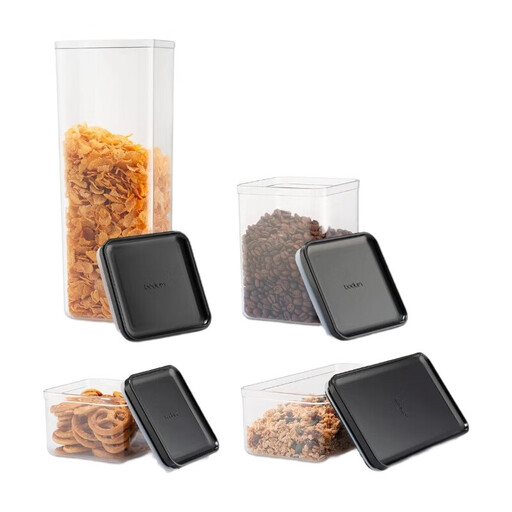
Why this choice suits this profile: This set of six storage jars helps organise dry foods, snacks, and leftovers thanks to multiple capacities and a transparent design that allows you to quickly identify the contents.
The airtight lids are paired with transparent containers, while the six different sizes prevent you from choosing a box that is too large for each use.
Recyclable plastic advertised as BPA-free, airtight lids, and components stated as dishwasher safe according to the product sheet.

Why this choice suits this profile: The three containers of 1,000, 1,800, and 3,000 ml are suitable for meal preparation, family storage, and fridge organisation alike.
The stackable design minimises clutter. The product sheet indicates a 304 stainless steel body with no coating and a removable silicone seal.
Three capacities, borosilicate glass lids, and stated as dishwasher safe. However, the instructions recommend gentle washing and caution regarding thermal shock.
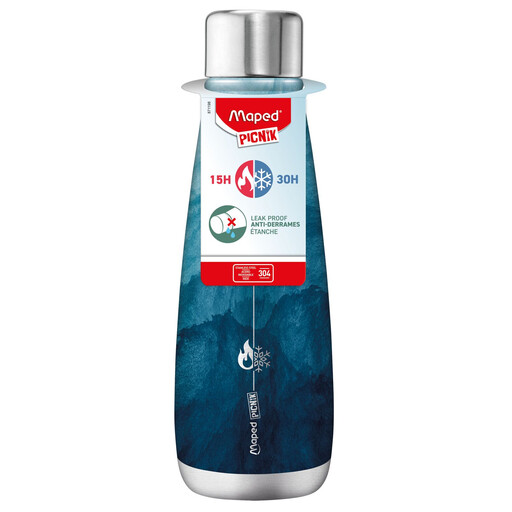
Why this choice suits this profile: This 500 ml bottle accompanies daily commutes, school, work, hiking, and sports activities when keeping your drink at the right temperature is important.
The product sheet describes a double-wall construction, a leak-proof closure, and hand washing recommended. The maintenance requirements are therefore clearly established.
Double-wall stainless steel, 500 ml capacity, and stated temperature retention performance of up to 15 hours for hot and 30 hours for cold.
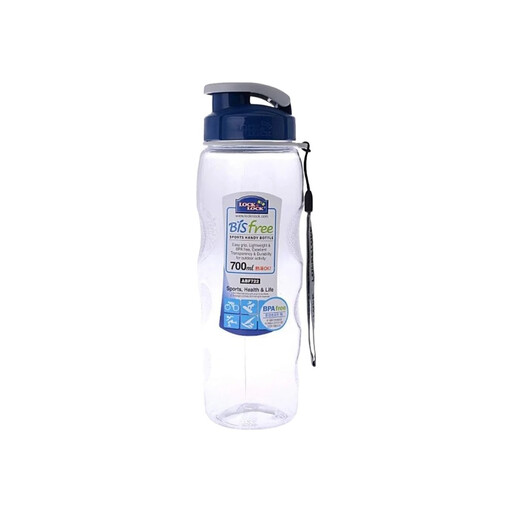
Why this choice suits this profile: Its 700 ml volume is suitable for walks, hikes, and sports sessions when you want to minimise refills.
Its lockable lid is suitable for transport. However, the product sheet recommends hand washing and advises against extreme temperatures and direct sunlight exposure.
700 ml capacity, reusable design, and lockable lid for outdoor activities.
We have put together a comprehensive, real-time updated selection of products that meet these demanding criteria and European safety regulations.
304 stainless steel is suitable for those looking for a robust material that is resistant to odours. BPA-free plastic will be lighter for on-the-go meals, while glass makes it easy to see the contents. In all cases, check the usage limitations and the manufacturer's instructions.
It all depends on the model and its different components. Check the product sheet separately for the container, lid, and seal. When freezing a liquid food, leave enough space for expansion and avoid sudden temperature changes, especially with glass lids.
The lifespan varies depending on the frequency of washing, impacts, scratches, and the condition of the seal. Replace a cracked lid, a deformed seal, or a container that no longer closes properly. Gentle cleaning, thorough drying, and respecting the stated temperatures will help extend the life of your containers.