
Livraison le jour même ou le lendemain

Qualité garantie

Débloquez vos offres de bienvenue: Livraison GRATUITE | Jusqu'à -80 % | 30 jours d'essai gratuits à JoyPlus
Téléchargez l'application
Finding the right pen can turn the chore of writing into a genuine pleasure. Yet, the world of retractable gel pens is filled with unfulfilled promises. Between smearing ink, a scratchy tip, or non-existent comfort, it's easy to end up with a drawer full of unusable pens. This guide will help you break down the essential criteria to make the right choice and finally find the tool that's perfect for you.
Before you dive in, let's review the most common pitfalls:
To avoid these disappointments, here are the technical specifications that truly make a difference.
The size of the tip is crucial for the final look of your writing. The choice will depend entirely on your use case and personal preferences.
Gel ink is prized for its vibrant colours and consistency. However, not all formulas are created equal.
A pen is a tool you sometimes hold for hours. Its comfort is not a luxury.
Here are a few models that cater to specific user profiles, based on the criteria we've just discussed.

Why we love it: Perfect for students and professionals who fill up pages. Its 0.5 mm fine point and quick-drying ink ensure clean, legible notes, even when writing at top speed.
Its near-instant-drying ink is designed not to smear, a major asset for left-handers. The retractable mechanism, in turn, effectively protects the tip from drying out.
Its silent click mechanism (patented, according to the brand) is a real treat in libraries or open-plan offices where the slightest noise can be distracting.
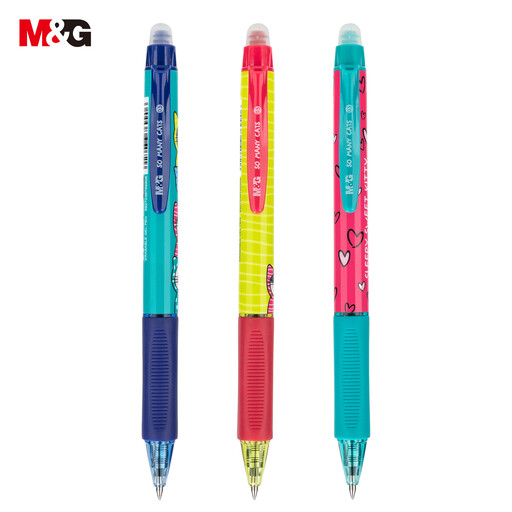
Why we love it: Perfect for those who love to plan everything in their diary or organise their notes, with the ability to make clean corrections without any mess or cross-outs.
Its thermosensitive ink erases without a trace and without damaging the paper. No more frustration with cross-outs and correction fluid that warps the page.
It combines the convenience of friction-erasable ink, a playful design, and a very practical side-click mechanism for one-handed use.
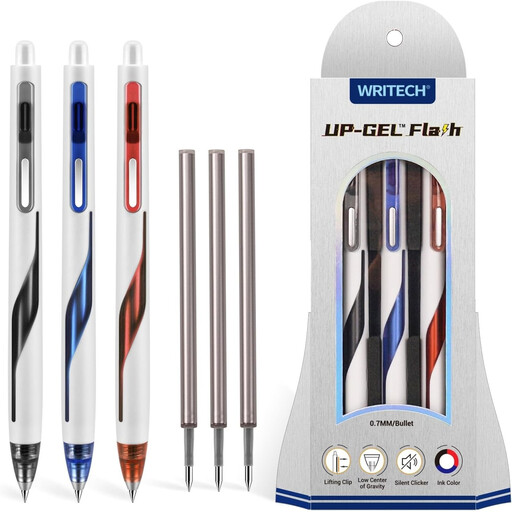
Why we love it: Designed for professionals seeking a reliable, comfortable, and understated writing tool for the office, meetings, or travel.
Its low centre of gravity and ergonomic grip are designed to limit fatigue during long writing sessions. The silent click, meanwhile, avoids disturbing colleagues.
Its low centre of gravity technology provides perfect balance for precise line control. The included refills make it an economical and sustainable choice.
Browse our full selection of products that meet our quality criteria.
Yes, as long as you choose the right model. For a pen for left-handers, the main challenge is the ink's drying time. As you write, your hand glides over the freshly written text, which inevitably causes smudging. Opt for a gel ink pen whose packaging explicitly mentions "quick-dry". These inks are designed to set on the paper in just a few seconds, minimising the risk of smears.
The golden rule is simple: always retract the tip after each use. The click mechanism is more than just a convenient gadget; it creates an airtight seal that protects the tip from the air and prevents the ink from drying out. For long-term storage, it's advisable to keep pens horizontally in a cool, dry place.
The fundamental difference lies in the ink.