
Livraison le jour même ou le lendemain

Qualité garantie

Débloquez vos offres de bienvenue: Livraison GRATUITE | Jusqu'à -80 % | 30 jours d'essai gratuits à JoyPlus
Téléchargez l'application
Resistance bands for strength training are easy to take anywhere, but not all bands are created equal. Whether you’re looking to build strength, work out at home, practise Pilates, improve mobility or ease yourself back into exercise, the right choice mainly depends on resistance, format and build quality.
However, certain marketing claims can make it difficult to know what really matters. Here are the key points to check before choosing your fitness bands.
A resistance-band kit made up of several components is not necessarily suitable for every exercise. Three bands with progressive resistance may be enough for the legs, glutes and certain mobility exercises. By contrast, a set with handles, an anchor and accessories will be better suited to pulls and upper-body strength training.
So check exactly what the kit contains: number of bands, handles, straps, a door anchor and, where applicable, a storage bag.
Resistance given in kilograms does not correspond to a fixed load comparable to that of a dumbbell. Tension changes according to how far the band is stretched, the angle of the movement and the anchor point.
A band labelled 8, 12 or 16 kg therefore indicates a theoretical tension level, not a constant weight lifted throughout the exercise. To progress safely without rushing, it is better to have several resistance levels than to rely on one very tough band.
Latex and TPE can be damaged by sharp edges, excessive heat or overstretching. A band with a crack, whitened area or deformation should no longer be used.
On models with handles, inspect the attachments too. A comfortable handle will not compensate for a poorly secured strap or an unstable anchor.
For a balanced workout, choose a kit offering at least two or three resistance levels. Light bands are generally suitable for warming up, mobility work and controlled exercises. Higher resistances are better suited to leg-strengthening exercises, squats, lunges and hip thrusts.
Loop bands are practical for targeting the glutes, performing lateral movements and activating the hips. Long bands are better suited to pulls, stretching and certain Pilates movements.
TPE is used on some models because it is flexible and easy to maintain. Dimensions matter too: a band around 120 cm long does not provide the same range of movement as a mini band designed for the thighs or ankles.
For bands with handles, pay particular attention to:
After each session, wipe the bands with a soft, slightly damp cloth, then leave them to air-dry. Store them away from sunlight, moisture and sharp objects.
Check the condition of their surface before every use. Do not exceed the recommended stretch capacity, and stop immediately if you experience pain, dizziness or discomfort. If you have an injury or intend to use them for rehabilitation, seek advice from a healthcare professional before getting started.
The options below meet different needs. The features mentioned correspond to the information available on the product pages.
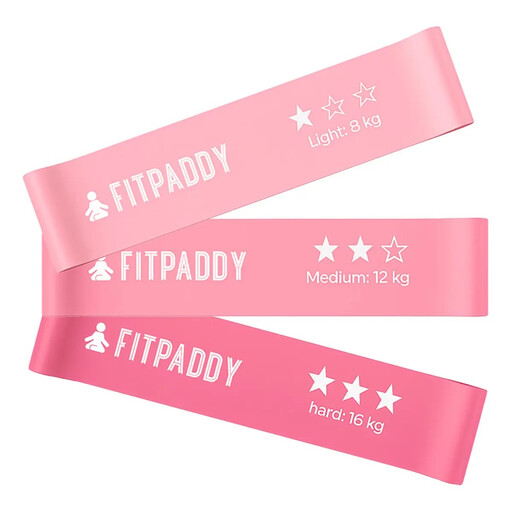
Why this choice suits this profile : The three advertised levels — light 8 kg, medium 12 kg and heavy 16 kg — let you get started gradually, whether you’re working out at home, targeting the glutes or stretching.
The levels are clearly differentiated, so you are not reliant on a single resistance that is either too strong or too weak. It is still essential to check the condition of the bands before every session.
A set of three bands with advertised progressive resistance, suitable for strength training, mobility work and stretching.
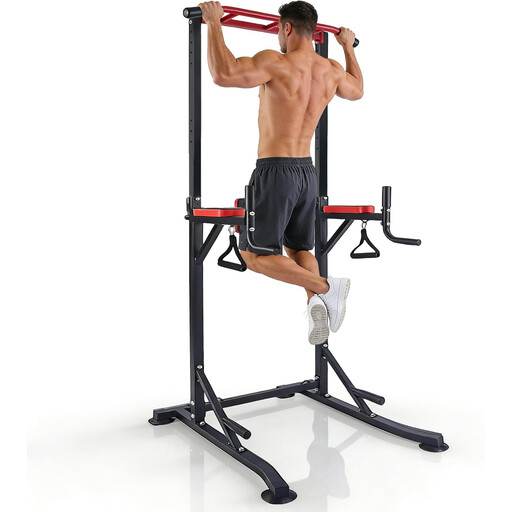
Why this choice suits this profile : This station is designed for people who want to create a proper home workout space focused on pull-ups and bodyweight training, with two bands included.
The frame and bands are combined in one set, so there is no need to buy several accessories separately. However, check the product page to confirm the dimensions and the space available in your home.
A multifunctional freestanding frame and two fitness bands mentioned in the product title.
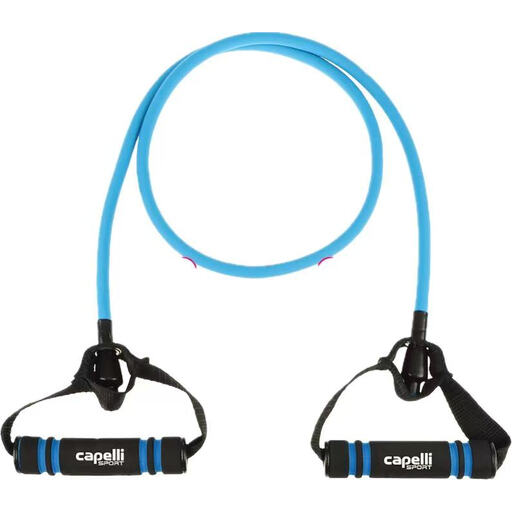
Why this choice suits this profile : This single medium-resistance band, equipped with handles, is designed for curls, triceps extensions, raises, as well as Pilates and strength exercises at home.
The foam handles improve grip and mean you do not have to hold the tube directly. Even so, check the connections and keep the band away from any sharp edges.
TPE, a tube advertised as 120 cm long, foam handles and a strap to keep the bands together.
We have put together a complete, real-time updated list of products that meet these demanding selection criteria and European safety standards.
Start with five to ten minutes of warm-up using light resistance. For strength training, follow this with two or three sets of controlled movements, without trying to stretch the band aggressively.
Here are a few accessible exercises:
You can work out two to three times a week, allowing enough recovery between sessions that target the same muscle group. Consistency and controlled range of movement matter far more than rushing to choose the maximum resistance.
Start with light or medium resistance while you learn the movement and master the tension. A kit offering several levels lets you adapt the effort to each exercise and the area being worked.
Their lifespan depends on how often they are used, the material, storage conditions and the intensity of the stretching. Inspect them before every session and replace them as soon as you notice a crack, unusual discolouration or deformation.
They can support certain mobility or return-to-exercise exercises, but the choice of resistance and movements should be approved by a healthcare professional in the event of an injury or medical condition. They are not a substitute for medical supervision or physiotherapy.