
Livraison le jour même ou le lendemain

Qualité garantie

Débloquez vos offres de bienvenue: Livraison GRATUITE | Jusqu'à -80 % | 30 jours d'essai gratuits à JoyPlus
Téléchargez l'application
Resistance bands take up very little space, require almost no equipment, and fit just as easily into a home session as they do a Pilates class or a workout on the go. But not all kits are created equal. Poorly defined resistance, fragile latex, or an unsuitable width can quickly turn a bargain into an unusable accessory.
Before choosing your fitness bands, it’s worth looking beyond the colours and marketing promises. Here are the criteria to examine, the mistakes to avoid, and a selection of kits suited to different uses.
Colours don’t follow any universal standard. A pink band might be light from one brand and noticeably firmer from another. Even labels like “8 kg”, “12 kg” or “16 kg” should be taken with a pinch of salt: they sometimes refer to a maximum resistance stated for commercial purposes, and don’t necessarily allow you to compare products across manufacturers.
To progress without skipping steps, choose a set that clearly indicates several resistance levels. Then adapt the band to the exercise, the range of motion, and your own level.
Natural latex generally offers good elasticity, but it can cause a reaction in sensitive individuals. A reputable product description should state this clearly. A quality band should also remain supple, with no persistent odour, cracks, or whitened areas when stretched.
If this applies to you, look for other materials or seek advice from a healthcare professional before regular use.
A single band can suffice for a few exercises, but it quickly becomes restrictive when you need to work your legs, glutes, shoulders, and back. For resistance bands for strength training, mobility exercises, or Pilates, a kit offering multiple levels is far more versatile. Also check the dimensions: a short mini-band behaves very differently from a long band designed for pulls or stretches.
A three-level kit suits many beginners and allows you to gradually increase the tension. Five levels offer more flexibility, particularly for alternating between muscle activation, strengthening, and more intense work.
For bands with different resistance levels, check the designation of each model and how the brand presents its values. A colour code can help with identification, but it doesn’t replace clear technical specifications.
Loop bands are practical for squats, glute bridges, abductions, and lateral movements. Models that are 5 cm wide are often popular for leg and glute work. A larger circumference can also offer more comfort, depending on your body shape and the exercise you’re doing.
Long bands are better suited to pulls, arm movements, certain rehabilitation exercises, and resistance bands for mobility exercises. So before ordering, check the length, width, and exact format of the product.
Inspect each band before your session. Any tear, cut, or significant deformation means it should be replaced. Also avoid abrasive surfaces, metal edges, and anything that could damage the material.
Clean your bands with a soft, slightly damp cloth, then leave them to air dry. Store them away from sunlight and extreme temperatures. Do not stretch them beyond the stated limit, and stop the exercise if you feel pain or discomfort. After an injury, seek advice from a qualified professional: rehabilitation bands are not a substitute for a personalised programme.
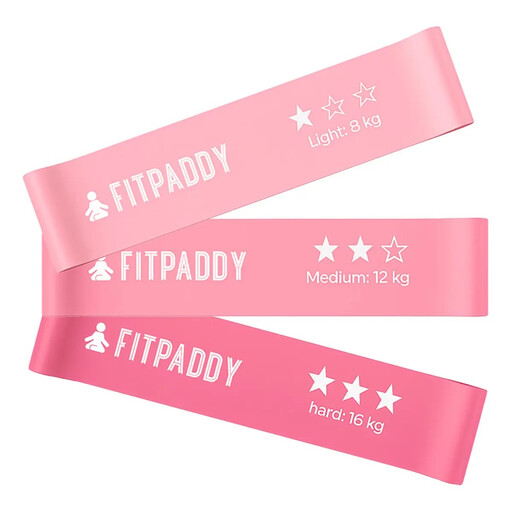
Why this choice suits this profile: this kit offers three levels rated at 8 kg, 12 kg, and 16 kg. Enough to start with a light tension, then gradually progress your home workouts.
The three levels prevent you from relying on a single tension and make progression clearer than unexplained colours alone.
Three compact bands, designed for strength training, mobility, stretching, and functional rehabilitation.
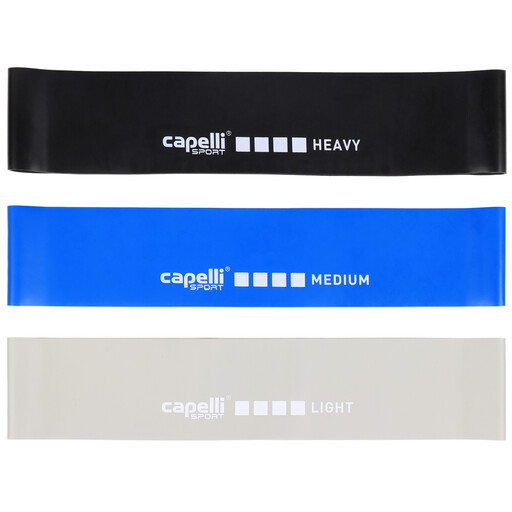
Why this choice suits this profile: with its 5 cm width and three resistance levels, this kit fits into a yoga, Pilates, or full-body strengthening routine. A storage bag is included.
The stated width and circumference let you check the format before buying. The bag makes storage easy and protects the bands from prolonged sun exposure.
Natural latex, three resistance levels, 5 cm width, and portable storage. Avoid if you have a known latex sensitivity.
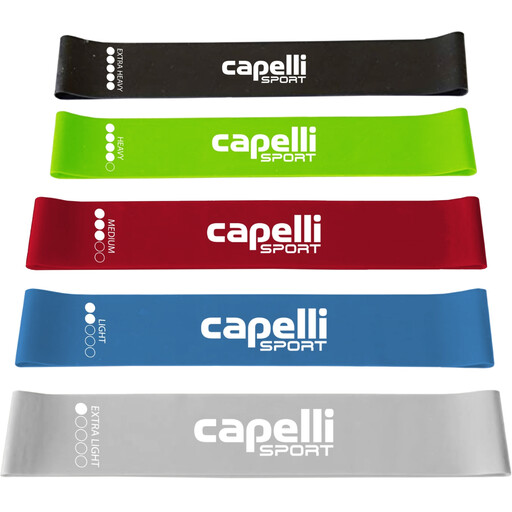
Why this choice suits this profile: its five levels, from very light to very firm, offer a wide range of adjustment for legs, glutes, Pilates, yoga, and certain mobility exercises.
The five-level gradation prevents you from forcing with a band that’s too firm and lets you reserve the higher resistances for suitable exercises.
Five mini-loop bands, a carry bag, and use stated for strengthening, flexibility, and rehabilitation (after professional advice).
We’ve put together a comprehensive, real-time updated selection of products that meet these exacting criteria, as well as European safety standards.
Begin with the lightest level, especially for shoulder movements, mobility exercises, and learning proper technique. For legs and glutes, a medium resistance may be suitable, depending on the exercise. The tension should remain manageable from the start to the end of the movement, without compensating or feeling pain.
It depends on the frequency of use, the range of stretch, the material, and storage conditions. Regular inspection is essential. Replace the band as soon as you notice cracks, a tear, thinning, or a clear loss of elasticity, even if it still seems usable.
Some bands are designed for rehabilitation, mobility, or light strengthening. However, the resistance level and exercises should be determined with a professional if you have an injury, persistent pain, or a specific condition. These accessories can complement a programme, but they do not replace personalised care.