
Livraison le jour même ou le lendemain

Qualité garantie

Débloquez vos offres de bienvenue: Livraison GRATUITE | Jusqu'à -80 % | 30 jours d'essai gratuits à JoyPlus
Téléchargez l'application
Whether you're looking to start strength training at home, spice up your yoga sessions, or follow a rehabilitation programme, the resistance band is the ultimate simple-yet-effective accessory. Compact, affordable, and versatile, it allows you to work every muscle in your body without investing in heavy, bulky equipment.
The catch? With a multitude of models available—latex, fabric, loop, flat, and more—it can be tough to know where to start. This guide is here to help you break down the key criteria for choosing the right exercise band and to introduce our selection of the best products on the market today.
Before you take the plunge, here are the key points to consider to ensure you make the right choice—one that aligns with your goals and workout style.
The choice of material is crucial: it determines the comfort, durability, and the type of exercises you can perform.
Resistance, often indicated by a colour code, is the name of the game for adjusting your workout intensity. Opting for a complete set is often the best solution for beginners, as it will allow you to:
The format of your fitness band will depend on its intended use.
To help you see more clearly, our editorial team has reviewed three products that cater to a variety of needs, from beginners to seasoned athletes.
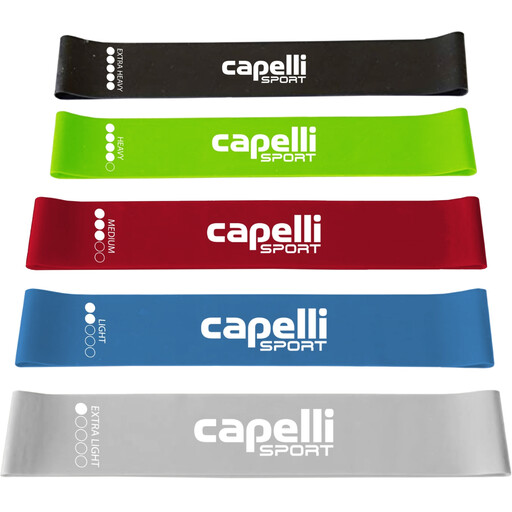
Why it stands out: This set is a comprehensive and scalable solution for anyone looking to incorporate resistance into their workouts. The variety of levels ensures steady progression and adaptability for all types of exercises.
Highlights:
Best for: Ideal for beginners who want a complete set to get started, as well as for intermediate users looking to vary the intensity of their at-home workouts.
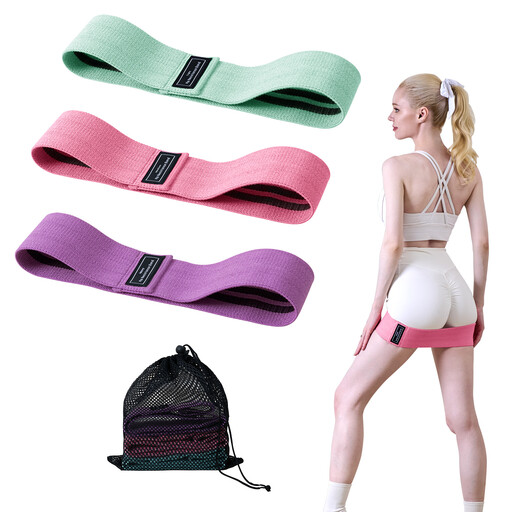
Why it stands out: Specially designed for the lower body, these fabric bands solve the problem of bands that roll up or slip. Their durability and comfort make them a prime choice for targeted exercises.
Highlights:
Best for: Perfect for those who want to focus on strengthening and sculpting their legs and glutes. It's the ultimate glute band, for use at home or in the gym.

Why it stands out: This set of flat bands shines with its versatility for mobility, stretching, and gentle strengthening exercises. Their 120 cm length allows for a wide range of motion.
Highlights:
Best for: Recommended for yoga and Pilates enthusiasts, individuals in rehabilitation, or anyone looking for a simple tool to improve their flexibility and mobility.
If these models didn't convince you, or if you want to explore other accessories for your workouts, take a look at our full range.
? Explore All Our Fitness and Strength Training Equipment
1. Can you really build muscle with a resistance band? Absolutely. It is entirely possible to build muscle with a strength training band. The principle is the same as with free weights: progressive overload. By choosing a resistance that challenges you on the final few reps and increasing the difficulty over time (by moving to a tougher band or combining several), you create the necessary stimulus for muscle growth.
2. What resistance level should a beginner choose? For a beginner, it's best to start with the lowest resistance in a resistance band set. This allows you to focus on proper form without risking injury. Once you've mastered the technique and the exercises become too easy, you can move up to the next level.
3. How do you care for your resistance bands? To extend their lifespan, a few simple steps are all it takes. After each session, wipe them with a damp cloth to remove sweat. Avoid exposing them to direct sunlight or heat sources. Store them in their bag, away from sharp objects. For latex bands, you can apply a little talcum powder from time to time to prevent them from sticking.