Households replacing a washing appliance
For a washing machine or dishwasher, compare energy, water, capacity, Eco programme duration, noise and repair options to avoid having to run extra cycles.


Start by choosing a category and capacity that suit the way you use the appliance, then compare the energy-label figures for like-for-like appliances rather than relying on the class letter alone. For washing appliances, consider energy, water, capacity, programme duration and noise together. Before replacing an appliance that is out of warranty, also check whether it can be repaired and which durability indicators apply.
For a washing machine or dishwasher, compare energy, water, capacity, Eco programme duration, noise and repair options to avoid having to run extra cycles.
When replacing a fridge, fridge freezer or freezer, compare kWh/year, usable capacity, freezer compartment and noise across similarly sized appliances.
If an appliance that is out of warranty breaks down, check the fault, available parts and the applicable durability or repairability indicator before deciding to replace it.
First compare appliances that provide the same service, then check the information that matters for your installation and everyday habits.
| Priority | What to check | Your needs |
|---|---|---|
| Like-for-like consumption | Compare the same sub-category, with similar volume or capacity. For refrigeration, look at kWh/year; for washing and dishwashing appliances, check kWh/100 cycles for the reference programme. | I want to reduce consumption without comparing appliances that are not designed for the same purpose. |
| Suitable capacity | Check the washing machine’s kg capacity, the dishwasher’s place settings or the fridge’s litres, based on your usual loads and storage needs. Also consider which convenience features are genuinely useful. | My usual loads should fit without buying an appliance that is too large or over-equipped. |
| Expected lifespan | For the model you are considering, look for the applicable durability or repairability score, spare parts, documentation and warranty terms. | I want to reduce the risk of having to replace the appliance too soon. |
| Everyday comfort | For washing appliances, check water use per cycle, noise, Eco programme duration and, where relevant, spin-drying performance. Check the dimensions and installation requirements. | The appliance must suit my home, an open-plan kitchen or my laundry schedule. |
The class does not, on its own, describe the service provided: a larger fridge, an oversized washing machine or a highly featured appliance can change its real-world consumption.
Compare appliances in the same category with similar volume or capacity, then check the kWh, water use, noise and programme duration that apply to that category.
For washing appliances, the label refers to a reference programme, such as Eco or Eco 40-60. The options and programmes you use at home may be different.
Check the reference programme and its duration before relying solely on its stated consumption.
A functional fault can sometimes be repaired, but not all repairs or appliances are covered by the same support or funding conditions.
Ask for a diagnosis, check the remaining warranty, parts availability and the applicable terms before comparing the cost of a repair with buying a new appliance.
The durability score provides information about repairability and reliability for the categories concerned, while the energy label covers consumption and other operating parameters.
For a washing machine, use both indicators: the label for energy, water, capacity and noise, and the score for its potential service life.
Joybuy options for comparing washing machines in different capacities and a fridge freezer when replacing an appliance based on your real-world needs.
 Image unavailable
An option for everyday laundry when 7 kg matches your household’s usual loads.
Class A, 1,400 rpm, declared consumption of 40 kWh/100 cycles and 44 L/cycle; 175-minute Eco programme and 72 dB spin noise, class A.
Advertised repairability score of 8.6/10 and spare parts advertised as available for 11 years. Check the manual, connections and installation space before buying.
 Image unavailable
Its top-loading design and 405 mm width may suit a narrow space, provided there is enough clearance to open the lid.
Class A, 1,200 rpm, declared consumption of 40 kWh/100 cycles and 42 L/cycle; 3 h 28 min Eco 40-60 programme and 77 dB(A) spin noise, class C.
Check the durability or repairability score, available parts, warranty and whether the programme duration fits your habits.
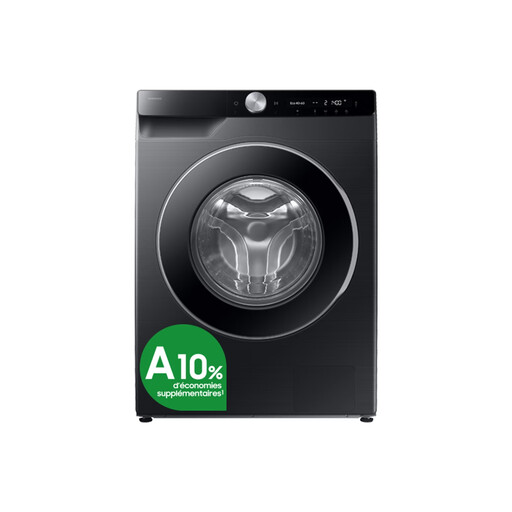 Image unavailable
This 9 kg capacity is best suited to households that regularly handle large loads.
Class A, 1,400 rpm, declared consumption of 44 kWh/100 cycles and 50 L/cycle; 3 h 48 min Eco 40-60 programme, 72 dB noise, class A, and spin-drying class B.
Check the dimensions, including the 55 cm depth excluding the door, as well as repairability, parts and warranty information.
 Image unavailable
A 10 kg capacity is worth considering for frequent large loads and a sufficiently deep installation space.
Class A, 1,400 rpm, declared consumption of 41 kWh/100 cycles and 48 L/cycle; 3 h 58 min Eco 40-60 cycle and 68 dB(A) spin noise, class A.
Advertised dimensions: 595 × 850 × 611 mm. Check that the capacity suits your needs, along with repairability information, parts and warranty terms.
 Image unavailable
An option for replacing a fridge freezer when 333 L meets your kitchen’s storage needs.
Class C, declared annual consumption of 169 kWh, total volume of 333 L and noise level of 34 dB.
Advertised dimensions: 597 × 1,860 × 674 mm; allow at least 5 cm of clearance at the sides, above and behind, then check the information on parts and support.
Not when their sub-category, volume or capacity differs. First compare appliances that provide the same service, then compare the label figures: kWh/year and volumes for refrigeration; kWh/100 cycles, water, capacity, Eco duration and noise for washing and dishwashing appliances.
It shows, among other details, the A to G class, energy consumption per 100 cycles of the Eco programme, the programme duration, water use per cycle, capacity and noise level. The European Commission presents the Eco programme as the reference programme for efficiency and operating requirements.
In France, the durability score has been compulsory for new washing machines since April 2025, according to the ministry responsible for ecology. Rated out of 10, it combines repairability and reliability; it complements the energy label but does not directly measure electricity consumption.
Yes. EU ecodesign rules provide, among other requirements, for certain spare parts to be available for ten years for washing machines; for dishwashers, some parts must also remain available for ten years after the model is withdrawn from the market. Check the information for the exact model, including in EPREL where these details are provided.
Yes, if the fault is functional, the appliance is out of warranty and the scheme’s conditions are met. ecosystem states that the Repair Bonus may apply when using a QualiRépar repairer for certain appliances, while cosmetic damage, removable accessories and certain faults linked to installation or misuse remain excluded.