Households mindful of their energy use
You’re thinking of replacing an appliance that runs continuously and want to compare models without relying on its age alone. ADEME recommends taking the appliance’s energy use and features into account.


To replace a fridge that runs continuously, first choose the compartments and capacity that suit your habits, then compare the kWh/year figures for models that meet those needs. ADEME notes that a newer model may use less energy, but an appliance that is too large or has more features than you need can reduce the benefits of upgrading. If you’re buying second-hand, also check the condition of the specific appliance and any energy information available.
You’re thinking of replacing an appliance that runs continuously and want to compare models without relying on its age alone. ADEME recommends taking the appliance’s energy use and features into account.
You need enough room for fresh food and, depending on your habits, frozen food too. The capacity of each compartment matters more than the total capacity alone.
You need an appliance that fits a designated space and works with its door-fitting system, or you need to check the condition and guarantees of a used model. The DGCCRF sets out the information to check when a reconditioned product is sold by a professional.
ADEME notes that a fridge runs continuously. Compare the annual energy use of models that meet your storage needs, but don’t assume this alone will tell you how much you’ll save at home.
| What matters | What to check | Who this matters to |
|---|---|---|
| Annual energy use | Check the kWh/year figure for the exact model and compare appliances suited to your storage needs. | If I’m replacing an appliance that runs all the time, I want to compare energy use without assuming how much I’ll save at home. Around 36 % of consumers prioritise kWh/year. |
| Compartment capacities | Compare the fridge and freezer capacities separately; check whether you need a proper freezer compartment. | If I regularly store fresh and frozen food, I check that each compartment has enough useful space. Around 29 % of consumers prioritise storage that suits their habits. |
| Kitchen fit | Measure the space and check the model’s dimensions, niche requirements and door-fitting system. | If my fridge needs to fit into a niche or suit a particular layout, I check the installation requirements before comparing appliances. Kitchen compatibility is a priority for around 21 % of consumers. |
| Condition and guarantees for second-hand appliances | Identify the model and ask for information about the condition of the specific appliance and the checks carried out. | When buying a used or reconditioned appliance, I want to inspect the appliance being sold and understand which guarantees apply. Around 14 % of consumers put these checks first. |
ADEME says newer models can use less energy, but size and features also affect energy use.
Compare the kWh/year figures for models with capacities and compartments that suit your needs. Unless you have a comparable measurement for your old appliance, don’t assume how much you’ll save.
A fridge-freezer splits its capacity between the fridge and freezer sections. The total capacity alone won’t tell you whether each section will suit your habits.
Make a separate note of how much space you need for fresh and frozen food before choosing between a single-door fridge and a fridge-freezer.
The DGCCRF notes that the technical and cosmetic information for a reconditioned product must relate to the item being sold, not simply to the original new model.
Ask for the model details, the stated condition and the checks carried out on the specific appliance. The legal guarantee of conformity also applies to second-hand goods sold by a professional.
Niche dimensions and the fitting system vary by model; you can’t work them out from its capacity.
Check the stated dimensions and door-fitting system for your chosen model before ordering. If it’s not compatible, you may not be able to install it as planned or may need a different installation.
Documented models include a single-door fridge without a freezer compartment and a freestanding fridge-freezer. These are two configurations to compare depending on the compartments you need.
The KFF6DD18S4 is an example of a built-in single-door fridge to consider if your kitchen requires a specific niche.
Documented models include freestanding single-door appliances and built-in fridges, which can be useful when the type of installation guides your choice.
This selection features freestanding and built-in fridge-freezers, so you can compare compartment capacities and the annual energy-use figures listed for each model.
 Image unavailable
Worth considering if you use both the fridge and freezer; check that the capacity of each section suits your habits.
Stated capacities: 230 L for the fridge and 114 L for the freezer. Stated energy use: 254 kWh/year. Energy class E. No Frost.
 Image unavailable
Worth considering if you need both fridge and freezer space in a fitted kitchen; check that the niche and sliding-hinge fitting system are compatible.
Stated capacities: 186 L for the fridge and 62 L for the freezer. TwinTech Total No Frost and ECO mode are listed for this model.
 Image unavailable
Worth considering for a fitted kitchen if the separate capacities and dimensions suit the space available.
Stated capacities: 176 L for the fridge and 76 L for the freezer. Stated energy use: 150 kWh/year. Dimensions: 540 × 545 × 1772 mm. Class C.
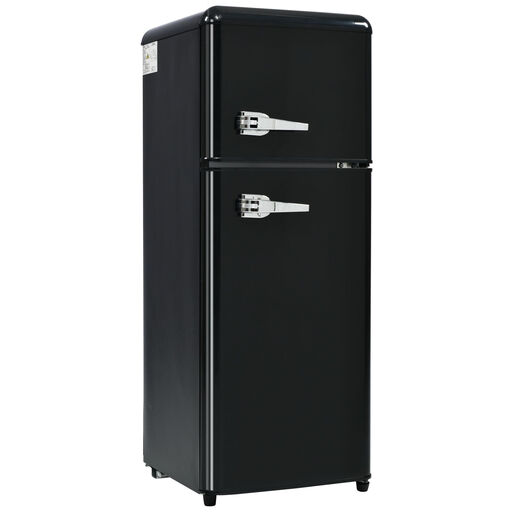 Image unavailable
Only consider this if a compact format meets your storage needs; check the capacity before choosing it to replace a family-sized appliance.
Stated capacity: 92 L, including a 28 L freezer compartment. Energy class D.
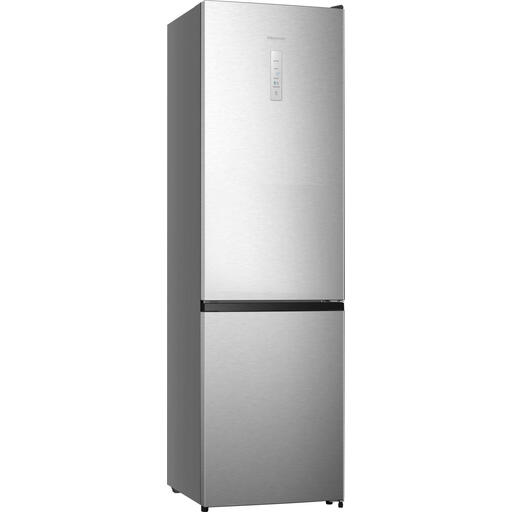 Image unavailable
Worth comparing if you need separate capacities for fresh and frozen food and want a freestanding appliance.
Stated capacities: 238 L for the fridge and 98 L for the freezer. Stated energy use: 135 kWh/year. Total No Frost and an Inverter compressor are listed for this model.
Compare the kWh/year figures for the exact models, along with the fridge and freezer capacities that meet your needs. The European Commission says the current A to G scale has applied to fridges since 1 March 2021, so an old A+++ rating can’t be compared directly with a current class. Scan the label’s QR code to access model information in EPREL. The energy-use figure shown doesn’t measure the energy use of your old appliance.
No, not in every case. According to the DGCCRF, a new label isn’t required if reconditioning doesn’t change the original performance, intended use or type, and if the original product had already been placed on the European market. Ask for information about the specific appliance being sold.
The legal guarantee of conformity applies to both new and second-hand goods sold by a professional; claims must be brought within two years of delivery. If a fault is found, the presumption that it existed at the time of purchase lasts for one year for second-hand goods and two years for new goods. A commercial guarantee is separate and optional. For online purchases from a professional seller, the DGCCRF notes that you have a 14-calendar-day right to cancel, subject to the applicable conditions.
Follow the model’s instructions and check its temperature regularly. Anses says the coldest area for storing food should be between 0 and +4 °C. Don’t overfill the appliance, so cold air can circulate, and clean it regularly.
The durability index mentioned by the ministry applies to televisions and washing machines, not fridges. When choosing a fridge, don’t confuse this index with its energy label.