You’re keeping your existing worktop
The existing cut-out, the space in the cabinet and the connection will determine which models are suitable. Compare your kitchen measurements with the instructions for the exact model, not just its stated width.


When replacing a built-in hob, first choose a model that fits your worktop cut-out, the space beneath the worktop and your connection: a “60 cm” label alone isn’t enough. Induction requires compatible cookware, while ceramic hobs avoid this restriction. A venting hob also means planning for ventilation. A mixed-fuel hob is only worth considering here if you’re keeping a suitable gas supply.
The existing cut-out, the space in the cabinet and the connection will determine which models are suitable. Compare your kitchen measurements with the instructions for the exact model, not just its stated width.
According to UFC-Que Choisir, induction requires compatible saucepans and frying pans. If you don’t want to replace your usual cookware, check the bases before choosing this technology.
A venting hob may suit you if you’d rather not install a cooker hood above the cooking zones. You’ll also need to consider the space beneath the worktop, whether to vent outside or recirculate air, and filter maintenance.
When replacing a built-in hob, first rule out models that won’t fit the existing cut-out or connection. Then compare the technology, cooking zones and, if needed, extraction options.
Consider it if: you want this technology and have compatible cookware.
Bear in mind: cookware with an incompatible base won’t heat up on the cooking zone.
Consider it if: keeping your existing cookware without induction’s magnetic compatibility requirement is a priority.
Bear in mind: the cooking zone heats by radiant heat and stays hot after use.
Consider it if: you want to keep gas cooking zones and already have a suitable installation.
Bear in mind: the requirements of each fuel type need to be considered separately; installing a new gas supply is beyond the scope of a straightforward replacement.
Consider it if: you want extraction built into the hob rather than a cooker hood above it.
Bear in mind: the appliance takes up more space beneath the worktop, and you’ll need to choose between external extraction and recirculation.
| Criteria | What to check | What matters to shoppers |
|---|---|---|
| Cut-out and connection | Measure the cut-out and clearance beneath the worktop; check the model’s instructions against your existing power supply. | If I’m keeping my worktop and electrical installation, I want to avoid choosing a hob that won’t fit. Around 36% of shoppers would make compatibility their top priority. |
| Cookware | Check the base of your essential cookware before choosing induction, using a magnet if necessary. | I want to carry on using my usual saucepans and frying pans without having to replace them. This would be a priority for around 29% of shoppers. |
| Cooking zones | Compare the number and layout of the cooking zones with the dishes you cook at the same time and the size of your largest pans. | When I’m preparing several dishes at once, I want each pan to have a suitable zone. Around 21% of shoppers would put this first. |
| Integrated extraction | Check the space beneath the worktop and the planned ventilation method; for recirculation, consider filter maintenance. | If I don’t want a cooker hood above the hob, I’m looking to build extraction into the cooking surface. This would come first for around 14% of shoppers. |
Two hobs with similar overall widths may need different cut-outs or take up different amounts of space inside the cabinet.
Measure the opening and available space, then compare them with the installation diagram for the exact model.
A mismatched cut-out may mean adapting the worktop.
Cookware without a ferromagnetic base won’t work on an induction cooking zone.
Test the saucepans and frying pans you actually use before choosing between induction, ceramic and, if you’re keeping gas, a mixed-fuel hob.
You may need to replace some incompatible cookware.
Its extraction system takes up space beneath the worktop. According to UFC-Que Choisir, extraction performance can also vary depending on the installation method.
Check the cabinet, available ventilation options and the maintenance instructions for the model you choose.
Recirculation may require you to replace the filters, while changes to the cabinet or ventilation may also need professional work.
The stated power rating of a hob doesn’t, on its own, tell you what connection is available in your home.
Compare the requirements in the instructions with your existing installation. If you’re unsure, ask a professional to assess it. Installing a new electrical circuit isn’t part of simply choosing a replacement model.
These brands offer examples of sizes and configurations to compare. Only the documentation for the specific model you choose will tell you what’s involved in fitting it.
The range includes induction hobs and standard-size ceramic hobs.
Electrolux France’s range includes standard induction hobs and venting hobs.
Siemens Électroménager France features models including the ED611BS16E, a standard-width venting induction hob.
Whirlpool France’s range includes induction hobs with a flexible zone on selected models.
This selection includes ceramic and induction hobs, including one with integrated extraction. The portable induction hob listed here can be used for separate cooking, but it isn’t a replacement for a built-in hob.
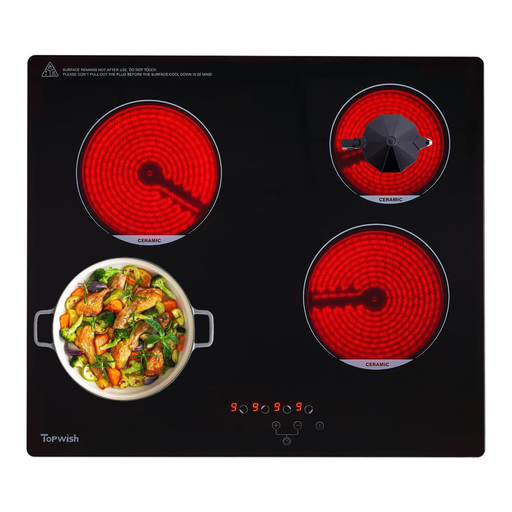 Image unavailable
Worth considering if you want to replace a built-in hob without the cookware compatibility requirement that comes with induction.
The product name lists four zones, touch controls, a child lock and a residual heat indicator. Compare the installation instructions and connection requirements with your existing setup.
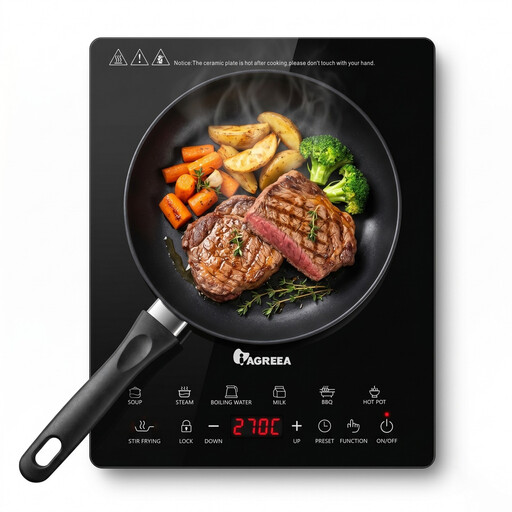 Image unavailable
This portable hob is suitable for cooking separately; it isn’t a built-in model to choose as a direct replacement for an existing hob.
The product name lists eight power levels and cookware sizes from 12 to 26 cm. Also check that your cookware is compatible with induction.
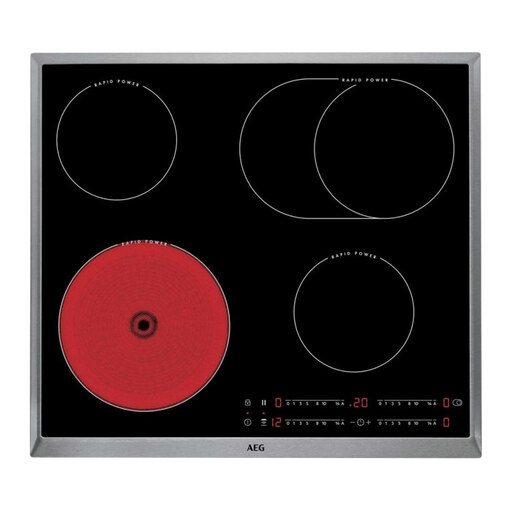 Image unavailable
Worth comparing if you want to keep cooking on a ceramic hob when you replace your existing one.
Before checking how it fits your kitchen, consult the instructions for this model to confirm its cut-out dimensions, clearances and connection requirements.
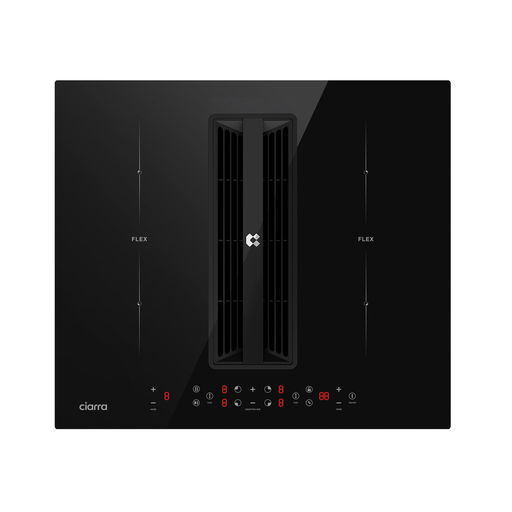 Image unavailable
Worth considering if you want to combine induction cooking and extraction in your worktop.
The product name lists four zones with Flex and Boost functions. Check the available height, the suitable ventilation method and whether you need to buy the CBEHKIT installation accessories listed for this model. The Plasma⁺ name alone doesn’t establish its extraction performance.
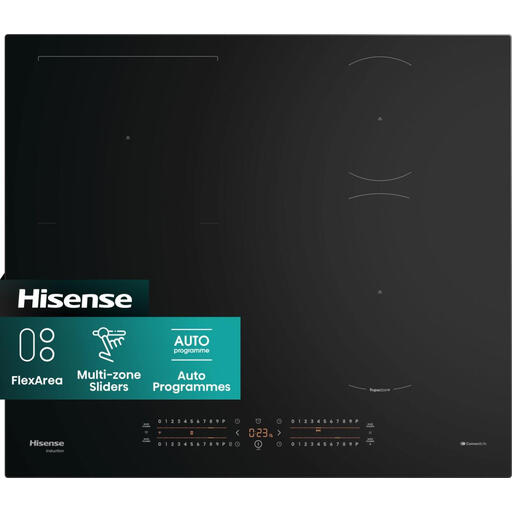 Image unavailable
Worth comparing if you want to switch to induction and are looking for a standard-width model.
Check that your cookware is compatible, then compare this model’s cut-out dimensions and connection instructions with your existing installation.
Yes, if their bases are ferromagnetic. UFC-Que Choisir notes that induction requires compatible cookware, so check the pans you use most often, using a magnet if necessary.
No. The width doesn’t guarantee the same cut-out or the same amount of space beneath the worktop. Measure the opening and compare the dimensions and installation diagram for the new model before buying.
Choose a method that suits both the model and your kitchen: external extraction requires a suitable outlet to the outside, while recirculation means maintaining the filters. UFC-Que Choisir reports that extraction results vary depending on the installation method, so also check the space available beneath the worktop.
Don’t assume that this figure applies to your replacement. Promotelec specifies a dedicated 32 A circuit for relevant new or fully renovated installations. For your existing installation, compare the hob’s instructions with the available connection and ask a professional to check it if you’re unsure.