Households looking to keep their pans
If you’re replacing a hob, check that your cookware is compatible before choosing induction: a pan without a ferromagnetic base won’t activate the zone, according to UFC-Que Choisir.


When replacing a built-in hob, first choose a cooking technology that works with your cookware and available power supplies. Then check the cut-out dimensions and the cooking zones you actually need. Induction requires cookware with a ferromagnetic base; ceramic hobs with radiant zones don’t have this requirement, while a mixed hob also means checking the specific requirements for a gas installation.
If you’re replacing a hob, check that your cookware is compatible before choosing induction: a pan without a ferromagnetic base won’t activate the zone, according to UFC-Que Choisir.
If you cook with large pans or several pieces of cookware at once, compare the size and layout of the zones, and check whether they can be combined on the model you’re considering.
When replacing a built-in hob, check the worktop cut-out and the available power supplies. A mixed hob also means checking the requirements for the gas installation.
Start with the heating technology and the cookware you plan to keep, then check the installation and the layout of the cooking zones. A flexible zone is a feature of some models, not a separate heating technology.
| Factor | What to check | Who it matters most to |
|---|---|---|
| Cookware compatibility | Check the bases of the cookware you use and the heating technology listed in the model specifications. | If I want to keep my pans, I check they’re compatible before choosing induction. Around 29% of consumers prioritise keeping their cookware. |
| Fit and installation | Compare the dimensions of the cut-out and hob, then check the requirements in the installation instructions and the available power supplies. | To replace a hob without discovering it’s incompatible during installation, I check the space and existing installation. Around 23% of consumers prioritise how the hob fits and the safety of the installation. |
| Number and layout of cooking zones | Check the dimensions and spacing of the zones, and whether they can be combined on the specific model. | If I use large pans or several cooking zones, I look at their actual layout rather than just the advertised number. Around 18% of consumers prioritise the layout of the zones. |
| Overall cost of replacing the hob | Factor in any cookware you may need to replace and any adaptations required. To compare specific models, look at cooking tests carried out under the same conditions. | When I want to manage the cost of replacing and using a hob, I look beyond its price tag. Around 18% of consumers make the overall cost their priority. |
| Keeping a gas burner | Check the distribution of the cooking zones and the requirements for the model’s gas supply and installation. | If I want to keep cooking over a flame, I check the installation requirements for a mixed hob in my kitchen. Around 12% of consumers prioritise having a gas burner. |
A glass surface alone doesn’t tell you whether a hob uses induction or radiant cooking zones. This distinction matters if you want to keep cookware that isn’t compatible with induction.
Check the heating technology in the model specifications and make sure your cookware bases are suitable before you choose.
The hob’s dimensions alone aren’t enough to confirm that it will fit the cut-out or work with the existing power supplies.
Measure the space and check the installation instructions for the specific model before arranging installation.
A mixed hob brings additional gas-related requirements, which may include its position and ventilation. The paperwork required also depends on the work being carried out.
Before choosing this option, clarify what work is planned and what paperwork applies. Cegibat, GRDF’s technical expertise centre, outlines the points to consider when installing a gas appliance.
The layout of the zones may limit how many pans you can use at the same time. UFC-Que Choisir noted this issue with a specific Bosch model; this finding doesn’t apply to every hob from the brand.
Compare the layout of the zones with your cookware and cooking habits, without generalising from the results for another model.
The PUJ611BB5E is an example of a three-zone induction layout.
The BHV6232FOK and DIV6747C are examples of a radiant hob and an induction hob respectively.
The JZC 63312 AB is an example of a mixed gas and induction hob.
The EX651HEC1F is an example of a four-zone induction hob with a flexible zone.
The CBIZ2432B is an example of a three-zone induction layout with a flex zone.
This selection includes built-in induction and ceramic hobs for replacing an existing hob. Check cookware compatibility, cut-out dimensions and the installation requirements for the model you choose.
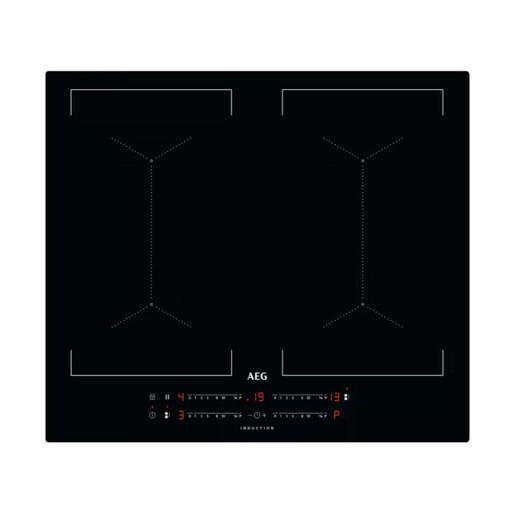 Image unavailable
Worth considering if you’re looking for a built-in induction hob with several zones and a Bridge function designed for large pans.
The product name specifies 60 cm, four zones and a Bridge function. Induction requires cookware with a ferromagnetic base.
The product description recommends a suitable power supply and installation by a qualified professional.
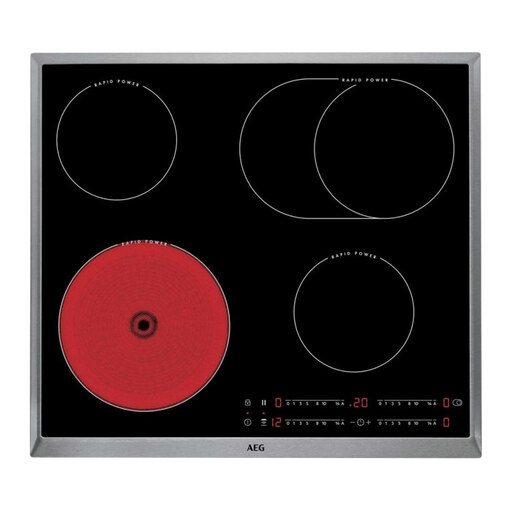 Image unavailable
Worth considering if you’d prefer a ceramic hob to an induction hob as a replacement.
The product name specifies a 60 cm ceramic hob.
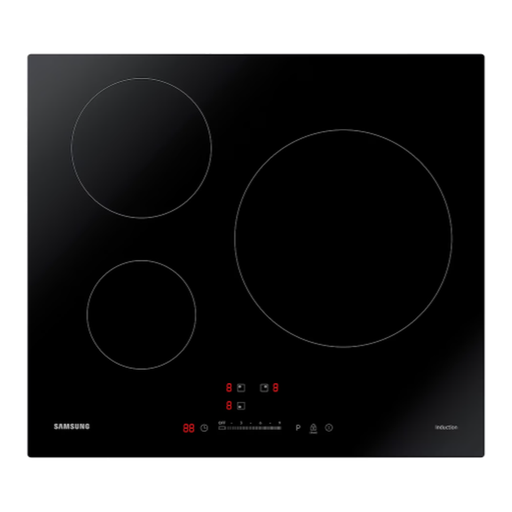 Image unavailable
Worth considering if you’re looking for a three-zone built-in induction hob for cooking on several zones.
The product name specifies three zones and 7200 W. Induction requires compatible cookware with a ferromagnetic base.
The product description recommends installation by a qualified electrician on a dedicated circuit and notes a risk of interference for people with a pacemaker or similar medical device.
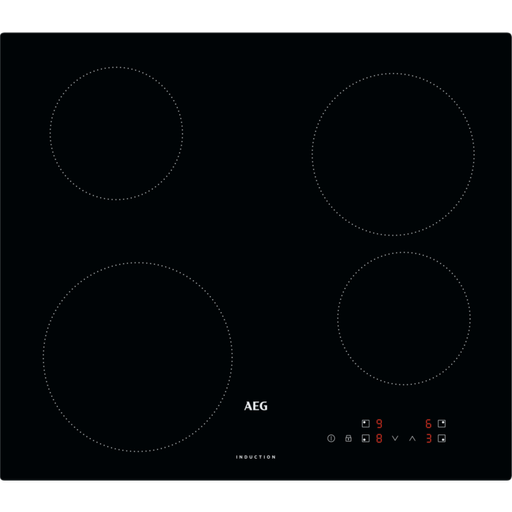 Image unavailable
Worth considering if you’re looking for a four-zone induction hob and the mounting type suits your worktop.
The product name specifies four zones, semi-recessed mounting, a two-phase (Perilex) power supply and a width of 59 cm. It isn’t suitable for flush mounting.
Induction requires compatible cookware with a ferromagnetic base; the product description recommends installation by a qualified specialist.
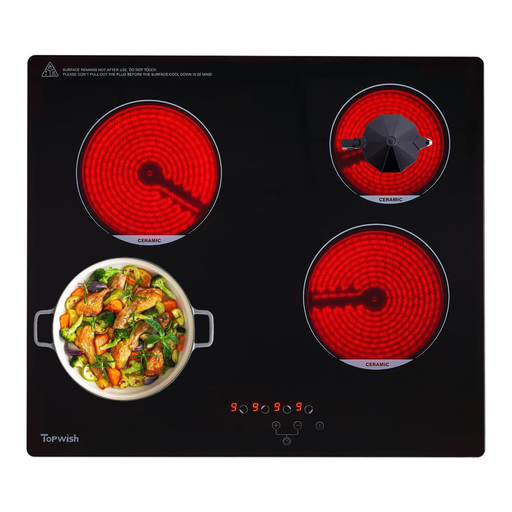 Image unavailable
Worth considering if you’re looking for a four-zone built-in ceramic hob to replace an existing hob.
The product name specifies four zones, 60 cm and 6600 W.
The product description states that a plug isn’t included and recommends connection by a qualified electrician.
Check that their bases are ferromagnetic: an induction zone won’t start with cookware that doesn’t have this property, according to UFC-Que Choisir. Also check the size limits for the cooking zones on the model you choose.
No. Enedis states that an induction hob requires a dedicated circuit, a 30 mA Type A RCD and a circuit breaker rated at no more than 32 A on that circuit. If you haven’t confirmed that the existing installation complies or is suitable for the new appliance’s instructions, ask a qualified professional to check it before installation. This guidance isn’t a set of instructions for connecting the hob.
No, a certificate isn’t always required. In France, Article 21 of the Order of 23 February 2018 provides for a certificate for a new installation or a modification to an existing gas installation, with exceptions, including certain minor modifications. The paperwork required depends on the work actually being carried out; the rules cited don’t establish that a professional is legally required for every like-for-like replacement. If the gas installation is being modified, ask a qualified professional to confirm what work is involved and what paperwork applies.
Check the layout of the cooking zones and the power supplies specified in the instructions, then have the gas installation requirements for your property checked, including the positioning and ventilation. Having an old gas hob doesn’t confirm that a new mixed hob can be installed in the same way.
No. Both induction and radiant hobs can have a ceramic glass surface. Check the heating technology in the model specifications. For a radiant hob, take account of residual heat and the corresponding indicator, if one is fitted.