When replacing a fridge or freezer, start by working out how much chilled and frozen food your household needs to store. Then compare the kWh/year figures for models with similar capacities and features. A fridge freezer covers both needs; a fridge on its own is suitable if you don’t need to freeze food in that appliance; and a separate freezer can provide more frozen storage, but it means running an additional appliance. The European Commission says the label includes information such as annual energy consumption and compartment volumes. You should also check the installation instructions for the model you choose.
Who are these options for?
Households storing fresh and frozen food
If you’re replacing an appliance that handled both jobs, compare the litres of chilled and frozen storage separately, then check the kWh/year figures. The European energy label provides these details for fridges and freezers.
Households with limited kitchen space
If the appliance needs to fit into an alcove or sit close to other units, you’ll also need to check its dimensions, door clearance and installation instructions. Que Choisir highlights the importance of positioning and airflow.
Households that freeze food in bulk
If you need more frozen storage than the fridge freezer you’re considering can offer, compare the capacity and annual energy consumption of a separate freezer. Que Choisir points out that how much frozen food you need to store can influence your choice of appliance.
What to compare before replacing your appliance
First choose the type of appliance that suits the way you use it. Then check its capacity, annual energy consumption and the requirements of the space where it will be installed.
Fridge
Consider this if: you don’t need a freezer compartment in this appliance and would rather use all its capacity for chilled food.
Bear in mind: it won’t replace a freezer if you need one for your frozen food.
Fridge freezer
Consider this if: you regularly store both fresh and frozen food in one appliance.
Bear in mind: check the capacity of each compartment separately. The total capacity alone won’t tell you how it’s divided.
Separate freezer
Consider this if: you need more frozen storage than a fridge freezer that fits your kitchen can provide.
Bear in mind: you’ll need to find space for it and add its energy consumption to that of your fridge.
| What matters to you |
What to check |
Who will find this most important? |
| Electricity consumption |
Check the kWh/year figures and compare appliances with similar capacities and features. The label alone isn’t enough to work out how much you’ll save. |
If I’m replacing an appliance that runs continuously, I want to compare its annual energy consumption with that of the new model without mistaking this for my future bill. Around 36% of consumers concerned prioritise electricity consumption. |
| Capacity split |
Compare the capacity in litres of the chilled and frozen compartments separately, based on your shopping habits. |
If I regularly store fresh and frozen food, I want each compartment to suit my needs rather than relying on the total capacity. Around 29% of consumers concerned prioritise this split. |
| Where it will go in the kitchen |
Measure the available space and check the model’s instructions for ventilation requirements, clearances and distances from heat sources. |
If an alcove or specific space determines what I can buy, I want to make sure the appliance can be installed there in line with its instructions. Around 21% of consumers concerned put how the appliance fits into their kitchen first. |
| Freezing capacity |
Compare the frozen storage capacity of a fridge freezer with that of a separate freezer, then add together the kWh/year figures for appliances that will be used at the same time. |
If I keep a large stock of frozen food, I want enough capacity without overlooking the space and energy consumption needed for an extra appliance. Around 14% of consumers concerned prioritise a large freezing capacity. |
Mistakes to avoid when replacing your appliance
-
Assuming a better energy rating guarantees savings
The label describes the new appliance. It doesn’t tell you how much energy your old one uses or what your household pays for electricity.
Compare the kWh/year figures for models that meet similar needs. To estimate your own savings, you’ll also need to know how much energy your old appliance uses and your electricity tariff.
-
Choosing based on total capacity alone
Two appliances with a similar total capacity can offer very different amounts of space for fresh and frozen food.
Check the capacity in litres of each compartment before choosing a fridge, fridge freezer or separate appliance.
-
Allowing the same clearance for every model
General advice about airflow doesn’t replace the manufacturer’s installation instructions for the model you’ve chosen, especially for a built-in appliance.
Check the dimensions, ventilation requirements and distances from heat sources in the instructions for the exact model.
-
Adding a freezer without counting the energy use of both appliances
A separate freezer gives you more frozen storage, but it doesn’t replace a fridge and will run alongside your other appliance.
Compare its capacity with that of a fridge freezer, and add together the kWh/year figures for the appliances you’ll keep running.
Brands to consider as a starting point
Bosch
An example of a freestanding fridge freezer: the KGN36NLEA divides its capacity between chilled and frozen storage.
- Bosch lists 216 l for the fridge compartment, 89 l for the freezer and 239 kWh/year for the KGN36NLEA.
- The “Perfect Fit” description doesn’t replace checking the installation instructions for the specific variant you buy.
LG
The GBV3100EEP is an example of a fridge freezer with a different split between compartments.
- LG lists a total capacity of 344 l, including 110 l for the freezer compartment, and energy consumption of 267 kWh/year for this model.
- The cooling technologies described by the brand don’t provide an independent measure of the savings you’ll make at home.
Haier
The HDPR1618CNPK is an example of a freestanding fridge freezer with extra features.
- Haier lists a width of 595 mm, a C energy rating, No Frost and connected features for this model.
- The energy rating alone can’t tell you how much you’ll save. Check the kWh/year figure and make sure the appliance can be installed where you plan to put it.
Liebherr
The models listed include a fridge, a built-in fridge freezer and a standalone freezer.
- Liebherr lists capacities of 382 l for the RBc 5220, 244 l for the ICBNdi 5123 and 238 l for the FNd 5026.
- These appliances serve different needs. Check the compartments, kWh/year figures and instructions for your chosen model before comparing them.
Electrolux
The LRB3AE88S is an example of a built-in fridge without a freezer compartment.
- Electrolux lists 142 l of fridge capacity, 93 kWh/year and an installation niche measuring 880 × 560 × 550 mm for this model.
- Without a freezer compartment, this fridge won’t replace a fridge freezer on its own if you need to store frozen food.
Fridge freezers available on Joybuy
The models below are fridge freezers, with both freestanding and built-in options. Compare their capacities and check the dimensions and installation instructions to make sure they suit your kitchen.
 Image unavailable
Samsung RB33B612EBN, 344 L, energy rating E
This fridge freezer combines chilled and frozen storage in one appliance.
Listed capacity: 344 L. Black finish; energy rating E.
View on Joybuy
 Image unavailable
AEG NSC6M18FES, 249 L, energy rating E
This built-in fridge freezer may be worth considering if your kitchen has a suitable housing unit.
Listed capacity: 249 L; TwinTech No Frost; white finish; energy rating E.
View on Joybuy
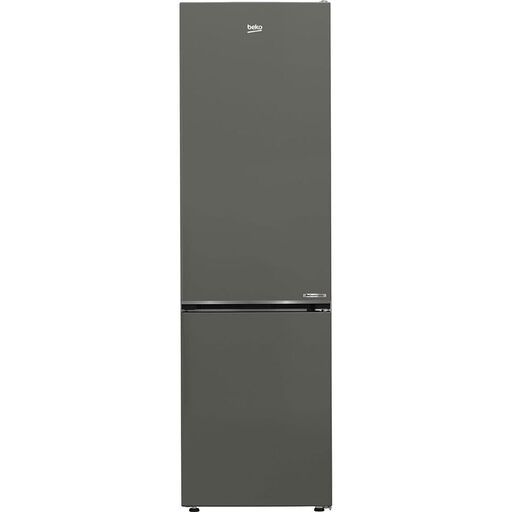 Image unavailable
Beko B5RCNE406HG, 355 L, energy rating C
This freestanding model combines fridge and freezer compartments.
Listed capacity: 355 L; Total No Frost; grey finish; energy rating C.
View on Joybuy
 Image unavailable
Sonlu CC-520WE, 444 L, energy rating E
This fridge freezer is worth considering if you’re looking for a listed total capacity of 444 L.
Listed total capacity: 444 L; energy rating E.
View on Joybuy
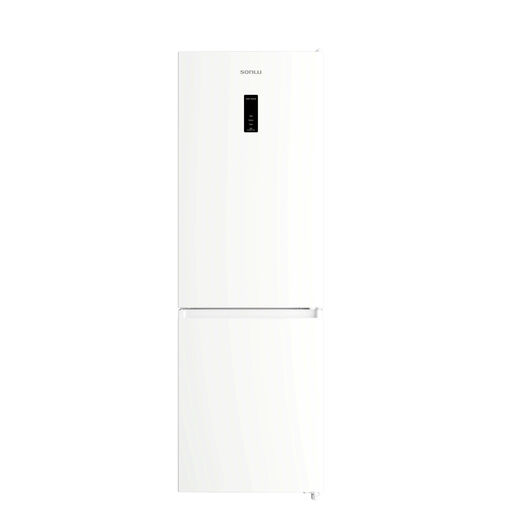 Image unavailable
Sonlu CD-350RW, 310 L, energy rating E
This freestanding fridge freezer divides its listed capacity between chilled and frozen storage.
Total capacity: 310 L; fridge: 211 L; freezer: 99 L; width: 60 cm; energy rating E.
View on Joybuy
Frequently asked questions
How can I read the label without confusing the energy rating with savings on my bill?
The label for fridges and freezers includes the energy rating, kWh/year and compartment capacities. The European Commission recommends using these details to compare appliances. Any savings in pounds will also depend on how much energy your old model uses and your electricity tariff.
Can I allow the same clearance behind every fridge?
No. The clearance required depends on the model and how it’s installed. Que Choisir offers general advice about airflow, but you should check the instructions for the specific model you choose, especially if it’s built in or positioned near a heat source.
What temperature should I aim for to keep fresh food?
Anses recommends a temperature of between 0 and +4 °C at the coldest point in the fridge, and advises checking it regularly. Arrange food without overfilling the appliance so that cold air can circulate.


