When replacing a fridge or freezer, first compare the kWh/year figures for models of the same type and with similar capacities, rather than looking at their energy rating alone. Then choose the balance between fridge and freezer space to suit the food you store, and check where the appliance will go. ADEME points out that an appliance that is too large, or installed in a room where the temperature is unsuitable, can use more energy or fail to work properly.
Who is this choice for?
Households mindful of long-term energy use
If you’re replacing an older appliance, compare the stated kWh/year figures for models with similar capacities and intended uses. A difference on the energy label alone doesn’t guarantee savings for your household.
Households with specific storage needs
If you store different amounts of fresh and frozen food, check the capacity in litres of each compartment. Also measure the space available, particularly for a built-in appliance.
People who care about noise and maintenance
If your kitchen is close to a living area, the stated noise level could influence your choice. Also check the defrosting method and, for the model you’re considering, whether repairs are possible.
Which features should you compare?
The right size depends first on how much room you need for fresh and frozen food. Then compare the stated energy consumption of appliances that can meet the same needs.
Fridge
Consider one if: you mainly need fresh-food storage and already have a freezer, or don’t freeze much food.
Bear in mind: if it has a freezer compartment, check its capacity separately. The total capacity won’t tell you how much freezer space you get.
Fridge-freezer
Consider one if: you use both types of storage every day and want them in a single appliance.
Bear in mind: two fridge-freezers with the same total capacity can have very different amounts of space for fresh and frozen food.
Separate freezer
Consider one if: freezing is your main priority and you have a suitable space for it.
Bear in mind: choosing a capacity larger than you need, or placing the appliance in a room with an unsuitable temperature, could make it the wrong choice. Check the installation requirements for the model.
| Feature |
What to check |
Who is it for? |
| Energy consumption |
The kWh/year figure on the label for appliances of the same type and with similar capacities; the energy rating alone isn’t enough. |
I’m replacing an appliance that runs continuously and want to keep energy use under control without losing the storage space I need. Around 40% of consumers make this their top priority. |
| Storage and size |
The capacity in litres for fresh and frozen food separately, followed by the appliance dimensions or the size of its housing. |
I need the new model to fit all my frozen food without extending beyond the space available. Around 40% of consumers put this need first. |
| Noise and maintenance |
The stated noise level in dB and the defrosting method for the specific model. |
My kitchen is close to a living area, or manual defrosting would be a regular chore. Around 20% of consumers prioritise this everyday convenience. |
Mistakes to avoid
-
Choosing by energy rating alone
The rating doesn’t tell you the annual energy consumption or how much space is available for fresh and frozen food. The European energy label also shows kWh/year, capacity and noise level.
Compare the kWh/year figures for models with similar capacities and intended uses, then check the usable capacity of each compartment.
-
Choosing far more capacity than you need
ADEME notes that an appliance’s size and certain additional features can increase its energy consumption.
Start with your storage habits and choose only the features you’ll actually use.
-
Overlooking the housing and installation room
A built-in appliance must fit the unit dimensions and suit the door-fitting system. ADEME also notes that a room that is too hot or too cold can affect how a fridge or freezer works.
Measure the housing and access points, then check the installation and temperature requirements for the model you choose.
-
Assuming the stated kWh/year guarantees savings
The energy label’s consumption figure is useful for comparing models, but how you use and install the appliance will affect its energy use in your home.
Use this figure as a point of comparison, not as a promise of individual savings.
Brands to consider, depending on the model you’re looking for
Bosch
Bosch Home Appliances offers fridges and freezers in a range of capacities, including No Frost models.
- The range includes a choice of sizes and capacities.
- Compare the kWh/year, capacity and noise level for the specific model. The brand’s energy-saving claims don’t apply to every model.
Liebherr
Liebherr product pages for built-in models can give details such as housing dimensions, capacity, noise level and door-fitting system.
- These details help you check whether a model will fit an existing kitchen unit.
- The figures on a product page apply to that specific model. Remember to check its annual energy consumption too.
Whirlpool
Whirlpool France lists built-in fridge-freezers and models with automatic defrosting.
- You can use the model reference to check the cooling system and look up compatible parts from the brand.
- Check the noise level, features and available parts for the specific appliance you choose.
Fridge-freezers to compare on Joybuy
These models combine fridge and freezer storage. Compare their capacity, size and stated features against the space available and how you usually divide your storage between fresh and frozen food.
 Image unavailable
Hisense RB3B250SAWC, 252 L built-in fridge-freezer
Worth considering if you’re looking for a built-in fridge-freezer. Check the housing dimensions, door-fitting system and space allocated to each compartment.
Stated total capacity: 252 L. The product title lists No Frost, an Inverter compressor and energy rating C.
View on Joybuy
 Image unavailable
Candy CFQQ5T817EPS, 467 L four-door fridge-freezer
Worth considering if you need a large fridge-freezer. Check the fresh and frozen capacities separately, as well as the overall dimensions.
Stated total capacity: 467 L. The product name mentions Total No Frost, a Smart Inverter compressor and energy rating E.
View on Joybuy
 Image unavailable
Haier HTW5618ENMG, 360 L three-door fridge-freezer
Worth comparing if you’re looking for a 360 L fridge-freezer. Check how much space it takes up and whether the compartment layout suits your needs.
The product name lists Total No Frost, energy rating E, Wi-Fi and My Zone. Check whether these features are useful for you.
View on Joybuy
 Image unavailable
Sonlu CC-520WE, 444 L fridge-freezer
Worth considering if you need plenty of storage space, after checking the capacity for fresh and frozen food separately and measuring the installation space.
The title states a total capacity of 444 L, frost-free operation, 40 dB and energy rating E, but doesn’t split the capacity between compartments.
View on Joybuy
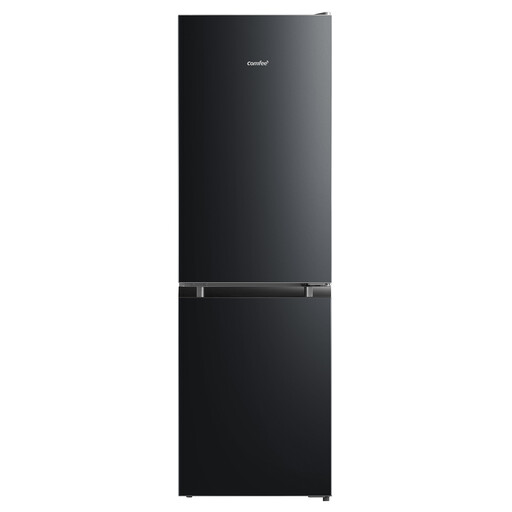 Image unavailable
Comfee' by Midea RCB230BL2EU(E), 174 L fridge-freezer
Worth considering if you’re looking for a 174 L fridge-freezer. Check that each compartment has enough capacity for your needs and that the appliance will fit in the space available.
The product name mentions Low Frost, an adjustable thermostat, LED lighting and a reversible door. Low Frost doesn’t mean you’ll never need to defrost it manually. Check the model’s kWh/year figure on the energy label to compare its consumption.
View on Joybuy
Frequently asked questions
How do you compare two appliances with different energy ratings?
First compare their type and fresh and frozen capacities, then check their stated kWh/year figures. The European Commission describes the A to G rating as one part of the energy label, which also shows capacity and noise level. A letter on its own isn’t a substitute for comparing models that meet the same needs.
Why does the room where a freezer is installed matter?
The room temperature needs to be within the operating range for the model. ADEME says that if a room is too cold or too hot, the motor may stop or run continuously. Check the manufacturer’s instructions before choosing where to put it.
Does Low Frost mean you’ll never need to defrost manually?
No. Low Frost doesn’t mean you’ll never need to defrost the appliance manually. If this matters to you, check the defrosting method specified for the freezer compartment of the model you’re considering.
What should you do if a new appliance bought in France is faulty?
You may be able to make a claim under the legal guarantee of conformity through the professional seller. The French Ministry of the Economy states that this guarantee applies to new goods for two years and that, during this period, consumers don’t have to prove the fault was present on the date of sale. Any commercial warranty is separate and doesn’t replace it.


