Who is this guide for?

Households considering a replacement

You want to know whether the difference in energy use really justifies buying a new appliance, or whether keeping and using your current one more efficiently is enough. ADEME and UFC-Que Choisir highlight the importance of taking energy consumption and usage conditions into account.

Households looking to resize their setup

You need to choose between a fridge, a fridge-freezer and a separate freezer, based on how much space you actually need for fresh and frozen food. The European Commission’s energy label, for example, lists the volumes of each compartment separately.

Households with installation restrictions

You need to check the dimensions, clearance requirements and, if the appliance will be kept in a cold room, the ambient temperature range it can operate in. Check the manual for the appliance before choosing where to put it.

What should you compare before replacing a fridge or freezer?

Fridge only

Consider this if: you don’t need much freezer space and an appliance with a suitable capacity meets your needs.

Weigh up: an oversized appliance or unnecessary features could increase energy use without meeting a genuine need.

Fridge-freezer

Consider this if: you regularly use both compartments and want them in one appliance.

Weigh up: the total capacity alone doesn’t tell you how much space is available for frozen food.

Separate freezer

Consider this if: the freezer compartment in a fridge-freezer isn’t large enough for your usual storage needs.

Weigh up: add the freezer’s annual energy use to that of any appliances you’re keeping.

Keep your current appliance

Consider this if: your appliance works and still meets your needs, before deciding that you have to buy a new one.

Weigh up: improving its position or upkeep may help limit excess energy use caused by the way it’s used, but won’t necessarily make it as efficient as another model.

Consideration What to check Who is it for?
Difference in energy use and cost Compare kWh/year figures on a like-for-like basis, then factor in your electricity tariff and the cost of replacing the appliance. If I want to know whether the difference justifies a purchase, I’ll check the energy use of my current appliance against that of the model I’m considering. Around 33% of consumers put this calculation first.
Usable capacity Check the litre capacity of the fresh-food and freezer compartments separately, as well as the dimensions and kWh/year figures. When I change size, I want to avoid running out of room as well as paying for capacity I won’t use. Around 25% of consumers prioritise choosing the right capacity.
Freezer capacity Compare the freezer capacity in litres and add together the kWh/year figures for the appliances that will remain plugged in. If I regularly store frozen food, I’ll check whether the fridge-freezer compartment is large enough before adding a separate appliance. Around 25% of consumers prioritise this need.
Installation and upkeep Check the dimensions, the clearance specified in the manual, the door seals, any ice build-up and the permitted ambient temperature range. If I have concerns about the location or condition of my current appliance, I’ll check these points before deciding to replace it. Around 17% of consumers prioritise installation or keeping their current appliance.

Mistakes to avoid before replacing your fridge or freezer

  • Applying average energy use to your household

    A typical energy-use figure for an appliance type doesn’t tell you how much your old appliance uses. Without comparing the two appliances and your electricity tariff, it can’t tell you how long it will take to recoup the cost.

    Record or estimate your current appliance’s kWh use over a representative period, then compare it with the kWh/year figure for the model you’re considering and your contract tariff.

  • Choosing based on the energy label rating alone

    The label also shows annual energy use and capacity. ADEME points out that an appliance that’s too large or has unnecessary features can increase your bill.

    Compare kWh/year figures and the usable capacity of each compartment for appliances suited to your needs, rather than choosing based on the energy rating alone.

  • Adding a freezer without factoring in its energy use

    An extra freezer runs continuously too, so its energy use is added to that of the fridge you’re keeping.

    Before choosing a chest or upright freezer, check how much frozen storage you need and add together the annual energy use of the appliances that will remain plugged in.

  • Confusing collection of your old appliance with installation

    The DGCCRF states that taking back an equivalent used appliance on a ‘one-for-one’ basis must be free when you buy a new one. This doesn’t mean separate services, such as disconnection or installation, are also free.

    Check the collection arrangements offered for delivery and ask for details of any optional services.

Brands and models to consider

Liebherr

Worth considering if you’re comparing a fridge-freezer with a chest freezer; these formats meet different storage needs.

  • Topten’s guide lists a capacity of 371 l and energy use of 104 kWh/year for the KGNsf 57Va03 fridge-freezer. Liebherr gives the CFe 2080 chest freezer a capacity of 353 l.
  • These figures relate to specific models in different formats; they don’t mean every model from the brand will suit your household.

Hisense

Worth considering when comparing fridge-freezers and the way capacity is divided between compartments.

  • Hisense France lists a total capacity of 336 l for the RB440N4ACA, including 98 l of freezer space, with annual energy use of 109 kWh.
  • These specifications are for the RB440N4ACA. The RB5K330GSFC featured in the Joybuy selection is a different model, so check its own product details.

Bosch

Worth considering for a fridge-freezer or, if you need a separate freezer compartment, an upright freezer.

  • Topten’s guide lists a capacity of 343 l and energy use of 119 kWh/year for the KGE398IBP fridge-freezer. Bosch gives the GSN51AWDV freezer an energy rating of D and a usable capacity of 290 l.
  • A separate freezer adds to the energy use of the fridge you keep; its energy rating alone isn’t enough to compare the total energy use of two appliances.

Beko

Worth considering if a separate chest freezer meets your storage needs.

  • Beko’s product details list the CF200EWN as a freezer with a total capacity of 198 l.
  • Capacity alone isn’t enough to compare its energy use with another format or to conclude that it will lower your bill.

Fridge-freezers on Joybuy

This selection features fridge-freezers to compare by their stated capacity and the space available for fresh and frozen food.
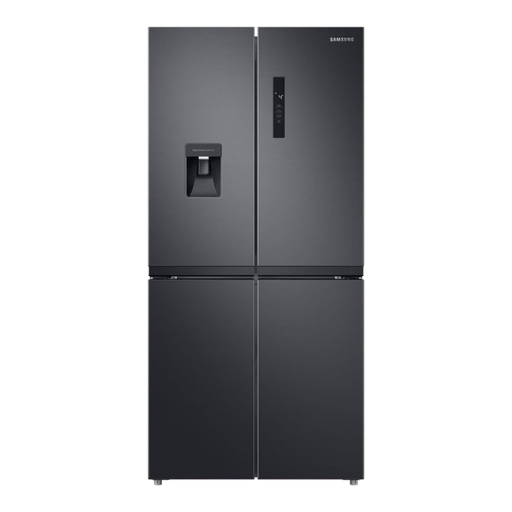
Samsung RF48A401EB4, black American-style fridge, 488 l, energy rating E

Samsung RF48A401EB4, 488 l, energy rating E, black

Its stated capacity can help you decide whether a large format offers the storage space your household needs.

Stated capacity: 488 l. Energy rating: E.

View on Joybuy
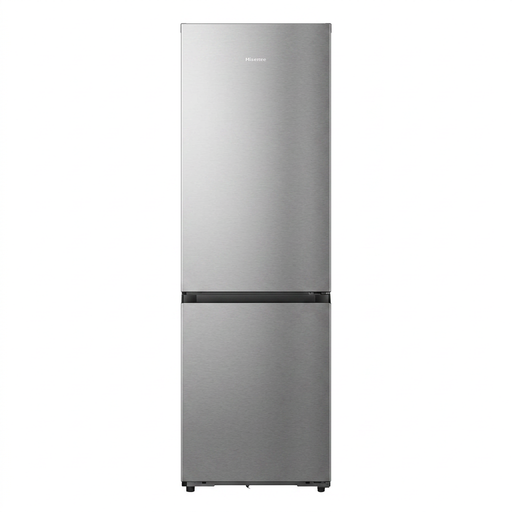
Hisense RB3K330SAFC, freestanding 330-litre fridge-freezer

Hisense RB3K330SAFC, 330 litres

This fridge-freezer is one option if you want a single appliance for both fresh and frozen food.

Freestanding, ventilated, frost-free; stated noise level: 35 dB.

View on Joybuy
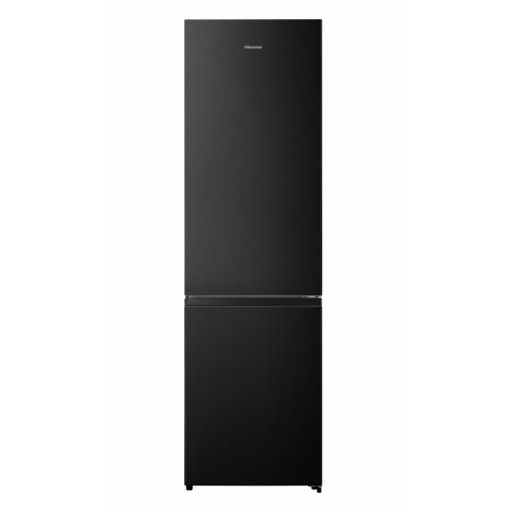
Hisense RB440N4AFC, 336-litre fridge-freezer

Hisense RB440N4AFC, 336 litres

A fridge-freezer to consider if you’re looking for one appliance for both fresh and frozen food.

Stated capacity: 336 litres.

View on Joybuy
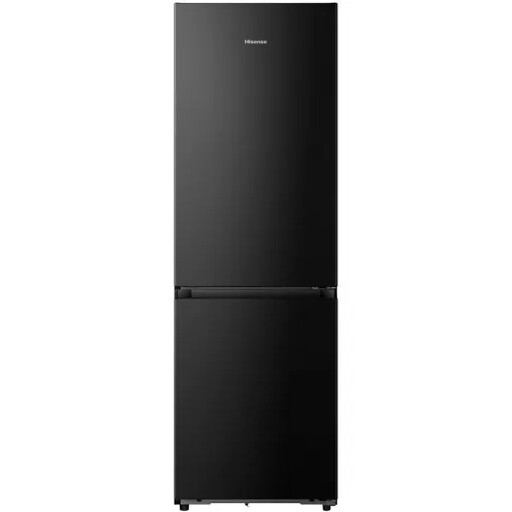
Hisense RB5K330GSFC, 330-litre fridge-freezer, black

Hisense RB5K330GSFC, 330 litres, black

Compare its stated capacity with the fresh and frozen storage space your household actually needs.

Stated capacity: 330 litres.

View on Joybuy
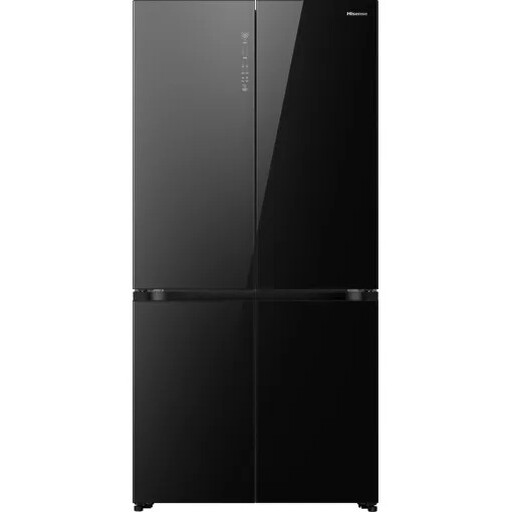
Hisense RQ768N4GBE, 591-litre American-style fridge, energy rating E, black

Hisense RQ768N4GBE, 591 litres, energy rating E, black

Only consider this large format if its stated capacity meets a genuine storage need.

Stated capacity: 591 litres. Energy rating: E.

View on Joybuy

Frequently asked questions

What should you compare on the energy label of a new fridge or freezer?

Compare annual energy use in kWh and the capacity of each compartment, as well as the energy rating. For applicable appliances, the European label also gives an indication of noise levels and a QR code linking to model information in EPREL, according to the European Commission.

How can I tell whether replacing my old appliance could lower my bill?

Compare its estimated annual energy use with the kWh/year figure for the new model, choosing a capacity and usage pattern that suit your needs. Then apply your own electricity tariff to the difference. Compare the result with the cost of replacement: stated energy use doesn’t guarantee savings for every household.

What should I check before replacing an appliance that still works?

First, check the temperature, position, ventilation, door seals and any ice build-up. UFC-Que Choisir recommends 4 to 5 °C for the fridge and −18 °C for the freezer; also follow the instructions in your model’s manual.

Does a separate freezer use less energy than a fridge-freezer compartment?

The available data doesn’t support a general conclusion about which option uses less energy. Compare the usable capacity and kWh/year figures for each model. If you’re also keeping a fridge, add together the energy use of both appliances.

Is collection of my old fridge free when I buy a new one?

The DGCCRF states that taking back an equivalent used appliance on a ‘one-for-one’ basis must be free when you buy a new appliance, including from an online retailer. Check the delivery arrangements and distinguish collection from optional disconnection or installation services.