What to compare before replacing your fridge
Keep or repair your appliance
Consider this: if your appliance still meets your needs or looks repairable, compare its condition and energy use, and the cost of a repair quote, with the full cost of replacing it.
Bear in mind: keeping it avoids an immediate purchase, but doesn't guarantee low energy use.
Fridge without a freezer
Choose this if: you don't need to store frozen food in this appliance and want the right amount of fridge space for your household.
What to consider: this configuration doesn't include a freezer compartment.
Fridge-freezer
Choose this if: you regularly store frozen food and need both functions in one appliance.
Compare: fridge and freezer capacities, dimensions and kWh/year. The extra compartment may affect total energy use.
| Concern |
What to check |
Who it's most important to |
| Whether replacement makes sense |
Compare the kWh/year of your current appliance and the model you're considering, the price per kWh, the purchase price and any repair quote over the same period. |
If I want to know whether the potential savings justify a purchase or repair, I compare these costs with my actual energy use. Around 34% of consumers concerned prioritise whether replacement makes sense. |
| Fresh food capacity |
Check the fridge capacity, dimensions and available space. Que Choisir gives an indicative guide of 100 to 150 litres for one person, then 50 litres for each additional person. |
When I mostly store fresh food, I look for a capacity that suits my shopping without buying an unnecessarily large appliance. Around 25% of consumers concerned prioritise getting the fridge capacity right. |
| Need for a freezer |
Check that there's a suitable freezer compartment, its capacity in litres separately from the fridge capacity, as well as the appliance's kWh/year and dimensions. |
If I regularly store frozen food, I want to know whether the compartment suits my needs without overlooking total energy use. Around 25% of consumers concerned prioritise frozen food storage. |
| Repair and product lifespan |
Check the applicable warranty, ask for a quote and look into repair options. French repairability and durability indices are not required for fridges under the relevant product categories. |
If I want to keep my appliance or limit the cost of a breakdown, I check the warranty and repair options first. Around 16% of consumers concerned prioritise repair and product lifespan. |
The percentages represent the main concern associated with each choice scenario; they are not survey results. To compare models, the energy label shows annual consumption in kWh. On its own, it isn't enough to predict your household's actual energy bill.
Fridge-freezers on Joybuy
The models featured here are fridge-freezers and multi-door fridges. Compare their capacities, kWh/year and dimensions to suit your storage needs.
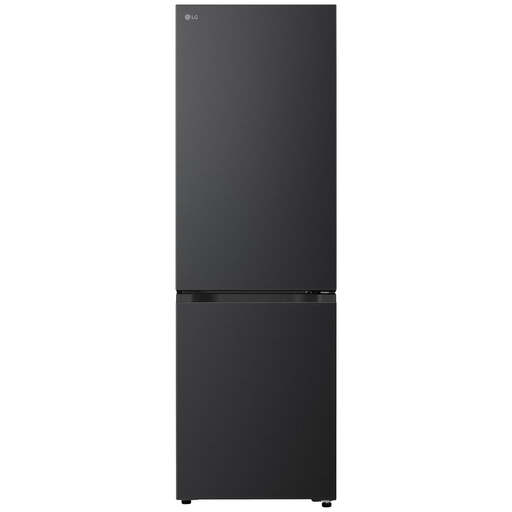 Image unavailable
LG GBBS312CEV, 333 l fridge-freezer, energy rating C
This fridge-freezer lets you compare fridge and freezer capacities separately, making it suitable for a household that uses both compartments.
Energy rating C; stated consumption: 169 kWh/year; 183 l fridge capacity and 113 l freezer capacity.
Allow at least 5 cm of clearance at the back, top and sides, as instructed.
View on Joybuy
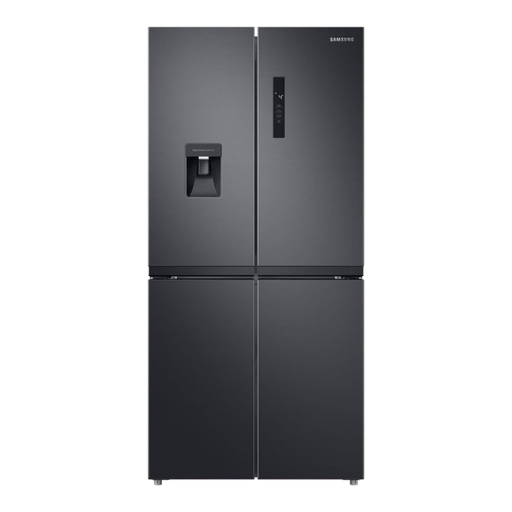 Image unavailable
Samsung RF48A401EB4, 488 l American-style fridge, energy rating E, black
This multi-door model may suit you if you're looking for separate compartments for fresh and frozen food.
Energy rating E; stated consumption: 298 kWh/year; 329 l fridge capacity and 159 l freezer capacity.
View on Joybuy
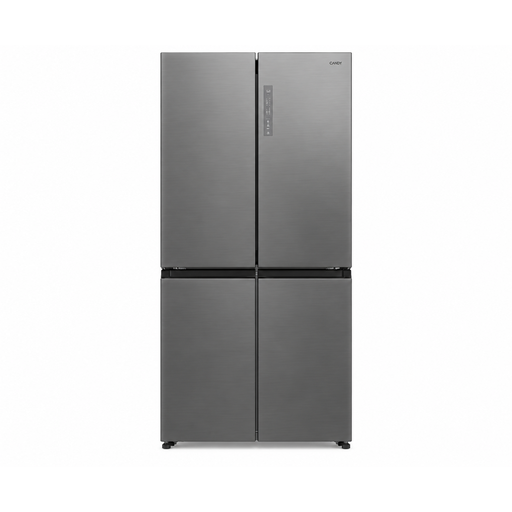 Image unavailable
Candy CFQQ5T817EPS, 467 l multi-door fridge, energy rating E
This multi-door model offers a stated capacity of 467 l for households that use both the fridge and freezer compartments.
Energy rating E; stated consumption: 290 kWh/year; stated dimensions: 83,3 × 65 × 181,5 cm.
The doors aren't reversible.
View on Joybuy
 Image unavailable
Sonlu CC-520WE, 444 l side-by-side fridge-freezer, energy rating E
This side-by-side model has fridge and freezer compartments for households looking to store fresh and frozen food.
Energy rating E; stated consumption: 289 kWh/year; stated total capacity: 444 l; Total No Frost system.
The instructions say to leave the appliance upright for at least 4 hours before first use.
View on Joybuy
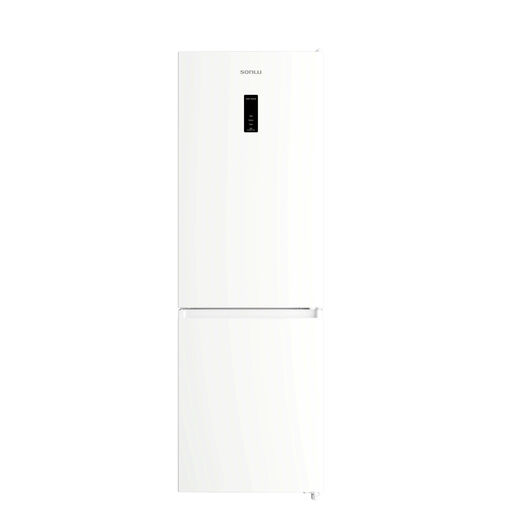 Image unavailable
Sonlu CD-350RW, 310 l fridge-freezer, energy rating E
This fridge-freezer lets you compare the capacity of both compartments if you're looking for an appliance for fresh and frozen food.
Energy rating E; 211 l fridge capacity and 99 l freezer capacity; stated width: 60 cm.
The doors are reversible.
View on Joybuy
Frequently asked questions
Is the energy rating enough to estimate my bill after replacing my fridge?
No. For a specific model, start with its stated kWh/year and the price per kWh that applies to your household. To estimate any savings, you'll also need comparable energy use figures for your current appliance. ADEME points out that published averages don't predict the savings for an individual household.
Is there any help available to repair my fridge instead of replacing it?
ecosystem lists a Repair Bonus of 25 € for an eligible out-of-warranty repair of a fridge or freezer carried out by a QualiRépar repairer. Check the eligibility conditions and get a quote before comparing this option with buying a new appliance.
Is an energy label compulsory in France for a new household fridge?
Yes. The DGCCRF states that household fridges, freezers and fridge-freezers are covered by European Regulation 2019/2016 on energy labelling, which has applied since 1 March 2021. Check the label for the exact model when you buy.
Does a fridge need to display a French repairability or durability index?
Fridges aren't among the product categories listed on the ministerial pages consulted for these indices. So don't treat the absence of a rating as a poor assessment of the model; instead, check the warranty terms and repair options.
What should I do with my old fridge if I replace it?
ADEME says you can hand it over to the retailer or delivery team when your new appliance is delivered, or take it to the dedicated electrical and electronic equipment area at a recycling centre. Refrigeration appliances need to be handled through the appropriate disposal route.


