
Livraison le jour même ou le lendemain

Qualité garantie

Débloquez vos offres de bienvenue: Livraison GRATUITE | Jusqu'à -80 % | 30 jours d'essai gratuits à JoyPlus
Téléchargez l'application
By our product experts
Changing the head on your electric toothbrush: a seemingly simple task that can quickly become a headache. Between the jungle of part numbers, marketing promises, and "compatible" products of varying quality, it's easy to make the wrong purchase. A poor choice can not only prove ineffective but also damage your device. Our mission: to help you see things more clearly and avoid the common traps so your next purchase is the right one.
Before you start, beware of these common and potentially costly mistakes:
To stop making mistakes, focus on these three parameters before you check out.
This is the number one, non-negotiable criterion. Each manufacturer has its own attachment system, and they are not interchangeable.
Checking your product line's name (e.g., "iO", "Sonicare Premium") is the first step to ensuring a perfect fit.
Once compatibility is confirmed, choose a brush head that suits your goals and sensitivity.
To help you remember to change your brush head, manufacturers have integrated visual aids. Most modern electric toothbrush refills have indicator bristles (often blue or green) that fade halfway after about three months of use. More advanced models, like those compatible with Philips' BrushSync technology or the Oral-B iO handles, even send a notification to the handle or via the mobile app to let you know it's time for a change.
To help you choose, here is our selection of brush heads tailored to specific needs, all evaluated on performance and compatibility criteria.
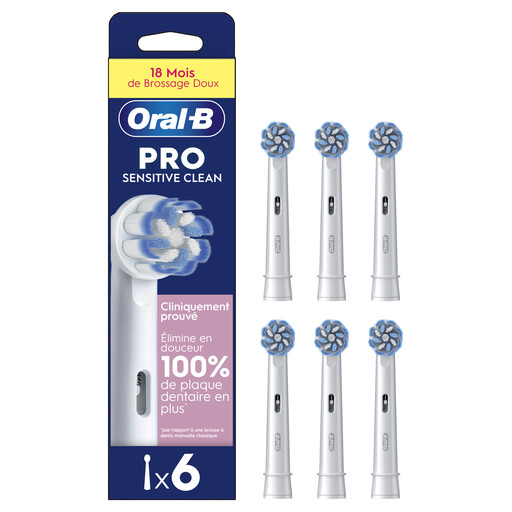
Why we chose it: Ideal for people with gums that bleed or are easily irritated. It combines ultra-soft filaments with standard filaments to remove plaque, offering an effective yet gentle clean.
It directly addresses the myth of the one-size-fits-all brush head by offering a targeted solution for sensitivity, where a standard head would be too abrasive.
Ultra-soft bristles for maximum comfort. Wear indicators that change from green to yellow. Compatible with most Oral-B handles (excluding iO and Pulsonic).
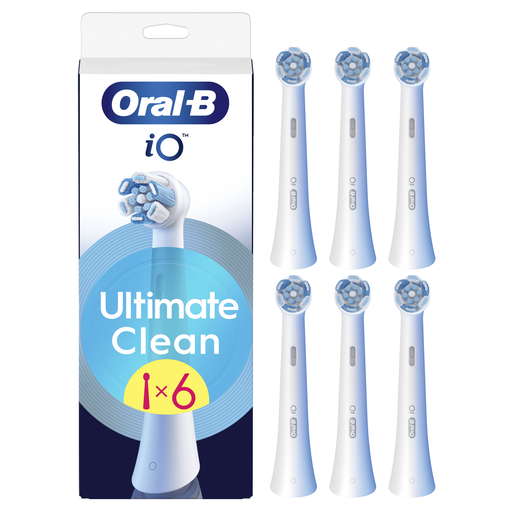
Why we chose it: This is the benchmark brush head for owners of Oral-B iO brushes. Its dual-level bristle design and micro-vibrations provide a deep clean, targeting plaque even in hard-to-reach areas.
It eliminates any compatibility risk by being exclusively designed for iO technology, ensuring optimal performance and safety.
Smart chip for wear tracking on the handle. Angled bristles for precise tooth-by-tooth cleaning. Economical pack of 6 brush heads.
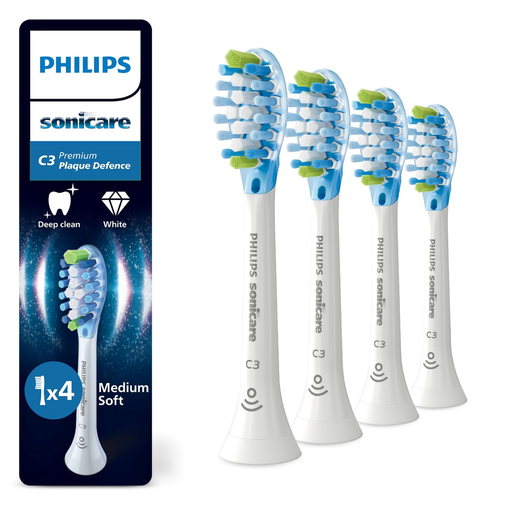
Why we chose it: Designed for Philips Sonicare users who demand powerful anti-plaque action. According to the brand, its dense bristles and flexible design remove up to 10 times more plaque than a manual brush by perfectly contouring to your teeth.
It justifies its premium positioning with specific technical features (dense bristles, soft edges) and tracking technology (BrushSync), far from the vague promises of generic products.
BrushSync technology for automatic replacement reminders. Soft edges for a gentle clean along the gumline. Compatible with all click-on Philips Sonicare handles.
We have compiled a comprehensive list of products that meet our strict selection criteria and quality standards.
The recommendation is unanimous among both manufacturers and dentists: replace your brush head every three months. After this period, the bristles become frayed and no longer clean as effectively. Worse, a worn brush head becomes a haven for bacteria. To avoid forgetting, rely on the color-changing indicator bristles or your brush's alerts.
Even if their price is attractive, compatible brush heads are not without risk. An approximate fit can, over time, damage the mechanism of your toothbrush. The cleaning effectiveness is also often below that of original models, due to a lack of equivalent design and materials. For the lifespan of your device and the quality of your brushing, always opt for official brand refills.
The easiest way is to look at the model name of your toothbrush, usually written on the bottom of the handle.