Households deciding whether to replace their fridge
Your appliance still works, and you want to check whether lower energy use could justify replacing it rather than making your decision based on its age alone.


If your fridge is still working, compare its measured energy use with that of a new model offering similar capacity and features. A difference in kWh alone isn’t enough to justify a purchase. Weigh the potential savings at your electricity rate against the total cost of replacing it and the space you actually need, especially for frozen food.
Your appliance still works, and you want to check whether lower energy use could justify replacing it rather than making your decision based on its age alone.
You want enough room for fresh food without choosing a capacity that exceeds your needs or the space available.
You need the right freezer capacity and want to compare fridge and freezer space separately.
Worth considering: if you don’t need a freezer in this appliance and the fridge capacity suits your food shopping.
Bear in mind: it won’t replace the freezer capacity of an old fridge-freezer.
Worth considering: if you regularly store frozen food and want both functions in one appliance.
Bear in mind: fridge and freezer capacities are separate; a fridge-freezer can’t be compared directly with a model without a freezer.
Worth considering: if your current size and capacity already meet your needs, compare similar models by capacity, energy rating and kWh/year.
Bear in mind: a better energy rating alone doesn’t tell you how much you’ll save in pounds. Size and features matter too.
Worth considering: if your appliance still meets your needs and, over the period you’re considering, the comparison doesn’t justify replacing it based on your costs.
Bear in mind: the comparison depends on your appliance’s actual energy use and on comparing like-for-like conditions.
To compare models, estimate your current appliance’s annual energy use from a measurement, then compare it with the kWh/year and capacities listed for each new model. The European Commission’s energy label shows fridge and freezer capacities separately. ADEME also points out that size and features can affect energy use.
| What matters | What to check | Who it matters to |
|---|---|---|
| Whether replacement pays off | Estimate the old appliance’s kWh/year from a representative measurement. Compare the difference with the total cost of purchase, delivery and installation at your electricity rate. | If your appliance still works, you want to know whether lower energy use would genuinely make up for the cost of replacing it. Around 33% of consumers prioritise value for money. |
| Useful fridge capacity | Compare the capacity in litres for fresh food with your storage habits and the dimensions of the space available. | If you want enough room for fresh food without choosing an appliance that’s too large, fridge capacity is a priority for around 27% of consumers. |
| Freezer capacity | Check whether there’s a freezer compartment and its capacity in litres. Compare appliances that offer the same functions. | If you regularly store frozen food, you’ll need to retain suitable freezer capacity. Around 20% of consumers put freezing at the heart of their choice. |
| Installation and space | Check the dimensions, whether the appliance is freestanding or integrated, and the manufacturer’s ventilation instructions. | If the available space or an alcove limits your choice, check the installation requirements before comparing capacities. Around 20% of consumers prioritise how the appliance fits into their kitchen. |
Average energy use for a product category doesn’t tell you how much your fridge uses. Its actual energy consumption is also affected by how it’s used.
Measure your appliance over several representative days, then compare its estimated annual energy use with the kWh/year of a model offering similar storage. Apply your electricity rate and be clear about the period you’re comparing.
The energy rating alone doesn’t tell you how much you’ll save in pounds compared with your current appliance. Greater capacity or additional features can also affect energy use.
Once you’ve worked out the capacity and features you need, compare the kWh/year of specific models.
A single-door fridge without a freezer compartment doesn’t offer the same functionality as a fridge-freezer. The energy label shows fridge and freezer capacities separately.
Before comparing annual energy use, check whether there’s a freezer compartment and how many litres of space it offers for frozen food.
The models below show a range of sizes and capacities. Their specifications apply to these particular models and don’t prove that an entire brand is more energy-efficient.
Two different formats for comparing a single-door fridge with a freestanding fridge-freezer.
The ENG8CD18S integrated fridge-freezer is worth considering if you have a suitable kitchen cabinet space.
The CTPe231-26 is a freestanding fridge-freezer listed as 55 cm wide.
The RB38C776CB1-EF is a fridge-freezer listed with a capacity of 390 L and a width of 60 cm.
This selection includes single-door fridges and fridge-freezers, including integrated models, so you can compare kWh/year and fridge or freezer capacity to suit your needs.
 Image unavailable
Compare this fridge-freezer for fresh and frozen food storage, with separate capacities for each.
The product information lists 254 kWh/year, 230 L of fridge space and 114 L of freezer space. Width: 59,5 cm; reversible door.
 Image unavailable
Compare this large-capacity fridge-freezer, with its annual energy use listed.
The product information lists a total capacity of 444 L and energy use of 289 kWh/year. The description specifies Total No Frost technology in both compartments.
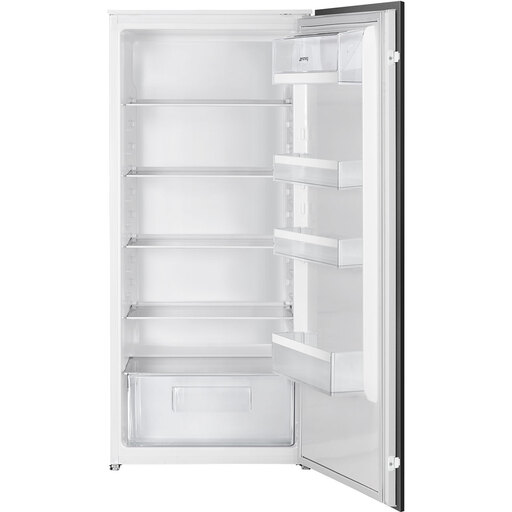 Image unavailable
For fresh-food storage without a freezer in the appliance, and where your kitchen is suitable for an integrated model.
The product information lists 101 kWh/year and 188 L of fridge space. This single-door model doesn’t replace a freezer compartment.
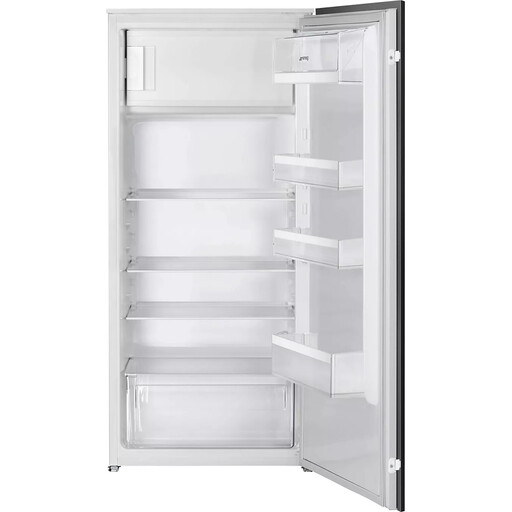 Image unavailable
Keep both fridge and freezer functions in an integrated appliance, provided your cabinet space matches the specified dimensions.
The product information lists 146 kWh/year, 174 L of fridge space and 14 L of freezer space. Cabinet space: 56 × 122,5 × 55 cm; furniture door not included. The freezer compartment must be defrosted manually.
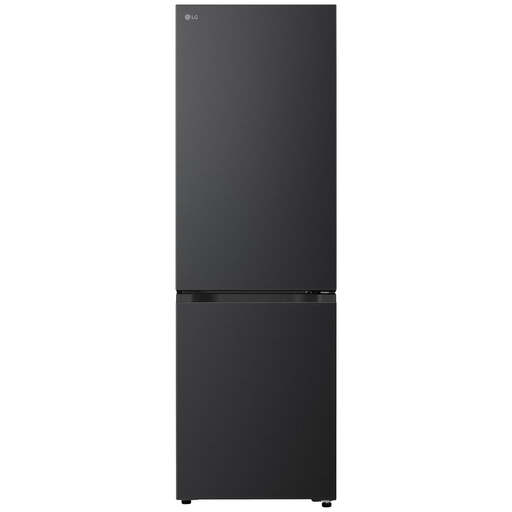 Image unavailable
Compare this fridge-freezer by its kWh/year and storage capacities.
The product information lists 169 kWh/year, 183 L of fridge space, 113 L of freezer space and a 37 L compartment. At least 5 cm of clearance is specified at the rear, above and at the sides.
For the exact model, check its energy rating, annual energy use in kWh, and fridge and freezer capacities. Compare the kWh/year of appliances that meet the same storage needs, rather than models in different formats that don’t offer the same functions.
No. ADEME’s averages and examples don’t measure your fridge’s energy use. Measure your appliance over a representative period, estimate its annual energy use in kWh, then use your rate in €/kWh to compare potential costs.
Check the dimensions of the space, the type of installation, and the model’s instructions on ventilation and installation. For an Electrolux appliance, the brand’s support page recommends allowing air to circulate, keeping the appliance away from heat sources and checking the climate class shown on the rating plate.
The DGCCRF describes the free take-back of an equivalent used product when a new one is sold. If your new appliance is being delivered, check the retailer’s arrangements for taking away the old one and distinguish this from any installation services that may be available.
In France, the statutory guarantee of conformity applies to goods sold by a business to a private individual. In information published on 9 September 2026, the Ministry for the Economy states that you have two years to claim under it. Contact the seller, and remember that this right is separate from an optional commercial guarantee.