Households replacing a fridge or freezer
Your fridge, fridge-freezer or freezer runs continuously. So it’s worth considering both the capacity you need and the annual energy consumption of a potential replacement.


Start by looking at the appliance that regularly accounts for a significant part of your energy use and whose replacement meets a genuine need. The ADEME notes that fridges and freezers run continuously, while the benefits of replacing a dishwasher, hob or oven depend more on how often you use it. Then compare appliances in the same category and with a suitable capacity: their reference consumption figures are measured in different units.
Your fridge, fridge-freezer or freezer runs continuously. So it’s worth considering both the capacity you need and the annual energy consumption of a potential replacement.
You want to take account of the electricity and water used per cycle, without choosing a capacity or noise level that’s unsuitable for your kitchen.
You’re thinking about replacing a cooking appliance and need to consider how often you use it, the space available for installation and how its energy consumption is stated.
Start with the appliance you’re replacing and how you usually use it, then check its energy consumption figures in the unit used for that category.
| Criterion | What to check | Best suited to |
|---|---|---|
| Always-on cooling | Compare kWh/year and usable capacity across fridges, fridge-freezers or freezers with a similar configuration. | If my appliance runs day and night, I want to choose a capacity that meets my needs without unnecessarily powering a larger space. Around 40% of consumers prioritise this need for cooling. |
| Dishwashing cycles | Check kWh/100 cycles, litres per cycle and a capacity suited to your usual loads. | When I run the dishwasher often, both the electricity and water used for my loads matter; around 30% of consumers prioritise this need. |
| Regular cooking | For a hob, check the type and installation requirements; for an oven, compare kWh/cycle for similar heating functions. | If I cook frequently, I want to replace my hob or oven with one that suits the food I prepare, rather than relying on a figure in isolation. Cooking is the top priority for around 30% of consumers. |
The rating doesn’t replace comparing energy consumption and capacity. The ADEME points out that a larger appliance or one with extra features can use more energy.
Compare kWh/year figures for cooling appliances with similar capacities and configurations, then choose the capacity you actually need.
kWh/year for cooling appliances, kWh/100 cycles for dishwashers and kWh/cycle for ovens are based on different measures. So the lowest figure alone won’t tell you which appliance to replace first.
First compare models within the same category. For an appliance used in cycles, also factor in how many cycles you expect to run.
Dishwasher energy figures on the label relate to a reference cycle, usually the Eco programme according to the ADEME; they don’t necessarily reflect the consumption of your quick programmes.
Check how long the Eco programme takes, choose a capacity that suits your loads and consult the manual for the programmes you plan to use.
Energy consumption figures don’t tell you everything you need to know about keeping an appliance in use. For eligible dishwashers, the repairability index gives you another point of comparison.
Consider this index alongside the energy label, then check information about spare parts and repair options for the model you’re considering.
Bosch offers fridge-freezers in a range of capacities.
Beko France offers cooling appliances as well as cooking equipment, including induction and ceramic hobs.
Liebherr France offers both freestanding and built-in fridges.
These models give you options to consider if you’re replacing a fridge-freezer, looking for a compact dishwasher or need a portable induction hob. Compare each one with appliances that meet the same need.
 Image unavailable
Worth considering if you’re replacing an appliance that combines refrigeration and freezing. It has an E energy rating and a stainless steel finish. To assess its energy efficiency, compare its annual consumption and capacity with those of appliances with a similar configuration.
 Image unavailable
Worth considering if you need a large capacity for round-the-clock cooling. The model name indicates a frost-free system, an E energy rating and a noise level of 40 dB. Before comparing its annual energy consumption with similar models, check that its capacity and installation dimensions are right for you.
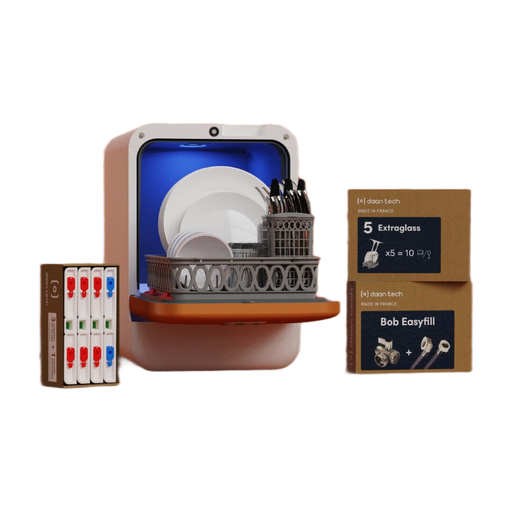 Image unavailable
A compact option to consider if it suits your dishwashing loads and available space. Before comparing its energy consumption with another dishwasher, check the specific model’s kWh/100 cycles, litres per cycle, capacity and Eco programme duration.
 Image unavailable
Worth considering if the available width and the balance between fridge and freezer space matter when choosing a replacement. The model offers 153 L of fridge space and 74 L of freezer space, measures 54 cm wide, has a reversible door and an E energy rating. Check its kWh/year figure to compare its energy consumption with other fridge-freezers that fit your space.
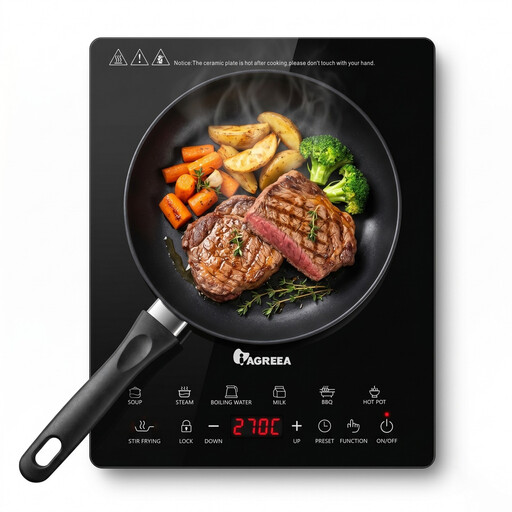 Image unavailable
Worth considering for hob cooking in a small space or as an extra cooking option, rather than as a like-for-like replacement for a built-in hob. The title lists eight power settings and suitable cookware measuring 12 to 26 cm. Check that your cookware and electrical installation are compatible; the wattage alone doesn’t tell you how much energy will be used to cook a meal.
No. These figures relate to different periods and types of use. To estimate a dishwasher’s annual energy consumption from its label, multiply the kWh/100 cycles figure by the number of cycles you expect to run in a year, then divide by 100. The result will depend on the programmes you choose and how you actually use the appliance.
Check the kWh/100 cycles, litres per cycle, capacity and noise level, then see how long the Eco programme takes. The ADEME notes that the stated energy and water consumption figures relate to a reference cycle; they don’t automatically describe a quick wash.
Yes. It’s a separate consideration from energy and water consumption. Check the repairability index for the model in question, along with information about parts and repairs, before deciding whether to replace it.
Compare their kWh/cycle figures for similar heating functions, then take into account how often you cook. European energy labelling for domestic ovens uses this unit per cycle, so it isn’t directly comparable with a fridge’s kWh/year figure.