Households looking to compare energy use
You want to compare your current appliance’s energy use with the kWh/year figure for a new model, without assuming that replacing it will necessarily lower your consumption.


Replacing a fridge could reduce your electricity use if your old appliance’s consumption is significantly higher than the kWh/year figure for a new model that suits your needs. Start by working out the difference, then compare usable capacity and the features you need: a fridge-freezer or a separate freezer serves different needs from a fridge-only model. If your current appliance works properly and you don’t know how much energy it uses, the fact that it runs continuously isn’t enough on its own to justify replacing it.
You want to compare your current appliance’s energy use with the kWh/year figure for a new model, without assuming that replacing it will necessarily lower your consumption.
You’re deciding between a fridge-freezer and a separate freezer. How much space you use in each compartment matters just as much as the stated energy use of each appliance you’re considering.
You want to work out whether keeping your fridge fits with your energy-saving goal, rather than assuming it needs replacing simply because of its age.
ADEME points out that refrigeration appliances run continuously, but its average figures can’t predict your household’s energy use. To choose, start with your existing appliance and storage needs, then compare the kWh/year figures for models with the right features and capacity.
Worth considering: if it cools properly and comparing energy use doesn’t clearly show that replacing it would be worthwhile.
Bear in mind: it will continue to use as much energy as it currently does; its age alone can’t tell you how much that differs from a new model.
Worth considering: if you mainly store fresh food and don’t need a large integrated freezer compartment.
Bear in mind: if you need more freezer space later, you may end up using a second appliance, whose energy use will need to be added to the total.
Worth considering: if you regularly use both the fridge and freezer compartments and want both functions in one appliance.
Bear in mind: the split between the two compartments needs to suit how you use them; a fridge-freezer isn’t automatically more energy-efficient just because it combines both functions.
Worth considering: if a suitably sized fridge-freezer doesn’t meet your regular frozen-food storage needs.
Bear in mind: this extra capacity requires a second appliance that runs continuously; compare the combined energy use of both appliances.
| Factor | What to check | Consumers concerned |
|---|---|---|
| Difference in energy use | Compare a useful measurement or figure for your old appliance with the new model’s kWh/year, making sure the features and capacity are suitable. | I want to know whether changing appliances will genuinely help me reduce the kWh I use. Around 36% of consumers would put this comparison first. |
| Fresh and frozen food capacity | Check the usable litres of each compartment separately, as well as the appliance’s dimensions. | If I’m short of freezer space but don’t use much fridge space, the split between the compartments matters more to me than the total capacity. This would be the priority for around 29% of consumers. |
| Condition of your current appliance | Check that it cools properly and that the door is in good condition; then compare its energy use with that of a potential replacement. | My fridge still works, and I’d rather work out whether replacing it makes sense before getting rid of it. Around 21% of consumers would prioritise this decision. |
| Extra freezer capacity | Work out how much space you regularly need and add the freezer’s kWh/year to those of your main fridge. | I often store more frozen food than a suitably sized fridge-freezer can hold; this need would be the priority for around 14% of consumers. |
A fridge-only model, a fridge-freezer and a separate freezer don’t do the same job. ADEME’s published averages vary by appliance type; a letter on its own doesn’t tell you the specific model’s kWh/year or usable capacity.
Compare kWh/year, features and the capacity you need. When choosing between models, give preference to appliances of a similar type and size.
An old appliance that runs continuously doesn’t necessarily use as much energy as you might think. Without figures for its energy use, you can’t determine the difference between it and a new model.
Measure its energy use or look for documentation that applies to your appliance before comparing it with the kWh/year figure for the model you’re considering.
A separate freezer gives you more space, but it stays switched on even when you rarely use that capacity. ADEME gives 300 kWh/year as an average reference figure for a freezer, not as the energy use of every model.
Check whether a suitably sized fridge-freezer would be enough. If not, add together the kWh/year figures for the two appliances you plan to use.
A fridge that still works could be donated or reused. An appliance that can’t be repaired needs to be handled through a suitable recycling route for refrigeration equipment, as explained by ecosystem.
Before replacing it, look into donating it or finding a suitable collection service near you.
These ranges illustrate features worth considering; a feature or specification for one model doesn’t apply to every appliance from the same brand.
The range includes freestanding fridge-freezers with product information covering capacity, energy rating and noise level.
Some models combine fridge and freezer compartments with features called HarvestFresh or NeoFrost Dual Cooling.
The range includes fridges and fridge-freezers with the No Frost feature.
The appliances below combine fridge and freezer functions. If this type suits your needs, compare their stated capacities with the space available, then check the kWh/year on the label of your chosen model before deciding whether to replace your current appliance.
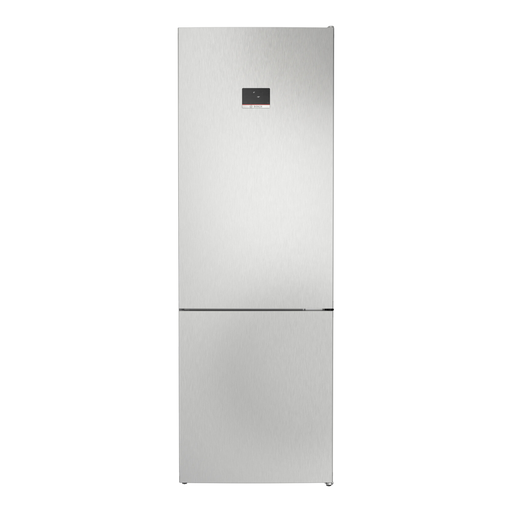 Image unavailable
Worth considering if you’re looking for a fridge-freezer with the stated capacity of 440 L; check the available space and the split between fridge and freezer capacity.
The product name states a D rating. To assess its energy efficiency, check the kWh/year on its label and compare it with your current appliance’s energy use.
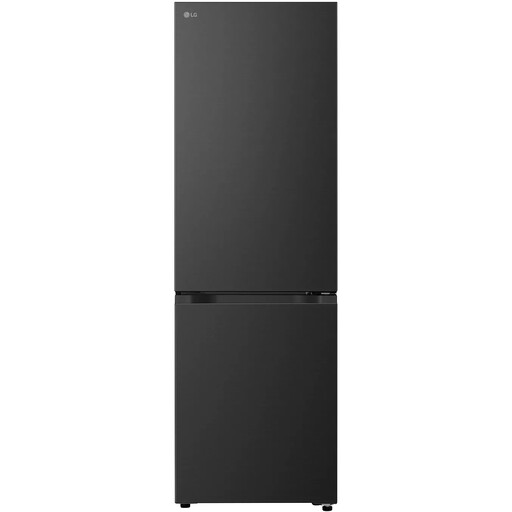 Image unavailable
Worth considering if a 333 L fridge-freezer suits your usual storage needs for fresh and frozen food; check the capacity of each compartment.
The product name lists No Frost and an A rating. Compare the kWh/year on the model’s label with those of other fridge-freezers suited to your needs.
 Image unavailable
Worth considering if you’re looking for a three-door fridge-freezer with a capacity of 360 L; check its dimensions and compartment capacity against your needs.
The product name lists Total No Frost, Wi-Fi and My Zone. Check the kWh/year on the label before comparing its energy use with another type of appliance or your current model.
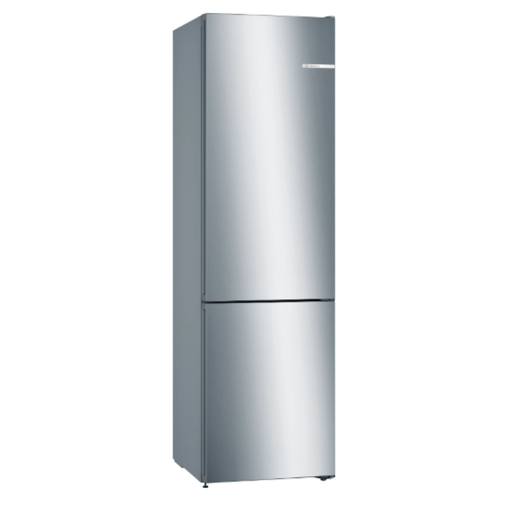 Image unavailable
Worth considering if the stated capacity of 368 L suits your needs for fresh and frozen food; also check the dimensions and clearance required for its location.
The product name states an E rating. Check the kWh/year on the KGN39VLEB’s label rather than assuming it has the same specifications as another Bosch fridge-freezer.
 Image unavailable
Worth considering if you regularly need plenty of space for fresh and frozen food; make sure its stated capacity of 467 L and overall dimensions suit your needs.
The product name lists Total No Frost and Smart Inverter. To compare its energy use, check the kWh/year on the CFQQ5T817EPS label rather than relying on its E rating alone.
First compare the kWh/year for the specific model, then check the usable fridge and freezer capacities. To decide whether one fridge is a suitable replacement for another, also consider the type and dimensions: the energy rating letter alone doesn’t tell you what the appliance can do.
No, it doesn’t tell you how much your current appliance uses. ADEME publishes averages by appliance type, but to make a comparison for your own situation, you’ll need useful energy-use figures for your old fridge and the kWh/year for the new model.
Subtract the new model’s stated kWh/year from the measured or documented annual energy use of your current appliance. The difference gives you an idea of the theoretical reduction in energy use, provided the new model offers the capacity and features you need.
No, the No Frost label alone doesn’t mean an appliance uses less energy. Whirlpool describes this feature as a way to prevent frost building up in the models that include it; to compare two appliances, look at their kWh/year and respective capacities.
If it still works, you could donate it or look into having it reused. If it can’t be repaired, ecosystem describes a collection route for recycling refrigeration equipment; look for a suitable take-back or collection service near you.