Households keeping an eye on their energy bills
You’re wondering whether it’s worth replacing an appliance that still works. ADEME points out that average energy consumption figures don’t necessarily reflect how much your appliance uses.


An older fridge isn’t, by itself, a reason to replace it. First, look at how you use it and how much energy it consumes, then compare it with a model suited to your needs. If you decide to replace it, start by working out how much fridge and freezer space you need. Then compare the kWh/year and dimensions of models that meet those requirements. National averages won’t predict how much your household could save.
You’re wondering whether it’s worth replacing an appliance that still works. ADEME points out that average energy consumption figures don’t necessarily reflect how much your appliance uses.
Your shopping habits, cooking or household size may mean you no longer need as much space as your current appliance offers. UFC-Que Choisir recommends taking the available space and your shopping habits into account.
You want to work out whether a fridge-freezer’s compartment is big enough, or whether a separate freezer would better suit your needs. UFC-Que Choisir highlights the importance of your frozen food consumption habits.
ADEME points out that fridges and freezers run constantly, but average consumption figures can’t predict how much energy your household will use. Compare appliances that meet the same needs, and take into account the shopping and freezing habits outlined by UFC-Que Choisir.
Choose this if: you mainly store fresh food, shop frequently or have limited space.
Check: if there’s a freezer compartment, it may not offer enough dedicated space for frozen food.
Choose this if: you regularly need space for both fresh and frozen food in one appliance.
Check: the total capacity alone won’t tell you how much space each compartment offers.
Choose this if: your fridge already meets your needs, but its freezer compartment isn’t big enough for the frozen food you regularly store.
Check: this appliance also runs constantly. Compare its annual energy consumption with that of your current set-up.
| What matters | What to check | Who it matters to |
|---|---|---|
| Electricity costs | Compare the kWh/year of appliances with suitable features and capacity. If you can measure your current appliance’s consumption, use that figure too. | I want to know whether replacing my appliance could reduce my household’s energy use, without relying on a national average. Around 33% of consumers prioritise this. |
| Fridge capacity and space required | Compare the fridge’s usable capacity, the appliance dimensions and the space needed to open the door. | I want the capacity to suit my shopping habits and the appliance to fit in my kitchen. Around 25% of consumers prioritise fridge capacity and the space the appliance takes up. |
| Freezer capacity | Compare the usable freezer capacity separately. If you add a freezer, consider its annual energy consumption alongside your fridge’s. | I regularly store frozen food and want to know whether a fridge-freezer compartment will be big enough or if I need a separate appliance. Around 25% of consumers put frozen food storage first. |
| Purchase cost and after-sales support | Check the arrangements for taking away your old appliance, and distinguish the legal guarantee from any additional services or commercial warranties. | I want to understand the purchase terms and after-sales support before choosing. Around 17% of consumers prioritise the upfront cost and after-sales support. |
ADEME’s average figures describe typical appliances and usage; they don’t measure the difference between your appliance and a specific model.
If possible, compare your current appliance’s consumption with the kWh/year of a model with suitable features and capacity. To estimate electricity costs, use your tariff and factor in the purchase price.
Two fridge-freezers may divide their capacity differently between the fridge and freezer compartments. A small freezer compartment won’t meet everyone’s frozen food storage needs.
Check the usable capacity of each compartment, then compare the kWh/year of set-ups that meet your needs.
A separate freezer gives you more storage space, but it also runs constantly.
Work out how much frozen food storage you need, then add together the annual energy consumption of all the appliances in the set-up you’re considering.
Taking away an equivalent appliance and delivery or installation services are not the same thing. The legal guarantee of conformity is also separate from a commercial warranty.
The DGCCRF explains that when you buy a new appliance, your old appliance can be taken away free of charge if it is equivalent. Ask the retailer about the practical arrangements and the services included. The Ministry of the Economy sets out the terms of the legal guarantee.
Delivery and installation fees may be charged separately, so check which services are included before you order.
The examples below relate to specific models; their features don’t apply to every product in a brand’s range. Compare the format, usable capacity and energy consumption of each model.
The HDPW7620AANPK fridge-freezer is an example of a high-capacity model rated A in the French selection consulted.
The models mentioned include fridge-freezers with different capacities and configurations.
The KGN392I1F and KGN492IAF illustrate the different widths and capacity splits available.
The brand’s chest freezers may be worth considering if you need enough frozen food storage to justify a separate appliance.
The brand’s French range includes freestanding and built-in fridge-freezers with different capacities.
These appliances let you compare separate freezers and fridge-freezers by their usable capacities and stated annual energy consumption.
 Image unavailable
If you want extra frozen food storage without replacing your fridge, this separate freezer could suit your needs.
 Image unavailable
If you want to store fresh and frozen food in one appliance, compare the capacity of each compartment with your needs.
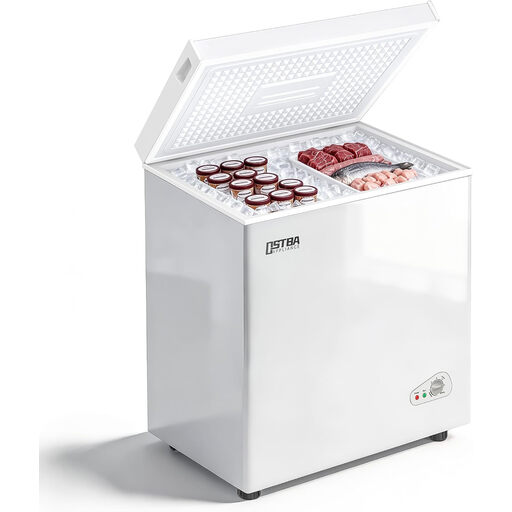 Image unavailable
If you need a separate space for frozen food, you can compare this chest freezer with an upright model to see which best suits your available space.
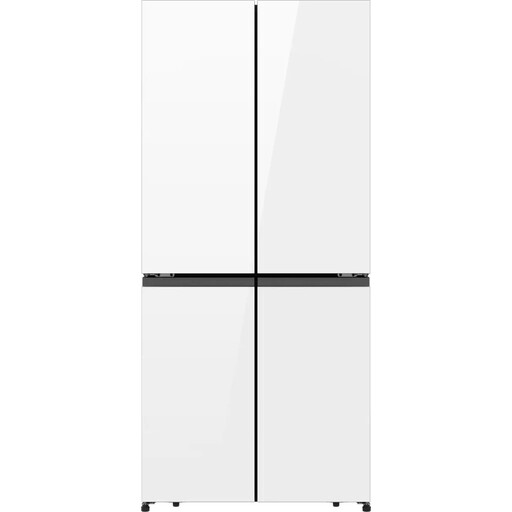 Image unavailable
This fridge-freezer may be worth considering if you need plenty of fresh food storage, plus a freezer or variable-temperature zone.
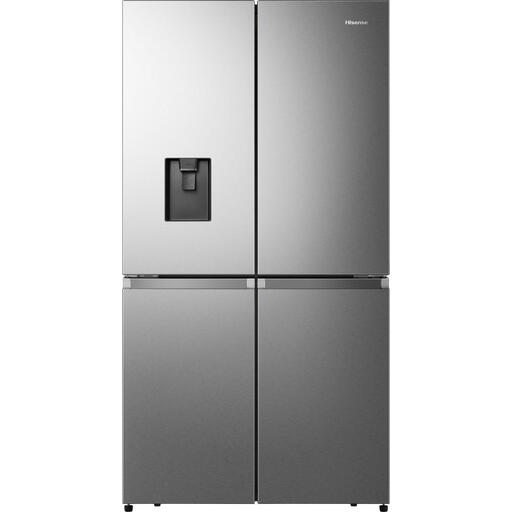 Image unavailable
If you need lots of space for fresh and frozen food, check that the capacity and dimensions suit your household and kitchen.
Age alone isn’t enough to make the decision. If possible, compare your current appliance’s energy consumption with that of a model with suitable capacity. ADEME’s averages can’t predict how much your household will save.
Note the exact model number, energy rating, kWh/year and compartment capacities, then compare set-ups that meet similar needs. The DGCCRF states that Delegated Regulation (EU) 2019/2016 has governed the labelling of domestic fridges, freezers and fridge-freezers in France since 1 March 2021, including its applicable amendments.
Measure the space and check the model’s instructions for the clearance needed to open the door. If you’re putting the appliance in a cellar or an unheated garage, check the ambient temperature range specified for that exact model. The suitability stated for some Beko freezers doesn’t apply to every appliance.
No. The scheme may reduce the repair cost for some fridges and freezers that are out of warranty, provided the repair is carried out by an approved repairer. It doesn’t determine whether your appliance can or should be repaired. Compare your options based on its specifications and condition.
When you buy a new appliance, the DGCCRF states that you can have an equivalent used appliance taken away free of charge. Ask the retailer about the practical arrangements. For new, second-hand or refurbished goods sold by a business to a private customer, the legal guarantee of conformity is compulsory. The Ministry of the Economy states that you have two years to claim under it, subject to the applicable conditions. These rights are separate from delivery or installation services and any optional commercial warranty.