To work out whether replacing your appliance will reduce electricity use, note how much your current model consumes, then compare it with the kWh/year figures for models with a similar capacity and the same purpose. According to ADEME, fridges and freezers run continuously, and an oversized appliance or an extra appliance can increase energy use. A better energy rating alone is therefore not enough to justify replacing it.
Who is this comparison for ?
Households mindful of year-round energy use
If your main reason for replacing an appliance is to cut electricity use throughout the year, compare the kWh/year figures for appliances that do the same job and have a similar capacity. ADEME reminds us that fridges and freezers run continuously.
Households whose freezing needs have changed
If you’re deciding between a fridge, a fridge freezer and a separate freezer, start by working out how much frozen food you actually need to store. ADEME advises taking the size and number of your refrigeration appliances into account.
Households with limited space
Whether you’re replacing a built-in model or fitting out an open-plan kitchen, check the dimensions, the ventilation requirements in the instructions and the noise level before comparing the energy figures.
Which criteria should you check first ?
The right format depends first and foremost on how much fridge and freezer space you use. To decide whether to replace your current appliance, compare energy use for models with a similar capacity and purpose.
Fridge only
Consider this : if you store few or no frozen foods and don’t need a freezer compartment.
Limitation : this option won’t meet regular freezing needs.
Fridge freezer
Consider this : if one appliance can meet your regular fridge and freezer needs.
Limitation : choosing a larger capacity than you need may go against the energy-saving approach recommended by ADEME.
Separate freezer
Consider this : if you regularly need to store more frozen food than a suitably sized fridge freezer can hold.
Limitation : as ADEME reminds us, this second appliance also runs continuously.
Keep your current appliance
Consider this : if you don’t yet have enough information about its energy use, condition and the capacity you actually use to judge whether replacing it is worthwhile.
Limitation : the appliance’s age or assumed energy rating is no substitute for comparing its actual energy use.
| Criterion |
What to check |
Who it matters to |
| Like-for-like energy use |
Note how much your current appliance consumes and compare it with the kWh/year figures for models with a similar capacity and the same purpose. |
If I’m replacing an appliance that runs non-stop, I want to know whether a new one would use less energy while doing the same job. Around 42 % of consumers put this need first. |
| Capacity and format |
Work out separately how many litres you need for refrigeration and freezing, and whether a separate appliance would be useful. |
If my frozen food storage needs have changed, I’d rather choose the right format than keep capacity I don’t use. This is the priority for around 33 % of consumers. |
| Installation and use |
Check the dimensions, the model’s ventilation requirements and its noise level before deciding whether you need extra features. |
In a kitchen where space or noise matters, I first need to be able to install and use the appliance properly. This comes first for around 25 % of consumers. |
Which pitfalls should you avoid ?
-
Comparing energy ratings alone
Two appliances with different capacities or functions won’t necessarily do the same job. As well as the rating, the label shows annual energy use, capacity and noise level, as Bosch explains for refrigeration appliances.
Work out how much fridge and freezer space you need, then compare the kWh/year figures for models with similar functions and capacities.
-
Treating an average figure as your personal saving
The typical energy-use figures published by ADEME may not reflect your old appliance or the way you use it.
Find the model number of your current appliance and look up its documented energy use, or measure it over a representative period, before comparing it with the kWh/year figure for the model you’re considering.
-
Forgetting about the housing and ventilation
An appliance that seems to fit may need extra clearance or a particular type of installation. Bosch and Whirlpool provide guidance that varies by model and installation type.
Before ordering, check the space, the route in for delivery, which way the door opens and the requirements in the exact model’s instructions.
If the appliance isn’t compatible, you may need to modify your kitchen, or delivery and installation could be more complicated.
-
Leaving arrangements for your old appliance until delivery
Make arrangements to remove your old fridge or freezer at the same time as your new one is delivered. ecosystem explains that an equivalent appliance can be collected when you buy a new one.
Before delivery, confirm with the seller what collection service is available and what you need to do.
Brands to consider
Bosch
Bosch offers freestanding and built-in fridges, as well as advice on reading energy labels and installation.
- Its guidance helps you find the kWh/year figure, capacity and noise level for a specific model on its energy label.
- For a built-in model, follow the dimensions and ventilation instructions in its own manual rather than relying on general brand guidance.
Liebherr
Liebherr offers fridges, freezers and fridge freezers, in both freestanding and built-in formats.
- This range of formats makes it easier to consider the type of installation and how much space to allocate to freezing separately.
- The brand’s claims about food preservation or low energy use don’t replace checking the capacity, kWh/year, noise level and dimensions of each model.
Whirlpool
Whirlpool offers freestanding and built-in fridge freezers, some of which have fan-assisted cooling.
- The French product information for model WHK 26413 XBR6EE lists a capacity of 415 L, a C rating and a noise level of 35 dB. These are details to check for this specific model, not the whole range.
- The brand’s claims about its food-preservation technologies don’t prove a benefit across the range. Check the model’s specifications and installation requirements.
Fridge freezers available on Joybuy
These models combine refrigeration and freezing in a single appliance. Compare their capacity with your needs, then check the energy label for the model you choose and compare its energy use with your current appliance.
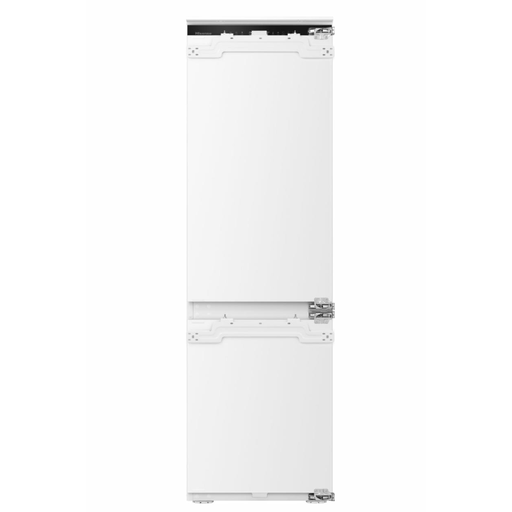 Image unavailable
Hisense RB3B250SAWC, 252 L built-in fridge freezer
Worth considering if you’re looking for a built-in fridge freezer and this capacity suits your needs.
The model name indicates No Frost, an Inverter compressor and a C energy rating. Check the housing dimensions and ventilation requirements, then compare the kWh/year figure on the label with those of models offering a similar service.
View on Joybuy
 Image unavailable
Sonlu CC-520WE, 444 L fridge freezer
This capacity is worth considering if you genuinely need plenty of room for both chilled and frozen food.
The model name lists frost-free operation, a noise level of 40 dB and an E energy rating. Check the capacity split, dimensions and kWh/year figure in the model documentation before comparing it with other appliances.
View on Joybuy
 Image unavailable
AEG NSC6M18FES, 249 L built-in fridge freezer
Worth considering if you’re replacing a built-in fridge freezer and the capacity and available space are right for you.
The model name indicates TwinTech No Frost and an E energy rating. Check the housing and ventilation requirements, along with the kWh/year figure on the label, to compare energy use.
View on Joybuy
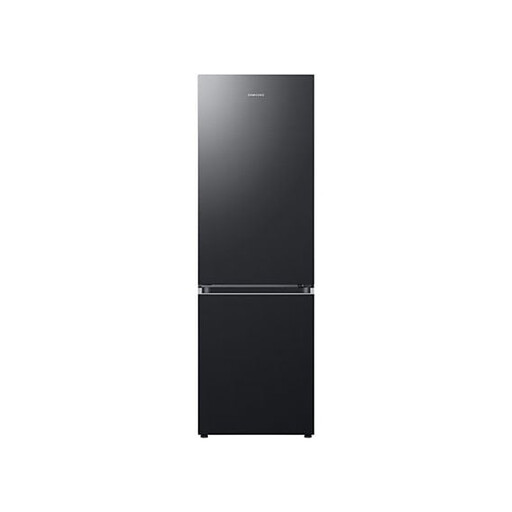 Image unavailable
Samsung RB34C704DB1, 344 L fridge freezer
Worth considering if one appliance with this capacity meets your refrigeration and freezing needs.
The model name indicates a D energy rating. Check the full dimensions and the kWh/year figure in the model documentation before assessing its energy use and whether it will fit.
View on Joybuy
 Image unavailable
CHiQ JR227LSE, 227 L fridge freezer
The listed capacity split could suit you if you’re looking for 153 L of fridge space and 74 L of freezer space in an appliance that’s 54 cm wide.
The model name indicates Low Frost and an E energy rating. Low Frost doesn’t mean you’ll never need to defrost it. Check the other dimensions, ventilation requirements and the kWh/year figure on the label.
View on Joybuy
Frequently asked questions
How can I compare two appliances beyond their energy ratings ?
Compare models with a similar purpose and capacity using their annual energy consumption in kWh. For refrigeration appliances, the label also shows capacity and noise level, as Bosch explains ; a single energy-rating letter doesn’t tell you everything about the difference between two models.
Do ADEME’s typical figures show how much I’ll save by replacing my appliance ?
No. ADEME’s average figures don’t predict the result for your household. To decide whether replacing your appliance is worthwhile, compare its energy use with the kWh/year figure for a model that offers the capacity and functions you need.
Should I check the ventilation before choosing a new fridge ?
Yes. Check the dimensions and clearance required in the instructions for the exact model. Whirlpool provides guidance for some freestanding appliances, but you shouldn’t automatically apply it to another model or a built-in installation.
What temperature should I check after installing my fridge ?
Anses recommends keeping the coldest part of your fridge between 0 °C and 4 °C. It advises checking the temperature particularly if the door is opened frequently or the appliance is very full.


