If you regularly make espresso without capsules, a portafilter machine is a good choice if you’re happy to measure out the coffee and clean the parts after use. A bean-to-cup machine is better if you’d rather use whole beans with less effort for each cup. According to Que Choisir, however, bean-to-cup machines take up more space and are noisier than capsule systems. Their containers and brewing unit also need regular cleaning. If the convenience of individual portions matters most, capsules or soft coffee pads are still an option, provided you check which format the machine accepts and how it needs descaling.
Who are these systems for?
The right choice mainly depends on how often you make coffee and how much effort you’re happy to put in each day.
Households that make espresso regularly
If you want to choose your own beans and make drinks with minimal effort for each cup, consider a bean-to-cup machine. Make sure you have enough space, and check the manual for instructions on cleaning the containers and brewing unit. Que Choisir notes that the containers and brewing chamber need regular rinsing.
Households that prefer individual portions
Soft coffee pads and capsules save you from measuring out coffee for every drink. If you’d like to cut down on capsules without switching to a portafilter machine, compare the pad formats accepted, the steps involved in making a drink and the descaling process for the model you’re considering.
People who want to make espresso by hand
A portafilter machine is a good fit if you want to choose your coffee and control how much you use, fit the filter and clean the machine. It involves more hands-on preparation than making a drink at the touch of a button. Also check whether you’ll need a separate grinder to use whole beans.
How do the machines compare?
Start with the coffee you want to use, then consider how each system fits your available space and the maintenance you can realistically keep up with.
| Criteria |
What to check |
To suit your needs |
| Coffee format |
Check which capsules or pads are compatible with the exact model. If you want to use ground coffee or whole beans, check whether you need a portafilter, a separate grinder or a machine with a built-in grinder. |
I want to choose my own beans: a bean-to-cup machine, or a portafilter machine paired with a grinder, is worth considering. If I’d rather use pre-measured portions, I’ll check the format first. |
| Everyday steps |
Compare the effort involved in measuring out coffee and cleaning up after each drink. A portafilter machine requires manual preparation; an automatic machine reduces the steps involved, but still needs maintenance. |
I enjoy making my coffee: a portafilter machine could suit me. If I mainly want to cut down on the steps for each cup, I’ll look at the controls on automatic or portion-based models. |
| Maintenance |
Check the manual for descaling instructions, how to rinse the containers and how to access the brewing unit. If you make milk-based drinks, also check how to clean the steam wand or milk system. |
I’ll choose a machine with maintenance tasks I can keep up with regularly. De’Longhi France explains that how often its bean-to-cup machines need descaling depends, among other things, on water hardness. |
| Space and noise |
Measure the space available, including room to fill the water tanks or remove the containers. Que Choisir notes that a bean-to-cup machine takes up more space and is noisier than a capsule system. |
My worktop space is limited, or noise matters in my household: I’ll check the dimensions and operating conditions of the exact model before choosing a bean-to-cup machine. |
| Portions and recycling |
Find out what the capsules or pads are made from and check the local collection guidance. ADEME recommends avoiding individually wrapped packaging or single portions where possible. |
If I want to reduce individually wrapped portions, I’ll consider ground coffee or whole beans. If I keep using capsules, I’ll check the local recycling options rather than assume they can be recycled. |
What should you avoid before choosing?
-
Forgetting that each system has its own consumables
The format you choose determines which coffee you can use and which cleaning products you’ll need. Switching to beans, ground coffee or pads doesn’t mean you can skip descaling.
Before choosing, check the coffee format the exact model accepts, along with any filters, cleaning products or accessories listed in its manual.
-
Assuming automatic preparation means no maintenance
According to Que Choisir, the coffee-ground and drip trays on a bean-to-cup machine need regular rinsing, as does its brewing chamber, though less often. One-touch controls don’t mean you can skip these tasks.
Before choosing a model, check how easy it is to access the parts that need cleaning, what alerts the machine provides and what’s involved in descaling.
Allow time to rinse the parts and descale the machine.
-
Assuming a recyclable capsule means a waste-free drink
The material the capsule is made from and the collection scheme actually available both matter. ADEME recommends avoiding individually wrapped portions where possible.
If you keep using capsules, check the local guidance for their material. If you want to reduce individual portions, also consider ground coffee and whole beans.
-
Assuming spare parts will always be available
Nespresso France says its repair service may not be available if the necessary parts are out of stock. So, an advertised repair option doesn’t guarantee that every machine can be repaired.
For the model you’re interested in, check the information on spare parts, accessories and the terms of the repair service.
A guide to the brands
This overview covers the ranges and documents mentioned, not every machine from each brand. Check the manuals for the specific models you’re interested in before making your choice.
De’Longhi
De’Longhi France’s support documents explain how to maintain its bean-to-cup machines, including the Magnifica Evo Next.
- The instructions identify parts that need cleaning, including the coffee-ground container, drip tray and brewing unit.
- Descaling frequency depends, among other things, on water hardness. Check the process and how to access the parts on your chosen model.
Sage
Sage’s Barista Express is aimed at people who want to get hands-on with making their espresso.
- The brand explains how to use ground beans in its espresso machines.
- Sage also sells descalers, cleaning tablets and brushes, so check the cleaning routine for the model you’re considering.
Nespresso
Nespresso is a good option for households that want to keep using pre-measured coffee capsules.
- Nespresso France provides descaling instructions for its machines.
- The brand recommends descaling every three months or after around 300 capsules. It also says that spare-part availability can affect whether its repair service is available.
Philips SENSEO
The SENSEO range offers soft coffee pads and individually portioned drinks.
- Philips France publishes descaling instructions and support pages for specific models.
- Check which pad format your chosen model accepts and what maintenance it requires. The documentation reviewed describes a two-cycle descaling process.
Machines to consider on Joybuy
These models showcase three ways to make coffee at home: a bean-to-cup machine for whole beans, a portafilter machine for making coffee by hand, and a multi-format capsule machine for individual portions.
 Image unavailable
Philips Series 2200 EP2230/10 LatteGo, glossy black
This machine with a built-in grinder is a good way for a household to enjoy whole-bean coffee and make drinks at home regularly. Check the manual for rinsing and descaling instructions specific to the EP2230/10, and make sure you have enough space for the machine and its containers.
View on Joybuy
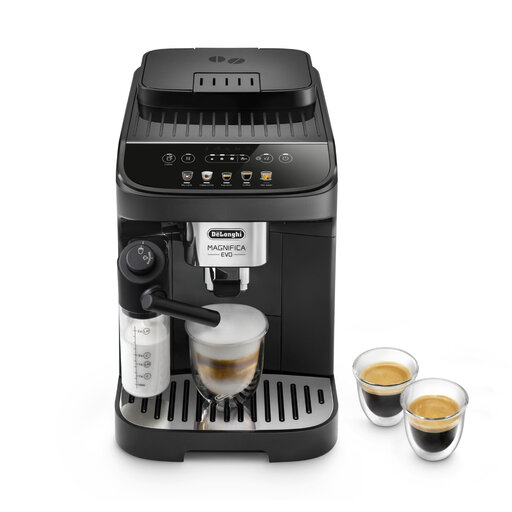 Image unavailable
De’Longhi Magnifica Evo LatteCrema ECAM290.61.B, black
This automatic Magnifica Evo is for households considering whole-bean coffee and a LatteCrema model. If milk-based drinks are important to you, check the ECAM290.61.B manual for instructions on cleaning the milk system, then measure the space available on your worktop.
View on Joybuy
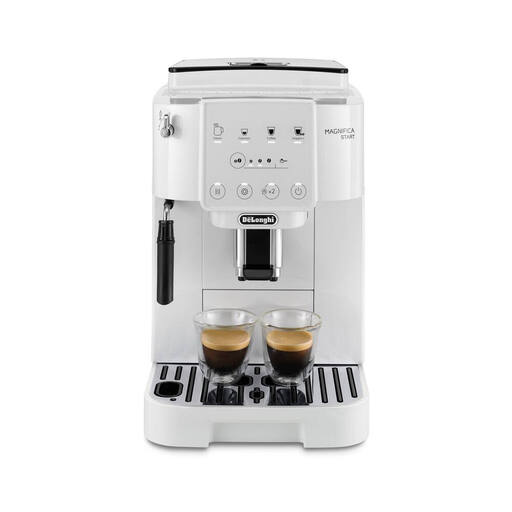 Image unavailable
De’Longhi Magnifica Start ECAM220.21.WW, white
This bean-to-cup machine is another option if you want to replace capsules with automatic coffee preparation. To compare the ECAM220.21.WW with other Magnifica models, check the drinks it makes, how much space it takes up and which parts need cleaning, as listed in its manual.
View on Joybuy
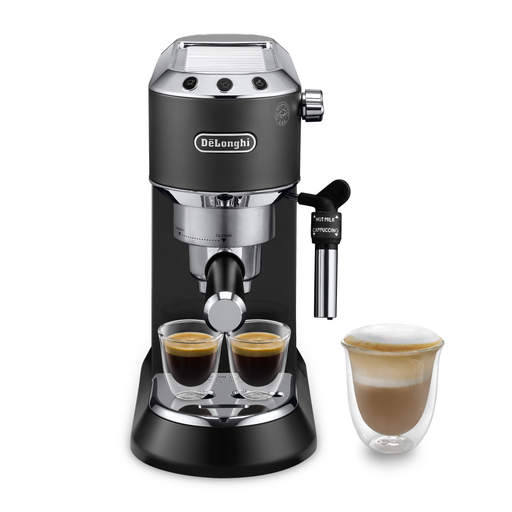 Image unavailable
De’Longhi Dedica Style EC685.BK portafilter machine, black
A portafilter machine is a hands-on option if you’d rather use ground coffee than capsules. With the EC685.BK, allow time for preparation and cleaning after use. If you’re starting with whole beans, check which grinder you’ll need.
View on Joybuy
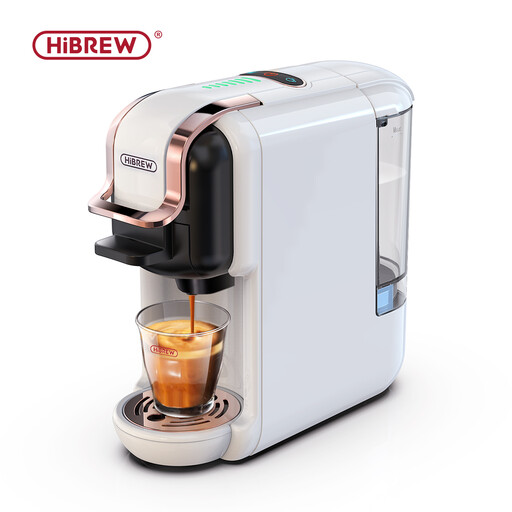 Image unavailable
HiBREW H2B 5-in-1, for capsules, ESE pads and ground coffee
The H2B is still a multi-format capsule machine. It’s best suited to people who want to keep using capsules while also considering the ESE pad and ground coffee formats mentioned in its name. Before relying on either of these options, check which adaptors are included with the version on sale and whether your cups are compatible.
View on Joybuy
Frequently asked questions
Does a capsule machine mean you don’t need to descale?
No. Nespresso France recommends descaling its machines every three months or after around 300 capsules. Follow the instructions for your model and the precautions for using the descaling product.
What maintenance does a bean-to-cup machine need?
Rinse the parts listed in the manual and run descaling cycles. Que Choisir specifically mentions the coffee-ground and drip trays, as well as the brewing chamber, which needs rinsing less often. De’Longhi France explains that descaling frequency depends, among other things, on water hardness. Check the instructions for your model, including how to clean the milk system if it has one.
Do all capsules have the same recycling instructions?
No. Instructions depend on the material and the collection options available locally. ADEME distinguishes, among other things, between paper capsules and capsules that can be returned through a dedicated collection scheme. Check the guidance for your capsules before throwing them away.
How can I check whether a machine can be repaired?
Look for information about spare parts and repair services for the exact model. Nespresso France says repairs may not be available if the necessary parts are out of stock. So, general information about a repair service doesn’t confirm what will be possible for your machine.


