Households considering replacing a refrigeration appliance
If your fridge-freezer runs continuously, compare its annual energy use with that of models offering suitable storage space. The ADEME notes that refrigeration appliances run all the time.


Prioritise the appliance that accounts for the most energy use in your home: a fridge-freezer runs continuously, while whether it’s worth replacing a washing machine, dishwasher or tumble dryer depends in part on how often you use it. Then compare appliances in the same category and with a suitable capacity, using the figures on the energy label rather than relying on the rating alone: kWh/year for refrigeration, figures per cycle for other appliances, then water use, programme duration and noise level to suit your needs.
If your fridge-freezer runs continuously, compare its annual energy use with that of models offering suitable storage space. The ADEME notes that refrigeration appliances run all the time.
How often you run a cycle and how much laundry you actually load can help you decide whether to prioritise replacing your washing machine or tumble dryer. Also check the capacity, noise level and installation requirements that matter in your home.
If you’re replacing a dishwasher, compare its water and electricity use, capacity and Eco programme duration. In an open-plan kitchen, noise levels may also influence your choice.
Start with the appliance you use most, then compare models with equivalent capacities: the European Commission and ADEME show refrigeration energy use in kWh/year, while washing machine and dishwasher labels give figures per 100 cycles.
| What matters to you | What to check | Who this applies to |
|---|---|---|
| Continuous refrigeration | Compare kWh/year and the fridge and freezer compartment volumes of appliances that meet the same storage needs. | If my fridge-freezer runs day and night, I want to know whether replacing it should take priority over appliances used in cycles. Around 31 % of consumers would prioritise this refrigeration need. |
| Frequent tumble drying | Check the energy use shown for the reference cycles, the capacity and how condensation is managed for your planned installation. | If I regularly tumble-dry my laundry, this is the repeated use I want to look at first; around 25 % of consumers would put drying at the top of their list. |
| Frequent washing | Compare kWh/100 cycles and litres per cycle for the Eco 40-60 programme, choosing a capacity that suits your loads. | If I’m doing one wash after another, I want a drum suited to my usual loads rather than a large capacity I rarely use. Around 25 % of consumers would put their washing needs first. |
| Dishes, water and noise | For comparable capacities, check kWh/100 cycles, litres per cycle, the Eco programme duration and dB. | In an open-plan kitchen, I want to be able to run the dishwasher without overlooking water use or noise. Around 19 % of consumers would prioritise this balance when choosing a dishwasher. |
The rating alone isn’t enough to distinguish between two purchases: the unit of measurement and reference programme vary by appliance type. A figure in kWh/year for refrigeration can’t be directly compared with a figure per 100 cycles.
First compare appliances in the same category, then check their capacity or volume, energy-use figures and any other criteria relevant to how you’ll use them.
A larger fridge or drum won’t necessarily help if you don’t use the extra storage space or usually wash small loads. ADEME recommends choosing an appliance size that suits your household’s needs.
Check how much you usually store and the size of your typical laundry loads before comparing models.
A fridge-freezer in an open-plan kitchen or a washing machine near living areas can make noise levels important, even if its energy rating suits you.
Check the dB figure and, where shown on the label, the appliance’s noise rating.
The capacity and energy label alone won’t tell you whether the appliance will fit in your home or how condensation will be managed.
Before choosing, check the dimensions, available space and installation guidance for the exact model.
These appliances suit three of the replacement projects covered here: a dishwasher, washing machine and fridge-freezer. Their inclusion doesn’t determine which one you should replace first: compare their specifications with those of your current appliance and consider how you use it.
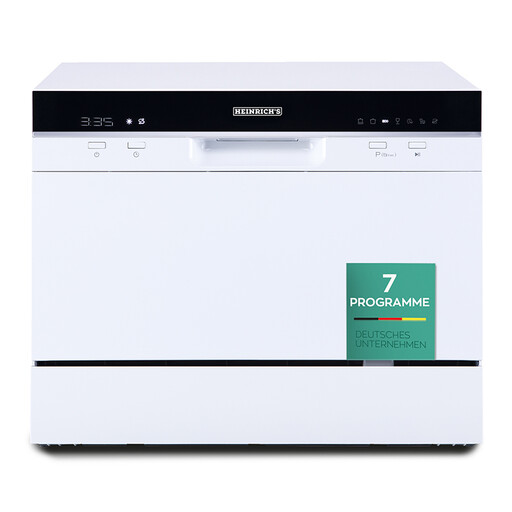 Image unavailable
Consider this if six place settings suit the amount of washing-up you do and a table-top model fits the space available.
The product name lists seven programmes, a D energy rating and 47 dB. To compare its energy use with other dishwashers, check the kWh/100 cycles on the label for this exact model.
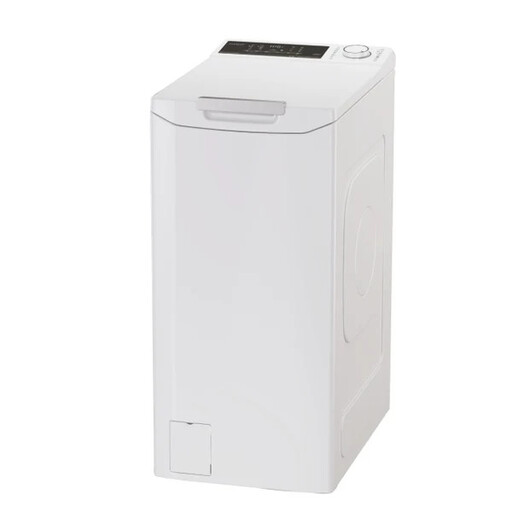 Image unavailable
Consider this if a 6 kg capacity suits your usual laundry loads and you’re looking for a top-loading machine.
The product name lists a maximum spin speed of 1 400 rpm, a B energy rating, Wi-Fi and 17 programmes. If you plan to install it near a living area, check the spin noise level on the label for the exact model before choosing it.
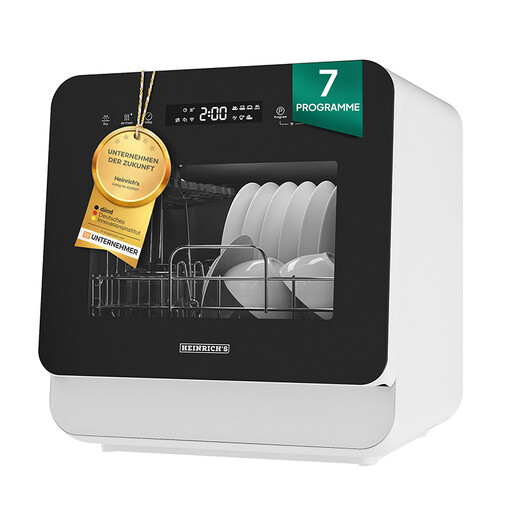 Image unavailable
Before making it your main appliance, consider whether its stated capacity of three place settings suits the amount of washing-up you usually have.
The product name lists seven programmes, a C energy rating and 56.3 dB, and says it can be used with or without a water connection. Check the water supply requirements and kWh/100 cycles in the documentation for the exact model.
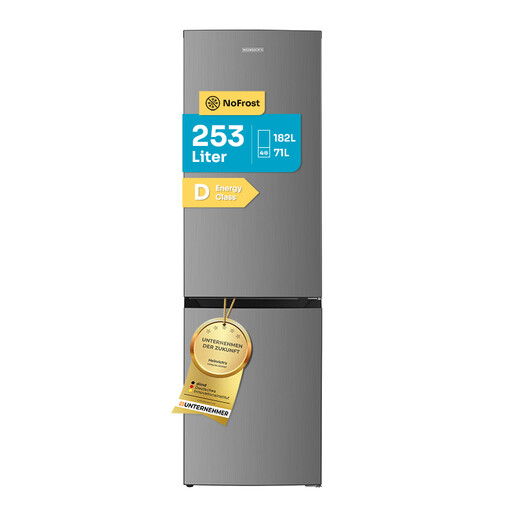 Image unavailable
Consider this if its storage capacity suits your household and you’re planning a freestanding installation.
The product name lists 182 L of fridge space, 71 L of freezer space, No-Frost technology and 39 dB. Check the kWh/year on the label for the exact model before deciding whether it’s worth replacing your current appliance.
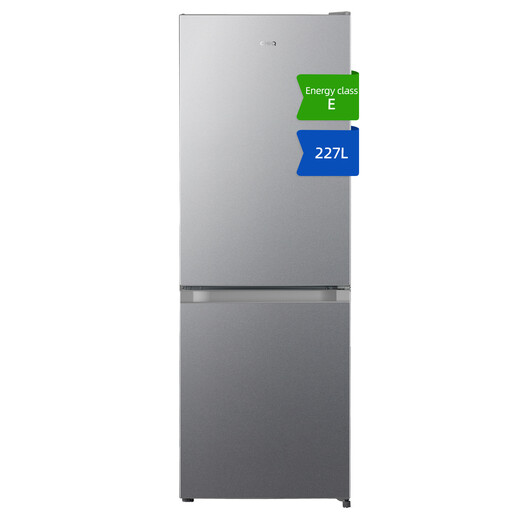 Image unavailable
Consider this if you’re looking for a fridge-freezer to fit a restricted space, making sure to check its dimensions before you decide.
Check the label and product details for the exact model to find the fridge and freezer volumes, width and kWh/year. You’ll need these figures to assess both the available space and whether replacement is worthwhile.
No : when deciding whether to replace an appliance, you also need to consider how you use your current one and the energy-use figures for comparable models. ADEME and the European Commission show refrigeration energy use in kWh/year, while washing machine and dishwasher figures relate to reference cycles ; capacity, water use and noise also help you choose the right appliance for your needs.
Compare their kWh/year figures and make sure their fridge and freezer volumes suit your needs. The European Commission says the label also shows storage volumes and noise emissions ; these criteria help you look beyond the energy rating alone.
No : they provide a reference for comparing models, not an exact prediction for every use. For washing machines, the figures relate in particular to the Eco 40-60 programme; for dishwashers, they relate to the Eco programme. The load, programme selected and conditions of use also make a difference.
Make sure the energy label and product details show the exact model you intend to buy. If there’s a QR code on the label, you can use it to view the corresponding entry in EPREL, the European public register described by the European Commission.