
Livraison le jour même ou le lendemain

Qualité garantie

Débloquez vos offres de bienvenue: Livraison GRATUITE | Jusqu'à -80 % | 30 jours d'essai gratuits à JoyPlus
Téléchargez l'application
Mosquitoes in the bedroom, ants along the skirting boards, cats wreaking havoc on a flowerbed, or ticks brought back from a walk: repellents and parasite treatments cover a wide range of very different needs. Yet packaging often highlights a protection duration without specifying the conditions of use, the actual surface area covered, or the precautions to take.
Before placing an order, three common mistakes keep cropping up:
Start by identifying the space you need to treat:
Never use a product outside its intended purpose. Biocides must be applied in accordance with their label and product information sheet.
The brand name alone is not enough to choose between two products. Look at the active ingredient, its concentration and the format on offer.
A 300 ml aerosol can be handy for treating a room or a specific area on a one-off basis. However, it does require good ventilation and adherence to precautions for flammable products. A diffuser refill will be more suitable for regular use, provided you have the compatible device.
For dogs, flea and tick pipettes for dogs are generally dosed according to the animal’s weight. A collar, on the other hand, offers continuous protection, but it must be fitted correctly and monitored during the first few days.
Don’t just look at the stated duration – check the conditions that go with it:
Even a solution marketed as long-lasting may need reapplication after cleaning, mowing or a spell of bad weather. Keep the packaging – that way you can refer back to the usage instructions, batch number and expiry date.
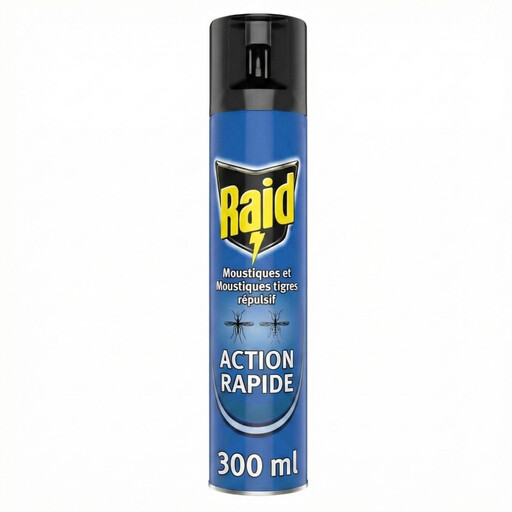
Why this choice suits this profile: with its 300 ml, this format is ideal for a one-off treatment in a room, without needing to buy a diffuser or multiple accessories.
The product page mentions a water-based formula with no added fragrance, offering protection for up to 4 hours. The product must not be sprayed on skin or the face.
A 300 ml pressurised aerosol, fragrance-free, designed for indoor use as per the instructions provided.
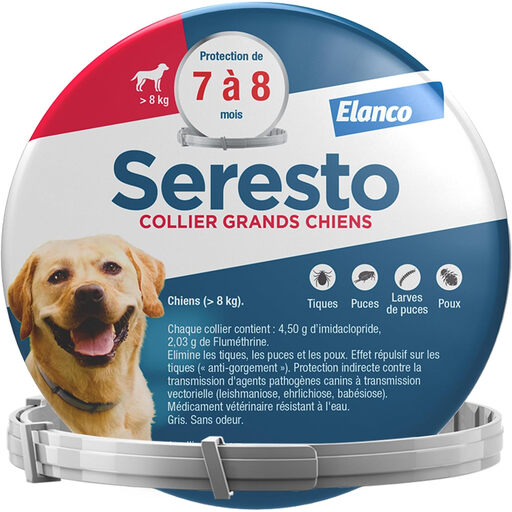
Why this choice suits this profile: this collar is aimed at owners of large dogs who want continuous protection, especially for pets that are walked regularly.
The size is explicitly designed for dogs weighing 8 kg and over. The fit should allow two fingers to slide between the collar and the neck.
A collar described as water-resistant and fragrance-free, with replacement recommended every 8 months according to the product information.
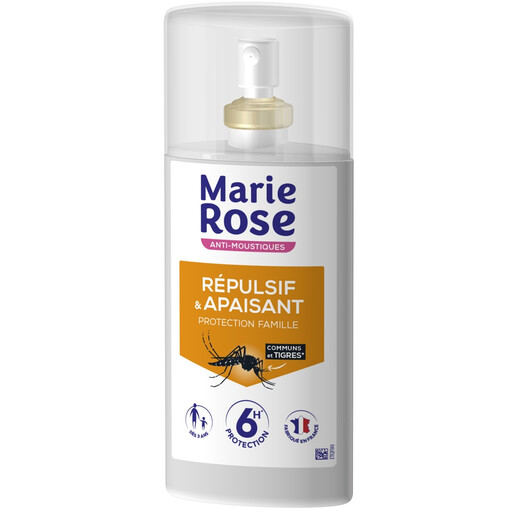
Why this choice suits this profile: its skin application and compact size make it ideal for frequent outings, provided you follow the minimum age and frequency stated on the label.
The product page specifies an IR3535 formula at 20%, suitable from 3 years of age, along with a maximum number of applications depending on age.
A 100 ml spray enriched with allantoin and menthol, to be applied only to exposed areas.
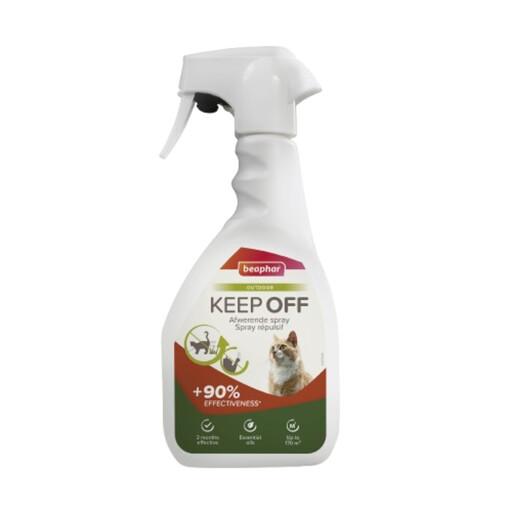
Why this choice suits this profile: this outdoor cat repellent targets garden furniture, fences, porches and patios in particular. Applications need to be repeated depending on conditions.
The recommended dosage is 3 ml per m², with weekly application in dry weather. On delicate surfaces, test it first in an inconspicuous spot.
A 500 ml bottle containing lavender and peppermint essential oils, intended for outdoor use, with an action described as immediate after application.
We have selected a complete range, updated in real time, of products that meet these strict criteria as well as European safety regulations.
An anti-mosquito repellent aims to keep mosquitoes away, whereas an insecticide is designed to act on insects already present. The method of application can also differ: skin, ambient air or surfaces. Always check the usage category and active ingredient stated on the label.
It all depends on the format you choose. Pipettes sometimes need to be renewed every four weeks, whereas a collar can be designed to last several months. For a dog weighing 10 to 20 kg or 20 to 40 kg, you must choose the dosage that matches its weight. If in doubt, ask your vet for advice.
That depends on how often you use it and the price of the refills. A spray is suitable for occasional use, whereas a refillable diffuser can prove more practical if you use it regularly. Compare the cost per period of use and make sure the refill is compatible with your diffuser.