Households with a fridge that’s the wrong size
If you’re short on space or regularly cool a large area that’s rarely used, check the usable capacity of each compartment, how much freezer space you need and the room available in your kitchen.


If you’re short on space or regularly cool a large area that’s rarely used, check the usable capacity of each compartment, how much freezer space you need and the room available in your kitchen.
A fridge runs all the time. When comparing potential replacements, ADEME recommends considering the size and features as well as the declared annual energy consumption.
If your fridge is near a living area, check the noise level and noise class for the exact model. If your current appliance has broken down, a diagnosis and a check for the required spare part can also help you decide whether to replace it.
If your fridge has broken down, consider repair before choosing a new appliance. If you do replace it, work out separately how much space you need for fresh and frozen food. This will help you compare the annual energy consumption of appliances with a similar type and capacity.
| Criteria | What to check | Who is it for? |
|---|---|---|
| Ongoing energy use | kWh/year on the energy label, comparing appliances with a similar type and usable capacity; the energy rating alone isn’t enough. | If I’m replacing an appliance that runs day and night, I want to compare its declared energy use without assuming what it will be in my home. Around 21% of consumers prioritise this continuous electricity use. |
| Capacity and layout | The usable capacity of the fridge and freezer separately, followed by the dimensions and clearances specified in the manual. | If I’m short on space for everyday storage, or one large compartment is rarely used, I’m looking for a layout that suits the food I buy. For around 36% of consumers, getting the capacity right comes before other criteria. |
| Repair and service life | A diagnosis and quote, the warranty, the spare part needed and whether the appliance may qualify for the Repair Bonus. | If my appliance breaks down, I’d rather find out whether it can keep working before buying another one. Avoiding premature replacement is the priority for around 29% of consumers. |
| Noise in your living space | The dB(A) rating and noise class for the exact model; an independent test can provide extra insight into noises during operating cycles. | In an open-plan kitchen or near a space where people relax, I want to minimise everyday noise. This is the top concern for around 14% of consumers. |
The energy rating alone doesn’t tell you how much electricity an appliance uses over a year. ADEME points out that a larger capacity or extra features can increase energy use, even in a newer appliance.
Check the kWh/year figure and compare models with a similar layout and usable capacity.
A breakdown doesn’t tell you whether a repair is possible. In France, the Repair Bonus may apply to certain appliances that are out of warranty and certain faults, provided the repair is eligible and carried out by an approved repairer.
Check the warranty, then ask for a diagnosis and a quote that identifies the part involved before deciding.
Two appliances with the same total capacity can divide the space differently between the fridge and freezer. So a large overall capacity doesn’t guarantee enough room where you need it.
Work out how much space you need for fresh and frozen food separately, then compare this with the usable capacity of each compartment.
The declared noise level makes it easier to compare models, but the installation, room acoustics and sounds produced during operating cycles all affect how noticeable the noise is.
In an open-plan kitchen, check the dB(A) rating and noise class. If noise is a deciding factor for you, look for a test of the exact model too.
These ranges include layouts worth considering based on the space available and the compartments you need. The features mentioned apply to the specified models, not every appliance from that brand.
The fridge-freezer range includes different sizes and capacities, including built-in models.
The brand offers fridge freezers in different capacities, with freestanding and built-in options depending on the model.
Its fridge-freezer range includes different storage layouts and air circulation features to explore.
The fridge-freezer range includes freestanding appliances and built-in models.
These appliances combine refrigeration and freezing. If you genuinely need both compartments, compare their capacities and the space they take up before checking the energy label for the exact model. They won’t tell you whether your current appliance can be repaired.
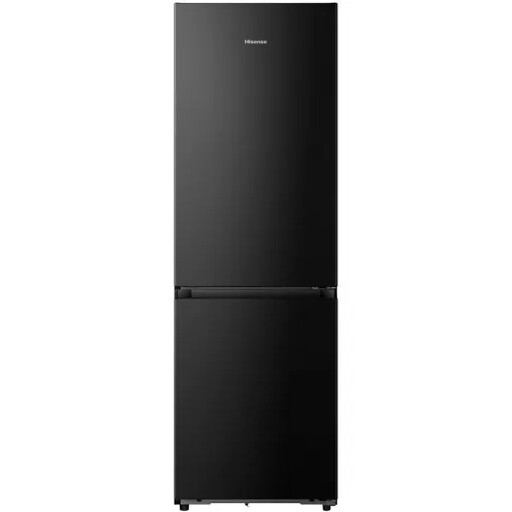 Image unavailable
Worth considering if you want to keep fresh and frozen food in one appliance.
The product name gives a total capacity of 330 l. Check the capacity of each compartment, installation dimensions and access to spare parts for this model.
 Image unavailable
Consider this if your storage needs call for a multi-door appliance and you have enough room for it in your kitchen.
The product name lists a capacity of 467 l, Total No Frost and an energy rating of E. Check the capacity of each compartment, the dimensions and access to spare parts for this model.
 Image unavailable
Worth considering if a three-door layout suits the way you organise fresh and frozen food.
The product name lists a capacity of 360 l, Total No Frost and an energy rating of E. Check the capacity of each compartment, the space needed for installation and access to spare parts.
 Image unavailable
Worth considering if you’re looking for a fridge freezer and need to check the available space around the appliance carefully.
The product name lists a capacity of 333 l and an energy rating of C. Information about the required installation clearance varies, so check the requirements for this model in its manual, along with access to spare parts.
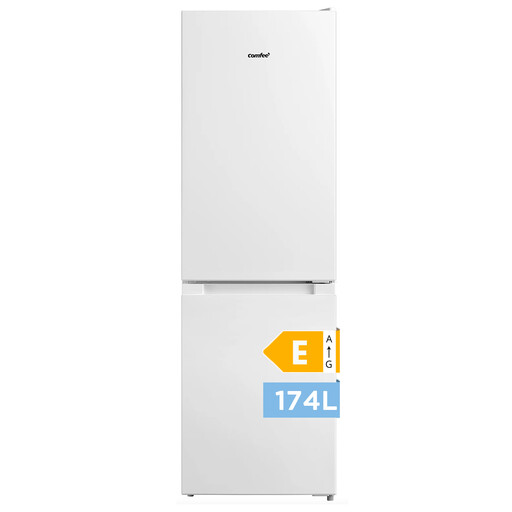 Image unavailable
Consider this if a more modest combined capacity suits your usual storage needs.
The product name lists a capacity of 174 l, a height of 150 cm, Low Frost, 39 dB and an energy rating of E. Low Frost doesn’t mean you’ll never need to defrost it manually. Check the label for the kWh/year figure too, and find out about access to spare parts.
It’s essential, but the energy rating alone isn’t enough. The EU energy label includes details such as kWh/year, storage capacities and noise level. Look at these figures together and, where possible, compare appliances with a similar layout and capacity.
It may qualify if the appliance is no longer covered by a warranty, both the appliance and the fault are eligible, and the work is carried out by an approved repairer, in line with the conditions published by ecosystem. Check these points when arranging a diagnosis and quote.
Check the dB(A) rating and noise class listed for the exact model. UFC-Que Choisir cites less than 40 dB(A) as a guide for models described as quiet, but this figure doesn’t guarantee the same level of comfort in every room. An independent test can help you assess noises during operating cycles.
When comparing fridges, it’s better to use their product information and details about spare parts for the exact model. France’s Ministry for Ecological Transition says the rollout of the durability index in 2025 applies to televisions and washing machines. Don’t assume that every fridge will display one.