
Livraison le jour même ou le lendemain

Qualité garantie

Débloquez vos offres de bienvenue: Livraison GRATUITE | Jusqu'à -80 % | 30 jours d'essai gratuits à JoyPlus
Téléchargez l'application
Hair dried out by colouring, split ends, curls lacking bounce or a hair fibre weakened by heated styling tools: a repairing hair mask can be an effective addition to a suitable routine. However, you should not be guided solely by the promises printed on the packaging.
Some mistakes are particularly common:
A hydrating hair mask often contains humectants such as glycerine, panthenol or certain forms of urea. It is intended for hair that lacks flexibility, feels rough or becomes dehydrated easily, particularly after repeated exposure to heating, sunlight or hard water.
A nourishing mask for dry hair focuses more on oils and other emollients: plant oils, butters and conditioning ingredients. This type of formula can be particularly beneficial for thick, curly, coily or highly porous hair.
To support the repair of broken hair, look instead for a combination of film-forming agents, hydrolysed proteins, amino acids or complexes described as strengthening the hair fibre. These ingredients cannot permanently rejoin a split end, but they may temporarily improve the feel, detangling and mechanical resilience of the hair.
A deep hair treatment needs to fit into your daily routine. Masks that are left on for 3 to 5 minutes are easy to use in the shower. Formulas requiring 10 minutes or more are better suited to a weekly routine.
A very rich texture is well suited to treatment for very dry hair, but may prove too heavy for fine hair. Conversely, a more fluid formula is often easier to distribute through curly hair without sacrificing volume.
If you are looking for a silicone-free hair mask, check the INCI list rather than relying on the front of the packaging. Silicones can generally be identified by names ending in “-cone”, “-conol” or “-siloxane”. They make detangling easier and provide a smooth surface feel, but some people prefer not to use them.
For coloured or bleached hair, it is better to choose a gentle routine and follow the manufacturer’s recommendations. A hair mask for coloured hair may contain conditioning agents and ingredients intended for sensitised hair, but it does not replace the essential precautions required after a chemical treatment.
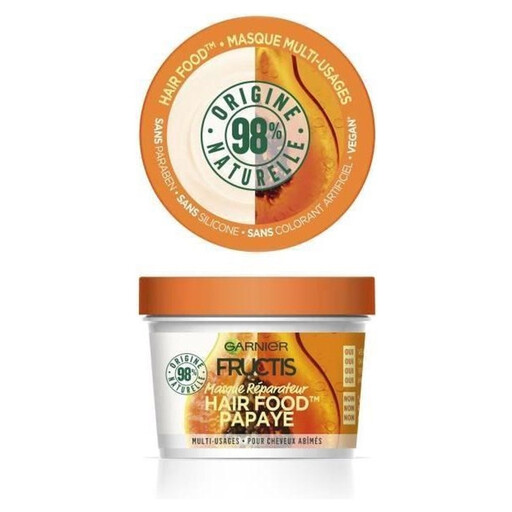
Why this choice suits this profile : With its 390 ml size and 3- to 5-minute application time, this mask makes it easy to start a repairing routine without turning your shower into an endless ritual. The product details also mention three uses : mask, conditioner or leave-in treatment.
Its versatility means you do not need to buy several products to try different textures. It is still essential to check the ingredients list and adapt how you use it to suit your hair fibre.
A generous size, papaya and amla extracts, plus a formula presented by the brand as vegan.
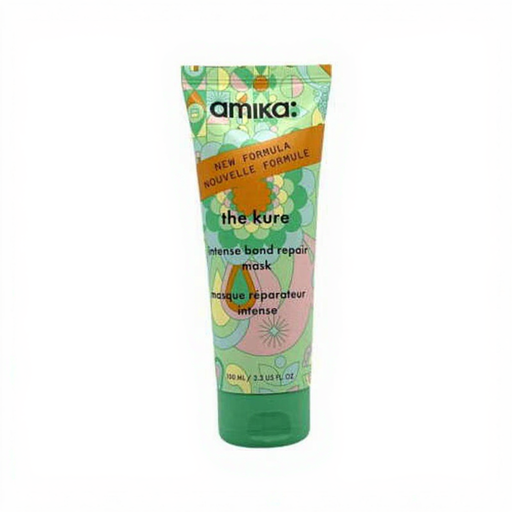
Why this choice suits this profile : Its 100 ml size is ideal for anyone looking to add a targeted intensive treatment to a premium routine, particularly for coloured, curly or sensitised hair.
The brand recommends leaving it on for 10 minutes and using it weekly. This provides useful guidance to avoid overloading the hair with a particularly rich treatment.
Shea butter, mango butter, borage oil and sea buckthorn oil, with a formula advertised as suitable for coloured hair.
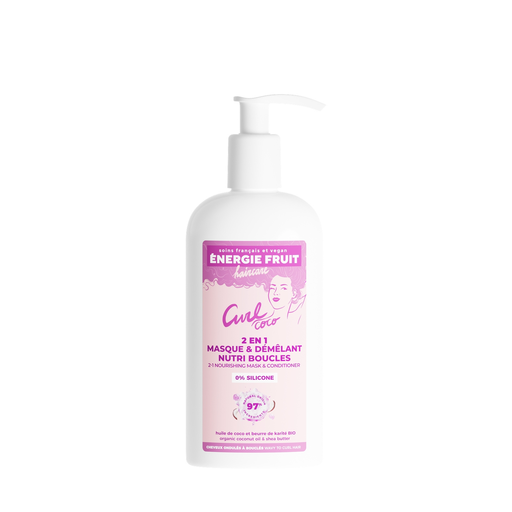
Why this choice suits this profile : This formula is designed for curly and coily hair, with application recommended once or twice a week. It may suit anyone looking for a nourishing silicone-free mask.
The product details specify the targeted hair type and confirm that it is silicone-free. These are two valuable pieces of information when avoiding an overly general mask.
97% naturally derived ingredients advertised, organic coconut oil, shea butter and manufacturing stated to take place in France.
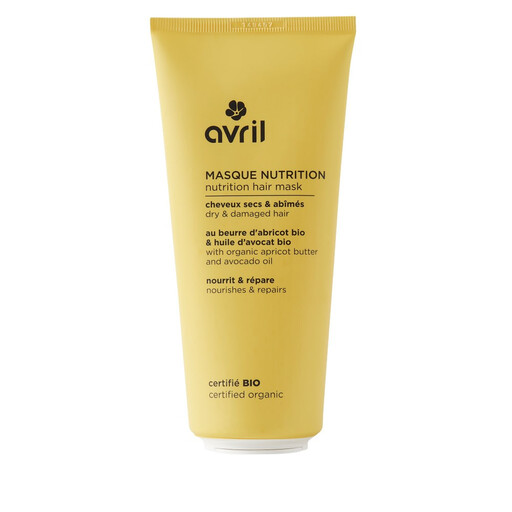
Why this choice suits this profile : Applying it before shampooing may suit very dry hair that responds well to rich textures and needs occasional nourishing care.
Using it before shampooing reduces the risk of leaving behind a heavy coating after washing, provided you rinse thoroughly and then shampoo as directed.
99% naturally derived ingredients advertised, organic avocado and apricot oils, plus Cosmos Organic certification highlighted by the brand.
We have put together a complete, real-time selection of products that meet these demanding criteria and European safety standards.
For a deep hair treatment, one or two applications a week are generally sufficient. Very dry or very curly hair may require a different frequency. Conversely, fine hair will often benefit from using a smaller amount and leaving it on for less time.
It is not necessarily useful. For an intensive formula, weekly application is generally sufficient. Using it too often may weigh down some hair types, particularly when the product contains a high concentration of rich ingredients, oils or silicones.
It depends entirely on the formula. The products featured here generally state an application time of between 3 and 10 minutes, while some treatments are rinsed off almost immediately. Leaving the mask on for longer than recommended does not guarantee better results.
No. A mask can leave the lengths feeling softer, more flexible and visibly healthier, but an already split end cannot be permanently reconstructed. To remove the damaged section, only a trim is truly effective.