
Livraison le jour même ou le lendemain

Qualité garantie

Débloquez vos offres de bienvenue: Livraison GRATUITE | Jusqu'à -80 % | 30 jours d'essai gratuits à JoyPlus
Téléchargez l'application
Dry, brittle, dull or hard-to-style hair? A repairing hair mask can restore suppleness and improve the look of your hair, provided you choose the right formula. After all, not all treatments labelled "repairing" target the same needs. Curly hair has different requirements to fine, coloured or heat-damaged hair.
A mask can coat the hair shaft, make detangling easier and leave your hair feeling softer to the touch. However, it won't permanently mend split ends, and it will never replace a haircut when the ends are severely damaged. So the phrase "intense repair" should be understood as a promise of cosmetic care, not a permanent transformation of the hair fibre.
A nourishing hair mask packed with oils, butters or coating agents can work wonders on very dry hair. On fine or low-porosity hair, however, this type of texture can flatten the lengths and quickly leave your hair feeling heavy. How often you use it matters just as much as what's in it.
A percentage of naturally derived ingredients, a "vegan" claim or a highlighted active ingredient isn't enough to tell you whether the product is right for your hair. You also need to look at the full ingredients list, how to apply it, the recommended leave-in time and where to use it. A certified organic hair mask, for example, can have a very different texture and scent from a conventional treatment.
Coconut, avocado, argan, camellia and fruit seed oils are common in nourishing hair masks. Glycerin and panthenol, on the other hand, are frequently used in hydrating treatments. Proteins and amino acids may appeal to those looking for more coating and structure.
Silicones, mineral oils, fragrances and preservatives don't suit every routine. Their presence isn't necessarily a bad thing – they can help with detangling and protecting the hair fibre. What matters most is matching the formula to your habits and tolerance. If you prefer plant-derived ingredients, check the certification or the manufacturer's information rather than relying solely on the marketing claim.
A 400 to 500 ml pot is ideal for regular use or for long hair. A 100 to 125 ml size is more practical for trying out a formula or taking it on holiday. Stick to the recommended leave-in time: three to five minutes is usually enough for maintenance, while an intensive treatment may need ten minutes.
Apply the product to clean, towel-dried hair, mainly from the mid-lengths to the ends, unless stated otherwise. Rinse thoroughly. One to two applications per week is a good starting point, adjusting according to how dry or fine your hair is.
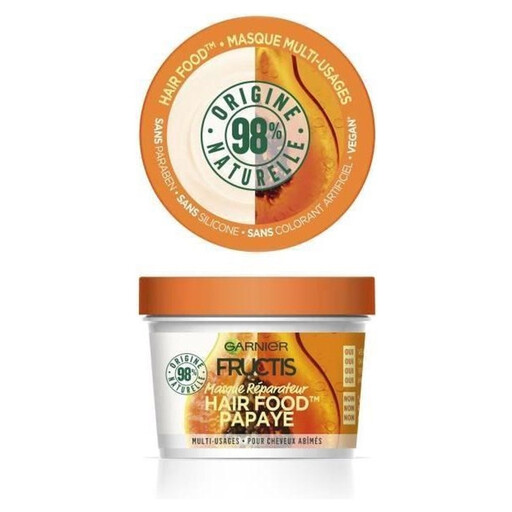
Why this choice suits this profile: With its 390 ml size, this mask is ideal for a regular routine on damaged hair. The recommended leave-in time of three to five minutes is easy to fit into your daily schedule. The product page also mentions a vegan formula and multiple uses: as a conditioner, a mask or a leave-in treatment.
The short leave-in time reduces the risk of leaving a rich treatment on for too long. If you're sensitive to fragrance, do take a moment to check the ingredients list.
Papaya and amla extracts, soybean and coconut oils, family-size format.
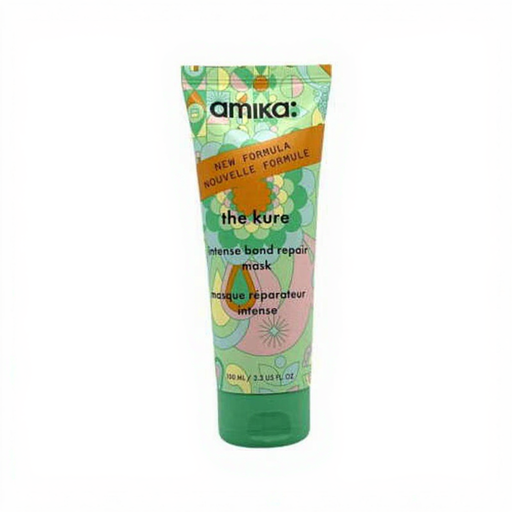
Why this choice suits this profile: At 100 ml, this treatment is designed for a targeted routine, particularly for coloured or sensitised hair. The brand recommends a ten-minute leave-in, once a week, in place of the conditioner from the same range.
The product page clearly states the size and leave-in time. Any claimed results should be taken as data provided by the brand, obtained according to its own testing protocol.
Shea and mango butters, borage and sea buckthorn oils, formula stated as suitable for coloured hair.
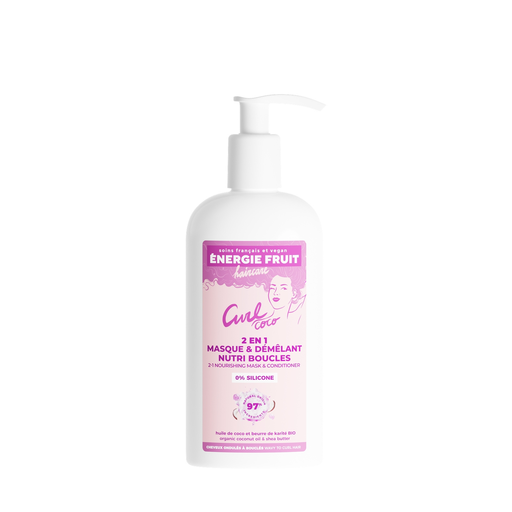
Why this choice suits this profile: This formula is specifically designed for curly and frizzy hair. The product page states it is silicone-free, made with 97% naturally derived ingredients, and recommends use once or twice a week.
Its positioning for curly and frizzy hair means you're not starting with a universal treatment that doesn't specify its effect on curl definition. If your hair doesn't tolerate rich oils well, start by testing a small amount.
Organic coconut oil, shea butter, panthenol, stated as made in France.
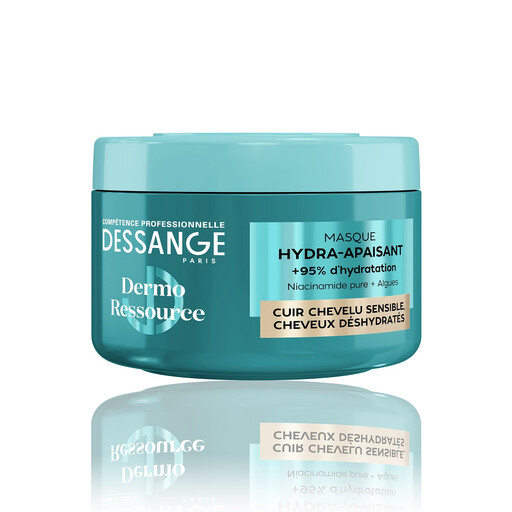
Why this choice suits this profile: Unlike treatments intended only for the ends, this formula is presented as suitable for both the scalp and dehydrated lengths. The product page recommends one to two applications per week, with a leave-in time of five to ten minutes.
Application to the scalp is clearly stated. If redness or irritation occurs, stop using it immediately, in line with the product instructions.
Niacinamide and algae extract mentioned in the ingredients, 280 ml size, suitable for scalp and lengths.
To avoid wasting your treatment, adjust the amount you use to the length and thickness of your hair. A small blob, spread with your fingers or a wide-tooth comb, is often enough. Avoid water that's too hot, dry your hair without rubbing it, and keep the temperature of your styling tools low.
Bleached hair may also need a treatment that targets yellow tones, such as a silver mask. This is used to neutralise unwanted brassy tones – it doesn't replace a nourishing repairing hair treatment. It's better to alternate functions than to pile on too many products in one routine.
We've put together a comprehensive, real-time selection of products that meet these strict criteria and comply with European safety regulations.
One to two applications per week is generally suitable for an intensive treatment. Very dry, curly or heavily sensitised hair may need a different frequency. On the other hand, fine hair will benefit more from a smaller amount and a shorter leave-in time.
Most masks are applied from the mid-lengths to the ends to avoid weighing down the roots. This changes when the product page explicitly states that it can be applied to the scalp, as with a hydrating mask formulated for that area.
Check the open-jar symbol and the information on the packaging. Close the container carefully and store it away from heat and light. Stop using the product if its smell, colour or texture has changed. Before each application, also check the updated ingredients list printed on the product.