
Livraison le jour même ou le lendemain

Qualité garantie

Débloquez vos offres de bienvenue: Livraison GRATUITE | Jusqu'à -80 % | 30 jours d'essai gratuits à JoyPlus
Téléchargez l'application
Whether you need to temporarily seal a leak, protect a cable, patch a torn tarpaulin or secure an object without a drill, repair tape can save the day in seconds. But not every roll is designed to withstand the same conditions. A versatile duct tape can never replace electrical insulation tape, just as outdoor double-sided tape will not be suitable for a repair exposed to twisting forces.
Before you buy, it is therefore worth looking beyond claims such as ‘extra strong’ or ‘waterproof’. The tape’s construction, the surface it is designed for and its format are all equally important. Here are the criteria to consider when choosing a solution suited to your project, whether indoors or outdoors.
A tape may stick immediately yet still come away under tension, vibration or temperature changes. Its strength depends on several factors: the adhesive, the reinforcement and the surface to which it is applied. Reinforced duct tape is generally suitable for bundling, protecting and carrying out certain everyday repairs. However, when securing a heavy object permanently, a multi-purpose adhesive tape may not necessarily have the required properties.
Waterproof tape can help limit water ingress, but it does not turn a makeshift repair into a permanent solution. Surface preparation, overlapping the strips and the pressure applied during installation all play a decisive role. On a pipe, roof or wooden structure, it is better to choose a product specifically designed for outdoor repair tape, waterproofing or corrosion protection.
Some adhesives are designed to stay in place and leave residue when removed. If the fixing is temporary, check that the tape comes away cleanly. The Scotch Extremium NO RESIDUE model claims to remove without residue from most opaque surfaces for up to six months after application, according to the manufacturer’s information. However, this claim does not remove the need to test it on an inconspicuous area.
A cloth-backed tape or reinforced tape combines an adhesive layer with a textile or synthetic backing. Flexible and often tearable by hand, it is practical for quick repairs. Thicker models with a waterproof backing are better suited to demanding repairs, but they are also more visible and can sometimes be harder to remove.
On an uneven surface, flexible polyurethane tape will generally follow the contours more effectively. For transparent glass or plastic, a translucent version without a fabric mesh will minimise the visual impact. The material should therefore be chosen according to the surface: metal, plastic, wood, sealed concrete, glass or fabric.
A width of 48 to 50 mm allows you to cover a tear, bundle of cables or joint effectively. A width of 19 to 24 mm is easier to use in narrow areas and for finishing touches. The length should also match how often you plan to use it:
A longer roll is only worthwhile if its properties genuinely meet your needs.
For outdoor use, look for precise information about resistance to the weather, rain, sunlight and ultraviolet rays. Permanent outdoor double-sided tape may be suitable for securing static items, provided you follow the stated load limit and check compatibility with the surface and setting time.
For electrical work, use only electrical insulation tape designed for this purpose. Scotch Electrical Insulation Tape is stated to comply with IEC 60454-3-1, is available in several colours and can withstand voltages of up to 5,000 V. This information should be checked on the packaging and compared with the specifications of the installation concerned. Always switch off the power before carrying out any work: standard adhesive tape is not a substitute for compliant electrical insulation.
The products below are designed for different uses. Their features are those provided in the product descriptions: always check the application instructions and usage limitations before using them.
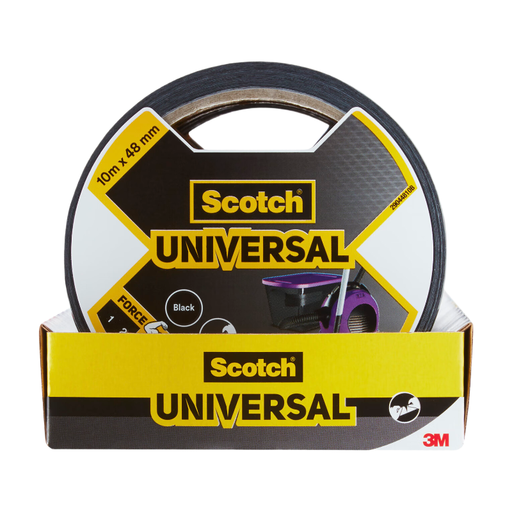
Why this choice suits this user profile: At 10 metres long and 48 mm wide, this tape is suitable for small household jobs, bundling and everyday repairs. It tears by hand and sticks to several surfaces, including plastic, wood and metal.
Its width and reinforced construction are clearly stated. This helps you avoid choosing a tape that is too narrow for a wide repair or one exposed to moderate tension.
Tears by hand, provides a writable surface and offers versatile indoor use.
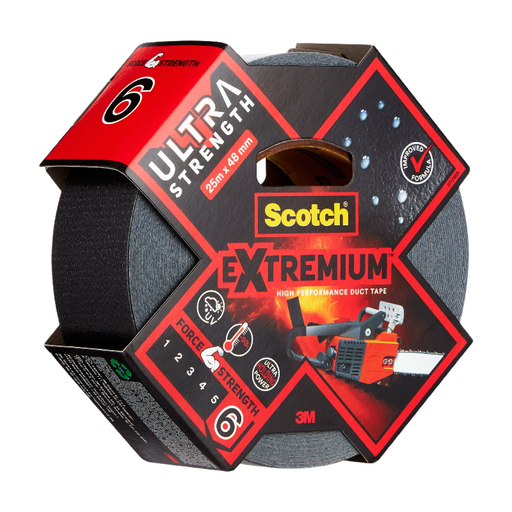
Why this choice suits this user profile: Its very thick, waterproof backing is designed for demanding jobs. Its natural rubber-based adhesive is stated to be suitable for metal, plastic and sealed concrete.
The mention of an ultra-thick, waterproof backing clearly indicates what it is best suited to, rather than suggesting that one multi-purpose tape can do everything.
25 m long, 48 mm wide and fitted with a waterproof backing for intensive jobs.
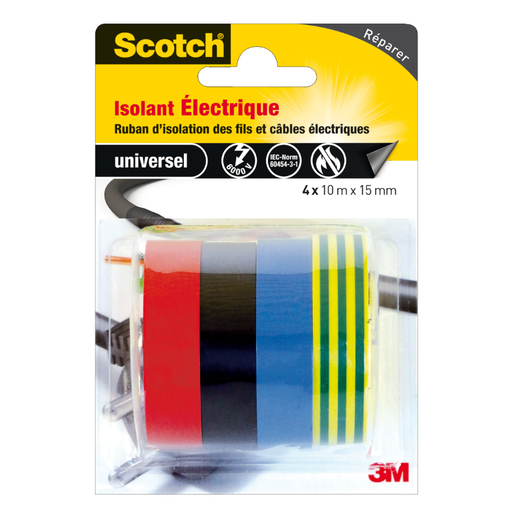
Why this choice suits this user profile: This electrical insulation tape is designed to insulate, bundle and identify cables. Its different colours make it easier to identify circuits during maintenance or installation work.
This is specifically a product intended for electrical insulation, unlike duct tape, whose adhesive and backing are not designed for this purpose.
10 m by 15 mm format, stated flame-retardant material and compliance with IEC 60454-3-1 indicated.
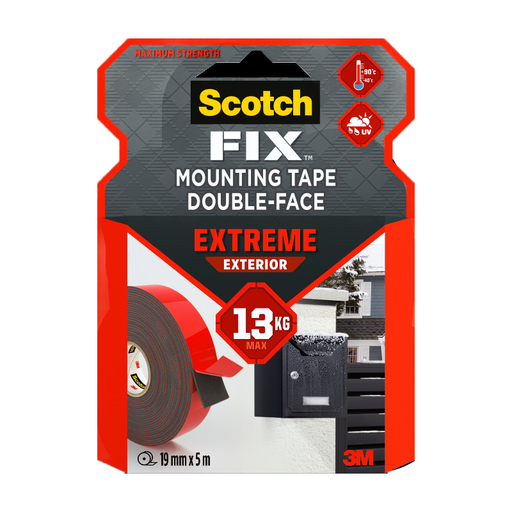
Why this choice suits this user profile: This double-sided tape is designed to permanently secure static objects outdoors on compatible surfaces. The product description states that it can support up to 13 kg under the specified conditions.
The stated load capacity, width and weather resistance are clearly specified. You should still check the actual weight, the type of surface and the bonding time.
Stated resistance to rain, sunlight and UV rays, with tool-free application.
We have put together a complete, real-time updated selection of products that meet these demanding selection criteria and European safety standards.
On a painted, porous or delicate surface, always carry out a preliminary test. For an electrical repair, you must switch off the circuit and use a product whose specifications match the installation.
It depends on the product, the surface, the temperature, humidity and the tension applied. Tape intended for temporary repairs may stay in place for a limited period, while a model designed for outdoor use or for residue-free removal will be suited to different requirements. Check the product information and inspect the repair regularly.
No. Duct tape or multi-purpose adhesive tape is not automatically suitable for electrical insulation. Choose clearly identified electrical insulation tape, check its rated voltage and switch off the power before applying it. For a complex or damaged installation, it is better to call in a professional.
For repairs, choose outdoor repair tape whose resistance to the weather, water and UV rays is clearly stated. To secure a static object without drilling, outdoor double-sided tape will often be more suitable. In all cases, check compatibility with the surfaces, the supported load and the application conditions.