What should you check first?
Start by finding out whether the appliance can still meet your needs after a repair. If you decide to replace it, work out how much capacity you need before comparing annual energy use.
| Consideration |
What to check |
Who this matters to |
| Electricity costs |
Compare the new appliance’s kWh/year figure with the old appliance’s measured or cautiously estimated energy use, then use the VAT-inclusive price per kWh on your tariff. |
If I’m replacing my appliance to lower my bill, I want to know whether the difference in energy use makes it worthwhile. Around 42% of consumers would prioritise this calculation. |
| Capacity and type |
Check the usable capacity in litres for each compartment, the space available and how much freezer capacity you usually need. UFC-Que Choisir suggests 100 to 150 L for one person, plus 50 L for each additional person. |
If my shopping or frozen-food storage needs change, I’d rather have an appliance that fits what I actually use, without unnecessary capacity; around 33% of consumers would prioritise this adjustment. |
| Repair or replacement |
Ask for a diagnosis and a quote, then compare the repair cost with the cost of a replacement, taking any difference in energy use into account. |
If my appliance can still be used, I want to consider repairing it before committing to a purchase. Around 25% of consumers would make this a priority. |
Brands to consider as points of comparison
UFC-Que Choisir lists fridge-freezers from these brands among the models it tested recently, in May 2026. Their inclusion here doesn’t indicate the features of other models or whether they’re available.
Bosch
The Bosch KGN36NLEA is among the fridge-freezers recently tested by UFC-Que Choisir.
- When comparing a Bosch model, check its annual energy use and the capacity of both compartments.
- The KGN36NLEA’s inclusion in this list doesn’t represent the whole range.
Beko
The Beko B5RCNA346HG is listed among the fridge-freezers recently tested by UFC-Que Choisir.
- You can compare this specific model with your storage and installation needs.
- Don’t assume other Beko models have the same features based on this listing.
Haier
The Haier HDPR1618CNPK appears in UFC-Que Choisir’s list of recently tested fridge-freezers.
- Compare the specifications of the model you’re considering with those of an appliance of a similar type and capacity.
- This list doesn’t show that a Haier model uses less energy than another appliance.
Liebherr
The Liebherr CBNC5223-22B/001 is among the fridge-freezers recently tested by UFC-Que Choisir.
- For this model, check the capacity, kWh/year figure and dimensions in particular.
- One model’s features don’t necessarily apply to the whole brand.
Candy
The Candy CNCQ2T518EB is listed among the fridge-freezers recently tested by UFC-Que Choisir.
- Its energy label and capacities can be compared with models suited to the same needs.
- Its inclusion in the list doesn’t establish the energy use of all Candy models.
Fridge-freezers in this Joybuy selection
These appliances combine refrigeration and freezing. If you decide to replace your appliance with a fridge-freezer, compare the stated capacity and annual energy use with your needs and your old appliance. This selection alone can’t help you decide between buying new and repairing your existing appliance.
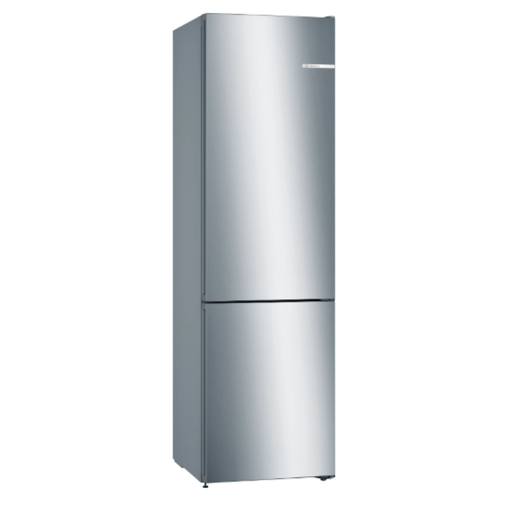 Image unavailable
Bosch KGN39VLEB, 368 L fridge-freezer, Class E
Worth considering if you need two compartments with a combined capacity of 368 L. The product listing states 279 L for refrigeration, 89 L for freezing and 238 kWh/year. Check these figures on the energy label for the exact model. Stated dimensions: 2030 × 600 × 660 mm; also check the clearance needed for installation.
View on Joybuy
 Image unavailable
Bosch KGN33NLEB, 282 L fridge-freezer, Class E
Worth considering if 193 L of refrigeration and 89 L of freezer capacity suit your storage needs. The product listing states 228 kWh/year; check this figure on the energy label for the exact model. Stated dimensions: 1760 × 600 × 660 mm.
View on Joybuy
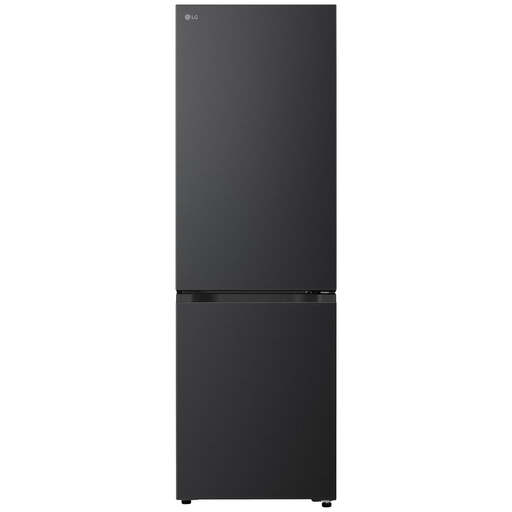 Image unavailable
LG GBBS312CEV, 333 L fridge-freezer, Class C
Worth comparing if its stated capacity of 333 L suits your storage needs. The product listing states 169 kWh/year; confirm this figure and the capacity of each compartment on the label for the exact model. Its stated dimensions are 597 × 1860 × 674 mm; the product description requires at least 5 cm of clearance.
View on Joybuy
 Image unavailable
Samsung RF50C530EB1, 495 L multi-door fridge-freezer, Class E
Worth considering if you’ll make real use of its large capacity and extra features. The product listing states 330 L for refrigeration, 165 L for freezing and 301 kWh/year; confirm the energy use on the label for the exact model. Stated dimensions: 177,6 × 81,7 × 71,5 cm, with at least 50 mm of clearance required at the back and sides.
View on Joybuy
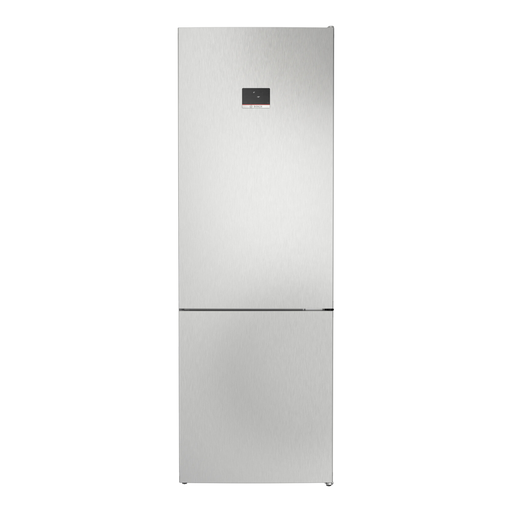 Image unavailable
Bosch KGN497LDF, 440 L fridge-freezer, Class D
Worth considering if you need 311 L of refrigeration and 129 L of freezer capacity. The product listing states 223 kWh/year; check this figure on the energy label for the exact model before comparing it with your old appliance. Stated dimensions: 70 × 203 × 66,7 cm.
View on Joybuy
Frequently asked questions
How can I estimate the electricity savings before replacing my appliance?
Subtract the new appliance’s stated kWh/year figure from the measured or cautiously estimated energy use of your old one, then multiply the difference by the VAT-inclusive price per kWh on your tariff. This is only an estimate: ADEME provides general figures for refrigeration appliances, not guaranteed savings for your household. You should also consider the purchase price separately.
Should I get a repair quote before buying a new fridge?
Yes, if it’s possible to get a diagnosis. A quote lets you compare repair with replacement instead of assuming that a fault means you need to buy a new appliance. ADEME says a Repair Bonus may be available for refrigeration appliances repaired by an approved repairer. Check whether it applies to your repair, then consider how long you expect to use the repaired appliance.
How can I arrange for my old fridge or freezer to be taken away?
Arrange collection with the seller when you buy an equivalent new appliance. The organisation ecosystem says that free collection is available, including for online purchases; confirm the arrangements before delivery. Fridges and freezers must be taken to an appropriate collection and recycling scheme, not put in an ordinary skip.
Do two appliances with the same energy rating use the same amount of energy?
No. The rating alone doesn’t tell you the exact annual energy use. Check the kWh/year figure on each label and compare appliances with a type and usable capacity that suit your needs. Also check the dimensions and the space allocated to each compartment. In its fridge-freezer tests, UFC-Que Choisir also looks at practical criteria such as how well appliances maintain their temperatures.


