What should you check first?
First, find out whether you can keep your existing appliance. Then compare replacement models that suit your needs and household capacity. Label figures let you compare appliances under set reference conditions; they can’t predict your energy use on their own.
| Criterion | What to check | Who it matters to |
|---|
| Stated energy consumption |
Compare appliances of the same type: kWh/100 cycles for a washing machine or dishwasher, kWh/year for refrigeration, and kWh/cycle for an oven, depending on the mode. Check the reference programme. |
If I use an appliance often, I want to compare figures calculated on the same basis, without mistaking them for my future energy use. Around 36% of consumers say this comparison is their main priority. |
| Capacity to suit your needs |
Check the washing machine’s capacity in kg, the dishwasher’s place settings, or the fridge and freezer compartment volumes in litres. |
If my laundry loads or storage needs vary, I want a capacity that suits my routine rather than choosing on energy rating alone. Around 29% of consumers prioritise getting the capacity right. |
| Repair and durability |
Before replacing an appliance, have the fault assessed and check the conditions for the Repair Bonus. For a new appliance, check the applicable repairability or durability indicator. |
If my appliance can still be used, I’d rather look into repairing it before choosing another one. For around 21% of consumers, keeping or being able to repair the appliance is the main priority. |
| Comfort and installation |
Check the noise level and programme duration where these are stated. For a tumble dryer, check how it vents or collects water. |
If the appliance is near a living area, or installation is restricted, I need to be able to use it without too much disruption. Around 14% of consumers put these practical considerations first. |
Brands to consider
There are no brands to feature in this section.
Appliances to consider as replacements
These dishwashers, washing machines and fridge freezers are in categories where you can consider energy consumption alongside capacity. Before choosing a model, check the label for the exact model and make sure it suits your installation.
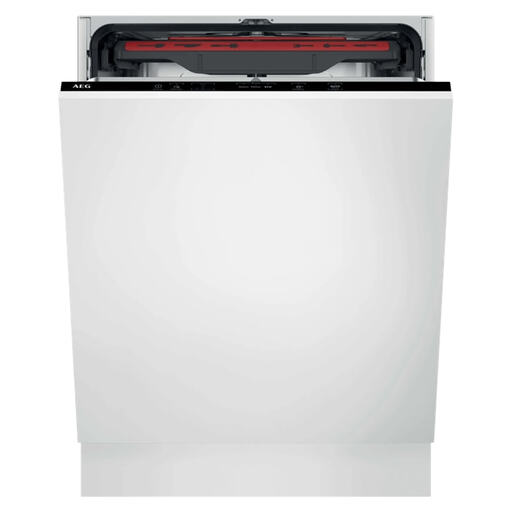 Image unavailable
AEG FSB34707Z, fully integrated dishwasher, 60 cm, 14 place settings
If you’re replacing an integrated dishwasher, compare its 14-place-setting capacity with your usual loads and check that it fits your cabinet and hinges. The model name indicates a C rating; check its label to compare energy consumption for the reference programme.
View on Joybuy
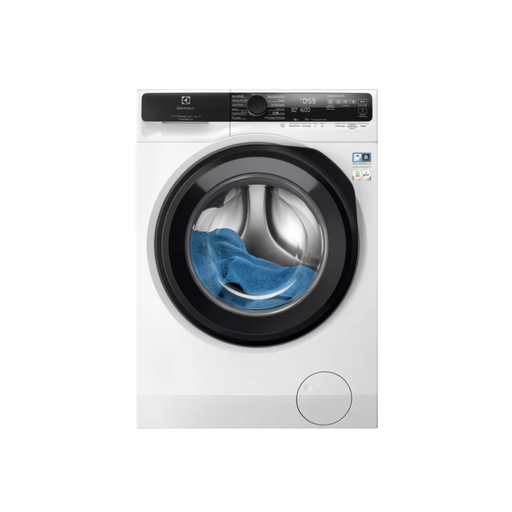 Image unavailable
Electrolux EW7FI259160V, front-loading washing machine, 9 kg
If a 9 kg capacity suits your laundry loads, also check that you have enough space and the right connections. The model name indicates a 1600 rpm spin speed; check its label and reference programme before comparing energy consumption.
View on Joybuy
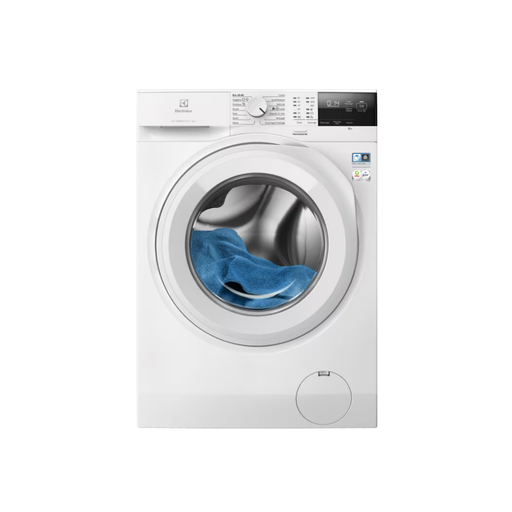 Image unavailable
Electrolux EW6FI4805AW, front-loading washing machine, 8 kg
If your loads are suited to an 8 kg capacity, compare it with your laundry routine and check the available space and connections. The model name indicates a 1400 rpm spin speed; the exact model’s label gives you the figure to use when comparing energy consumption.
View on Joybuy
 Image unavailable
Haier HTW5618ENMG, 3-door fridge freezer, 360 L
If you’re considering this 360 L total capacity, check that the individual compartments offer enough space and that there’s room for the doors and ventilation. The model name indicates Total No Frost and an E rating; check the label for its stated annual energy consumption.
View on Joybuy
 Image unavailable
Bosch KGN33NLEB, fridge freezer, 282 L
If you need 282 L of total storage, check how the capacity is divided between the fridge and freezer, as well as the dimensions and ventilation clearances. The model name indicates a stainless steel finish and an E rating; check the label to compare its stated annual energy consumption.
View on Joybuy
Frequently asked questions
Can you compare the kWh figures shown for all household appliances?
No. Compare appliances in the same category and use the unit shown on their labels. The European Commission specifies kWh/100 cycles for washing machines and dishwashers, kWh/year for domestic refrigeration appliances, and kWh/cycle for ovens, depending on the mode.
Will my appliance use the amount of energy shown on the label?
Not necessarily. The figure is based on a reference programme or set of conditions designed to compare models. How often you use the appliance, how you load it and which programmes you choose at home can all lead to different energy use.
Do you need an energy label to choose a new vacuum cleaner?
No. According to the European Commission, the former energy labelling rules for vacuum cleaners were annulled. Consider how you plan to use the appliance, its accessories and how to maintain it, rather than looking for a rating under the old label.
When should you look into the Repair Bonus before replacing an appliance?
Consider it if an out-of-warranty appliance has a functional fault that might be repairable. The DGCCRF and ecosystem explain that eligibility depends in particular on the appliance, the fault and whether the repair is carried out by a QualiRépar-approved repairer. Ask them to check whether the conditions are met during the diagnosis.


