Households replacing two chilled storage areas
You need to store fresh and frozen food every day and want an appliance that splits the capacity between the two compartments.


If your appliance is still keeping food properly chilled, ADEME recommends considering a repair before replacing it. If you do need to buy a new appliance, choose between a fridge, fridge freezer and freezer according to the compartments you need, then compare their capacities and kWh/year figures. The European Commission explains that the kWh/year figure on the label is for comparing models: it is not a guaranteed bill at your tariff, nor a measure of how much your old appliance uses.
You need to store fresh and frozen food every day and want an appliance that splits the capacity between the two compartments.
You already have somewhere to store frozen food, or don’t need to, and are looking for a fridge without a freezer compartment.
You have refrigeration covered elsewhere, but need to replace or reassess your freezer capacity.
| What matters | What to check before buying | Who it matters to |
|---|---|---|
| Compartment layout | Compare the fridge and freezer capacities in litres separately, then check the appliance type and dimensions. | If I need to store fresh and frozen food in one appliance, I want each compartment to suit the way I use it. This is a priority for around 30% of consumers. |
| Electricity consumption | Compare the kWh/year figures and usable capacities of the models you’re considering. To estimate your annual running cost, factor in the price you pay per kWh. | When I compare appliances that suit my household, I want to understand their stated consumption without mistaking it for a guaranteed bill. Around 30% of consumers prioritise this. |
| Repair or replacement | Check which warranties apply and, if necessary, get a repair quote before choosing a new appliance. | If my appliance breaks down, I want to know whether a repair can restore it to working order on acceptable terms. The repair-versus-replacement decision is a priority for around 20% of consumers. |
| Freezer capacity | Compare the freezer capacity in litres with the amount of frozen food you need to store, and check the model’s kWh/year figure. | If I already have refrigeration covered, I’m looking for a separate freezer with enough space for my frozen food. This is a priority for around 10% of consumers. |
| Installation and use | Measure the space and access routes, then check the dimensions and noise level of the model you’ve chosen. | When I need to install an appliance in a specific space, I want to make sure it will suit the room and its conditions. Around 10% of consumers put this compatibility first. |
The energy rating, kWh/year figure and capacities each tell you something different. The cost in euros also depends on the electricity price your household pays.
Compare the kWh/year figures of models with the compartments you need. To estimate the cost, use your own tariff and present the result as an estimate.
Total capacity alone doesn’t show how space is divided between refrigeration and freezing, and each model has its own dimensions.
Check the capacity of each compartment in litres, measure the space and check the dimensions of the exact model before you buy.
ADEME advises considering a repair before replacing a faulty appliance, although that doesn’t determine the right solution in every case.
Check which warranties apply and get a quote to compare your options, while making sure your food stays properly stored.
Liebherr states that the FNd 522i model can operate at an ambient temperature as low as −15 °C; this doesn’t apply to all freezers.
If the appliance is going in a cold room, check the ambient temperature range specified for the model you’ve chosen.
Worth considering for a single-door fridge without a freezer, or a fridge freezer, depending on the compartments you need.
Worth considering for a freestanding fridge freezer, particularly the KGN36NLEA model documented in France.
Worth considering for a freestanding standalone freezer, such as the FNd 522i.
Worth considering for a fridge freezer with a stated capacity of 344 l, such as the GBV3100EPY.
This selection features standalone freezers and fridge freezers, whether you’re replacing a separate freezer or bringing refrigeration and freezing together in one appliance.
 No image available
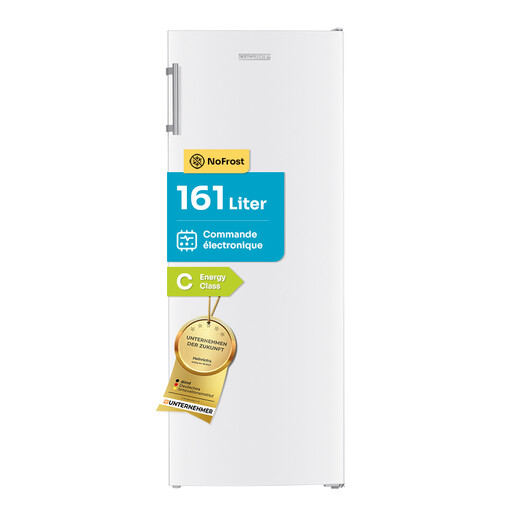
Worth considering if you’re looking for a standalone freezer to store frozen food separately.
Stated capacity: 161 l. C energy rating and No Frost. Stated temperature range: −14 °C to −22 °C.
 No image available
Worth considering if you want a freestanding appliance that combines fridge and freezer compartments.
Stated capacities: 235 l for the fridge and 125 l for the freezer. Stated consumption: 271 kWh/year. E energy rating and Total No Frost.
 No image available
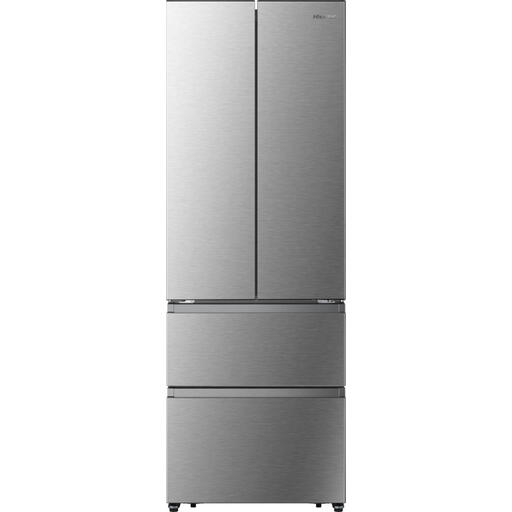
Worth considering if you’re looking for an appliance with a large stated fridge capacity and a freezer compartment.
Stated capacities: 336 l for refrigeration and 149 l for freezing. Stated consumption: 295 kWh/year. E energy rating, Total No Frost and a stated noise level of 38 dB(A).
 No image available
Worth considering if you want a multi-door appliance with separate capacities for fresh and frozen food.
Stated capacities: 330 l for refrigeration and 165 l for freezing. Stated consumption: 301 kWh/year. E energy rating and No Frost.
 No image available
Worth considering if you’re looking for a fridge freezer with a stated width of 54 cm and separate capacities for both compartments.
Stated capacities: 153 l for the fridge and 74 l for the freezer. E energy rating, Low Frost and 4-star freezing.
The European Commission says the label shows the efficiency rating from A to G, annual consumption in kWh, the capacity in litres of the fridge and freezer compartments, and noise emissions and their rating. The QR code on the label links to detailed information about the model in EPREL. Compare the kWh/year figure with the capacity you actually need.
No. According to ecosystem, the rate in force since 1 January 2026 is 25 € for a fridge, fridge freezer or freezer, provided, among other things, that the appliance and fault are eligible, the appliance is no longer under warranty and the repair is carried out by an accredited professional. Check which warranties apply first.
Anses recommends maintaining the cold chain and gives an ideal storage temperature of between 0 and +4 °C in the coldest part of the fridge. The Ministry of Agriculture advises setting the fridge to +4 °C and the freezer to −18 °C. These food storage recommendations aren’t the only factor to consider when choosing an appliance.
If you’re buying an equivalent appliance and want to get rid of the old one, ask the retailer about free ‘one-for-one’ take-back, subject to the conditions described by Service Public. ADEME also says that your old appliance can be handed to the retailer or delivery team when it’s replaced, or taken to a collection point for electrical and electronic equipment. Don’t leave it in a public place.
For a fault covered by the legal guarantee of conformity, Service Public says it must appear within two years of the goods being delivered, whether new or second-hand. Check the conditions that apply to the fault; a commercial warranty doesn’t replace your legal guarantees.