Households with a repairable fault
The appliance still suits your needs in terms of capacity and installation, but it isn’t working properly. Before replacing it, ask a professional to identify the fault and assess whether it can be repaired.


A fault alone isn’t a reason to replace a household appliance: check the warranty first, ask for a quote and find out whether it can be repaired. If the appliance no longer meets your needs or a repair isn’t worthwhile, compare models in the same category based on installation requirements, stated energy consumption and the applicable regulatory ratings. For second-hand and refurbished appliances, you’ll also need to check the condition of the appliance and the seller’s status.
The appliance still suits your needs in terms of capacity and installation, but it isn’t working properly. Before replacing it, ask a professional to identify the fault and assess whether it can be repaired.
If the appliance no longer meets your needs, check the capacity, installation requirements, maintenance and energy consumption of any model you’re considering. For the categories covered, compare the applicable regulatory rating for each model rather than for a brand as a whole.
When buying second-hand or refurbished, the appliance’s condition, accessories and the seller’s status all matter. If you’re getting rid of your old appliance, its condition will determine whether it can be donated or needs to go through an appropriate collection scheme.
Start by working out whether your current appliance could still meet your needs. That way, you won’t compare replacements before finding out what repair options are available. If you do need to buy, consider your choice of appliance separately from how to dispose of the old one.
Consider this if: the appliance still meets your needs and a professional can identify the fault and explain what repair may be possible.
Bear in mind: your decision will depend on the diagnosis, the appliance’s overall condition and whether the necessary part is available.
Consider this if: the old appliance no longer suits your needs or repairing it isn’t worthwhile.
Bear in mind: even a new appliance needs to suit your space, needs and the features you’re looking for. Being new doesn’t guarantee it will last.
Consider this if: a pre-owned appliance meets your requirements and you can check its condition before buying.
Bear in mind: information about its past use and the protections that apply can vary, including according to the product and the seller’s status.
| What matters | What to check | Who this matters to |
|---|---|---|
| Whether it can be repaired | Check whether the warranty is still valid, then ask for a diagnosis and quote. For the Repair Bonus, ADEME and ecosystem explain that the appliance, the fault and the repairer must meet the eligibility requirements. | If my appliance still suits me, I want to know whether a repair will do the job before I get rid of it. Around 37% of consumers would make this their priority. |
| Choosing a replacement | Compare models in the same category based on how you plan to use them, their maintenance needs and their energy consumption data on a like-for-like basis. Check the regulatory rating that applies to each model. | When I need to replace an appliance, I look for a model that suits how I’ll use it, rather than relying on a rating in isolation. This would be a priority for around 27% of consumers. |
| Whether it will fit your home | Check the dimensions, clearance and connections required, as well as the usable capacity. | If space is tight, I need to be able to install and use the appliance without discovering too late that it won’t fit. Around 18% of consumers would make this their main concern. |
| Reuse and your old appliance | For a second-hand purchase, check the condition, accessories and the seller’s status. For your old appliance, choose whether to donate it, arrange a take-back or use a collection scheme, depending on its condition. | If I’m considering a pre-owned appliance, I want to know about any faults and what to do with the one I already own. Around 18% of consumers would put this first. |
The durability index has applied to washing machines since 8 April 2025, while the repairability index still applies to dishwashers and vacuum cleaners, among other products, according to the French Ministry for the Ecological Transition. Neither index replaces checking the installation requirements or energy consumption of the exact model.
A fault may be limited to a single repairable component. Under the Repair Bonus scheme described by ADEME and ecosystem, a QualiRépar-certified professional can deduct the discount from your bill, provided the appliance and fault are eligible and the appliance is no longer covered by a warranty.
Check your warranty first and ask for an itemised quote before deciding whether to keep the appliance.
If you do replace it, also plan for delivery, installation and possible removal of the old appliance.
Regulatory ratings measure specific criteria and, on their own, can’t predict how long an appliance will last in your home. The applicable index also depends on the product category, according to the French Ministry for the Ecological Transition.
Compare the index for models of the same type that it applies to, then check capacity, installation requirements and energy consumption data separately.
The DGCCRF defines a refurbished appliance as a second-hand product whose functions have been tested and which has been restored if necessary. In France, the legal guarantee of conformity covers second-hand or refurbished appliances sold by a business to a private buyer, but not sales between private individuals.
Ask which faults have been disclosed, which functions have been tested and which accessories are included. Check who the seller is before making your choice.
Refrigeration appliances need to go through an appropriate disposal scheme, particularly because of the refrigerants they may contain, as ADEME explains.
If you’re replacing the appliance, arrange take-back with the seller or delivery team. Otherwise, find a suitable collection point.
These appliances are only relevant if you’re replacing a fridge or fridge-freezer. Their capacities and formats offer different starting points. Before choosing, check that your preferred model suits your space and how you plan to use it. Their inclusion here doesn’t determine whether your current appliance can be repaired.
 Image unavailable
Worth considering if you’re replacing a fridge-freezer and need a total capacity of 360 L. It’s listed with Total No Frost, an energy rating of E, Wi-Fi and My Zone.
Check the dimensions and required clearances, as well as repair options and the availability of spare parts for this model.
 Image unavailable
Consider this if the stated capacity of 444 L suits your storage needs. It’s listed as frost-free, with an energy rating of E and a stated noise level of 40 dB.
Check the dimensions, required clearances and repair options before choosing this size.
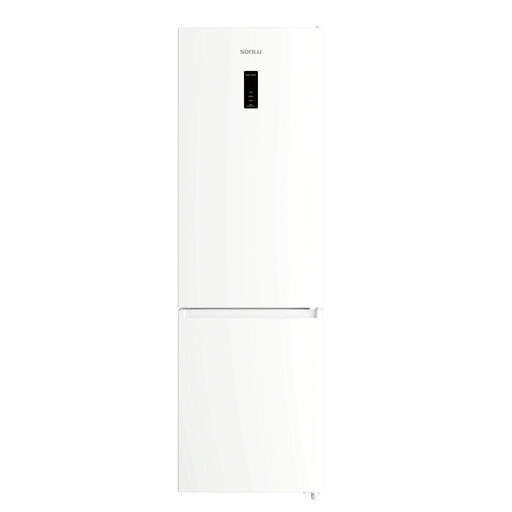 Image unavailable
Worth considering if the stated width of 60 cm and capacity of 355 L suit your space and storage needs. The stated split is 252 L for the fridge and 103 L for the freezer. It has a reversible door and an energy rating of E.
Check the height, depth, clearances, energy consumption data and repair options for this model.
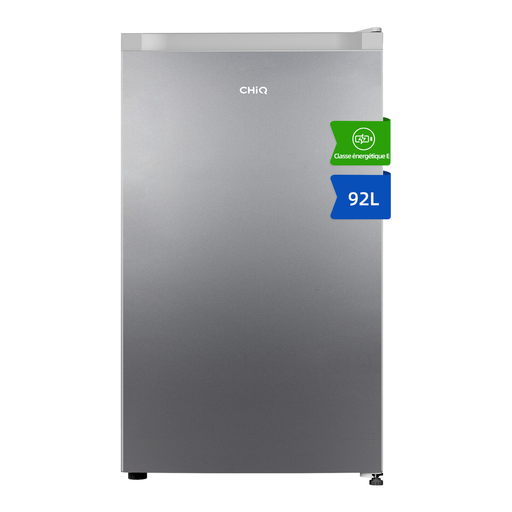 Image unavailable
Consider this if a capacity of 92 L is enough for your needs. It has a freezer compartment and an energy rating of E.
Check the full dimensions, clearances, energy consumption and repair options before installing it in a tight space.
No. According to ecosystem and ADEME, the appliance must belong to an eligible category, no longer be covered by a warranty and have an eligible fault. The repair must also be carried out by a QualiRépar-certified professional. Check these requirements before booking a repair.
In France, check the durability index for a washing machine and the repairability index for a dishwasher or vacuum cleaner. According to the French Ministry for the Ecological Transition, the durability index replaced the repairability index for washing machines on 8 April 2025. Then compare the other features of models that suit your needs.
The legal guarantee of conformity applies in France when a business sells a second-hand or refurbished appliance to a private buyer, explains the DGCCRF. It doesn’t apply to sales between private individuals, so check who the seller is and examine the stated condition of the appliance before you buy.
If it still works, consider donating it or finding another way to reuse it. Otherwise, arrange a take-back or use an appropriate collection scheme. The French Ministry for the Ecological Transition describes a one-for-one take-back scheme when you buy a product of the same type. Agree the practical arrangements with the seller or delivery team, particularly for a refrigeration appliance.