What should you check before buying?
In a rented home, first check airflow and how widespread the problem is. You can then choose between an electric appliance for one room, a passive solution for very limited use or a measuring device to monitor humidity.
| What you’re concerned about | What to check | Who is it for? |
|---|
| Understanding the cause |
Check the air inlets and extractor vents; see whether the signs of damp return or affect several rooms. |
If condensation persists, I want to know whether an appliance would simply mask poor ventilation or another source of damp. Around 36% of consumers would make finding the cause their priority. |
| Removing and draining water |
Compare extraction rates under the same test conditions, then check the tank and continuous-drainage options. |
If I regularly dry laundry indoors, I’m looking for suitable moisture extraction without having to keep an eye on the tank. This would be the main concern for around 29% of consumers. |
| Keeping day-to-day disruption to a minimum |
Check the noise level in the mode you plan to use, the appliance’s size and how easy it is to move. |
In a bedroom or studio flat, I need to be able to position the appliance without it getting in the way. Around 21% of consumers would put noise and size first. |
| Dealing with a very localised problem |
Check the limitations of a passive moisture absorber and whether it needs refills; distinguish this need from recurring condensation. |
For occasional damp in a small space, I’d rather consider a limited-use solution before choosing an electric appliance. This would be the priority for around 14% of consumers. |
Portable appliances and humidity monitoring on Joybuy
These products cover two stages of choosing a solution for a rented home: dehumidifying a room with a portable appliance, or monitoring humidity with a hygrometer before deciding what to do. A hygrometer measures humidity; it doesn’t remove water from the air.
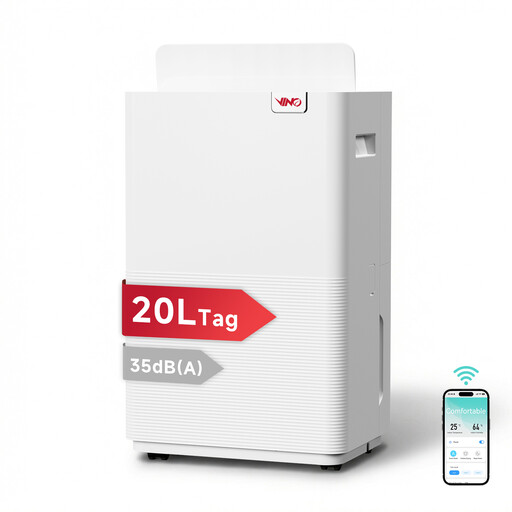 Image unavailable
VINO 20L Smart WiFi dehumidifier
Worth considering for extra help in a room where damp keeps returning, or when drying laundry indoors, once you’ve checked the ventilation.
The product details list a 2.5 L tank, three modes — Auto, Dry and Sleep — and stated coverage of up to 40 m². The noise figures differ between the title and the technical table. If noise matters to you, check the figure and how it was measured.
View on Joybuy
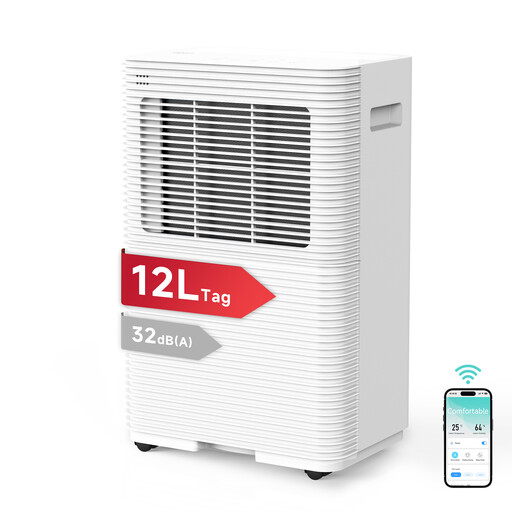 Image unavailable
VINO 12L Smart WiFi dehumidifier
Consider this for treating a single room, rather than assuming one appliance will cover an entire home divided into separate rooms.
The product details list a 1.8 L tank, three modes — Auto, Dry and Sleep — and stated coverage of up to 24 m². The noise figures for Sleep mode don’t match those in the technical table, so check the level for your intended use. If you plan to run it for long periods, check that continuous drainage can be set up where you want to place it.
View on Joybuy
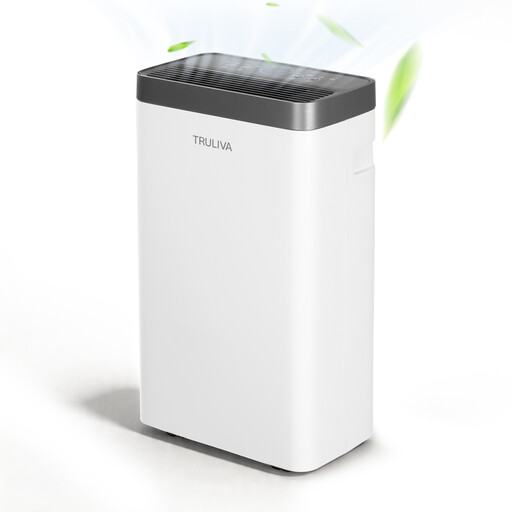 Image unavailable
TRULIVA AP10-2012EE dehumidifier
Its stated laundry mode may appeal to households looking for extra help when drying laundry indoors.
The product details mention a 24-hour timer and continuous drainage. The humidity setting ranges differ between descriptions, so check which range applies to this version. Also check the suitable room size before choosing this model for your home.
View on Joybuy
 Image unavailable
Comfee' MDDN-10DEN7, 10 L/24 h dehumidifier
Worth considering for extra help in one room, taking into account where the water can be collected or drained.
The product details give a capacity of 10 L/24 h, but this doesn’t guarantee that amount will be collected in all conditions. The stated coverage differs between descriptions for this model, so check which figure applies to your room. Also check the noise level in the mode you’ll use.
View on Joybuy
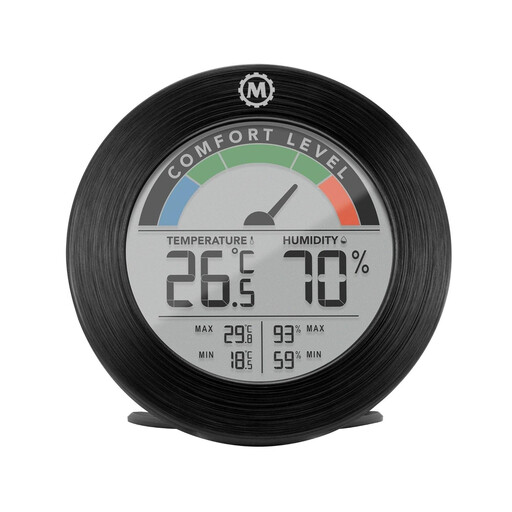 Image unavailable
Marathon Austin indoor thermometer and hygrometer
Useful for monitoring changes in humidity before choosing an appliance for extra help, but it won’t identify the cause of the problem on its own.
The product details list temperature and humidity readings, a comfort indicator and daily recording of minimum and maximum readings. Check the measurement accuracy if your decision depends on precise readings. This product doesn’t dehumidify a room.
View on Joybuy
Frequently asked questions
Can a portable dehumidifier replace ventilation?
No. A portable appliance can collect water as an extra measure, but it doesn’t replace airflow through your home. ADEME recommends keeping mechanical ventilation running, leaving vents clear and checking that they work properly if damp persists.
How can I compare the capacity of two dehumidifiers?
Compare their L/24 h figures only when the test conditions are stated and comparable. For example, De’Longhi France gives a figure of 14 L/24 h for the DEXD214RF at 30 °C and 80% relative humidity; the amount extracted in your home may differ. Then consider the room and how each model drains the water.
Can I put an electric dehumidifier in a bathroom?
First check that the instructions allow it and specify a suitable location and connection. Having a socket doesn’t mean it’s safe to use the appliance near a shower or bath. If you’re unsure about the electrical installation, ask a qualified professional for advice.
Do I need continuous drainage?
It can be useful if you won’t be able to empty the tank regularly, but only if the model and its location allow you to connect a drain. Check whether a hose is included, how the water drains and what happens when the tank is full.
Is one appliance enough if the damp seems to be caused by a leak?
No. Water collected by a dehumidifier doesn’t show that a leak or another problem with the home has been resolved. Make a note of where and when the signs of damp appear, and have the cause investigated. Be sure to distinguish this from condensation caused by everyday activities.


