What should you check before choosing?
Start by identifying the waste, then estimate the volume. You can then check the accessories, the machine’s reach and whether buying makes more sense than hiring.
| Priority |
What to check |
My needs |
| Debris and filtration |
Check which waste the instruction manual says the machine can handle, whether it’s suitable for dry use or water, and the filtration class stated for the exact model. A stated L class alone isn’t enough to conclude that a machine is suitable for dust that may be hazardous. |
I need to clear ordinary renovation debris without treating unknown dust as harmless. The INRS highlights the risks associated with materials containing asbestos and with crystalline silica dust produced by certain types of work. |
| Volume and tank |
Estimate the quantities of dust, debris and water separately. Where stated, distinguish between the tank’s gross capacity and its usable capacity for water. Also check how easy it is to empty. |
If emptying the tank is likely to interrupt cleaning frequently, a larger tank could be useful, provided I can move and store the machine. For hiring, Kiloutou offers 30 L and 55 L sizes, depending on the area and volume to be cleaned. |
| Hose and reach |
Check the hose diameter and length, the attachments supplied and whether they’re suitable for the debris. If you’re using a power tool, check the model’s socket or adaptor and whether it’s compatible with your tool. |
I need to reach the areas that require cleaning without constantly moving the tank. If I’m also collecting leaves or small pieces of rubble, I’ll check that the accessories are suitable for their size; UFC-Que Choisir links tube and hose diameter to the type of debris. |
| Buying or hiring |
Compare how often you expect to use it, its weight and the space available for storage. Before hiring, confirm which debris it can handle, its capacity, the accessories supplied and the instructions for use. |
For a one-off project, I’d rather look into hiring than keep a bulky tank all year. If I need to clean regularly, buying may be more practical, as long as the machine is suitable for those jobs. |
Wet and dry vacuum cleaners available on Joybuy
These two Vacmaster models are worth considering if you’re looking for a wet and dry vacuum cleaner to keep for regular household cleaning. Compare their instructions for use and accessories with the debris from your project; hiring is another option for a one-off job.
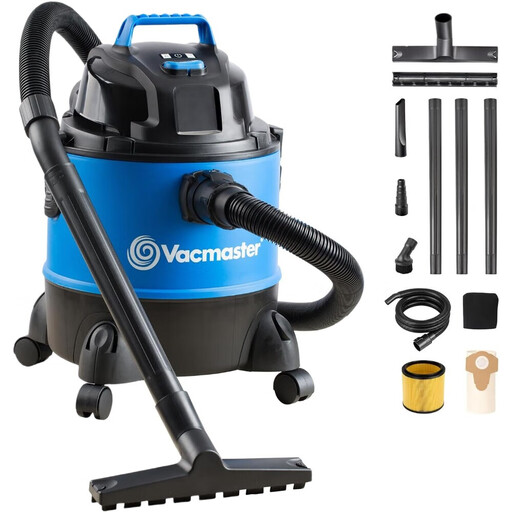 Image unavailable
Vacmaster VQ1220PF 3-in-1, 20 L, with blower
This wet and dry model is described as suitable for the home and garage, with a 20 L tank. Its title lists a 1250 W motor and a blower function. Before using it on fine dust or small pieces of rubble, check the filtration, hose diameter and attachments for the debris you need to collect.
View on Joybuy
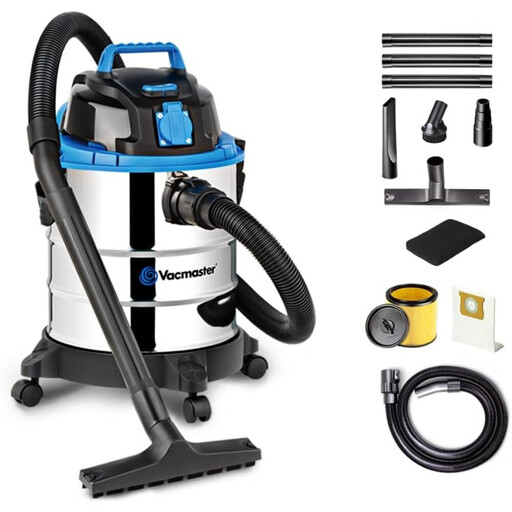 Image unavailable
Vacmaster VQ1220SC, 20 L, with power-tool socket
The stated 20 L tank and power-tool socket make this model worth considering for a workshop or garage; check that it’s electrically compatible with your tool. Although it’s described as a wet and dry vacuum cleaner, a warning refers to use in dry environments and a filter suitable for liquids: check the VQ1220SC manual before vacuuming water. Also check its filtration and accessories for the dust or debris you need to collect.
View on Joybuy
Frequently asked questions
Which debris should you avoid vacuuming with an ordinary domestic machine?
Don’t use an ordinary domestic vacuum cleaner for materials suspected of containing asbestos or for building dust that could expose you to crystalline silica. The INRS explains that some work on asbestos-containing materials releases fibres and highlights the risk of respirable crystalline silica produced by certain work processes. Stop cleaning if the material is suspect and have an appropriate prevention and collection method determined.
Can you put leftover paint, varnish or solvent in the tank?
No. Don’t treat leftover chemicals like dust or water from cleaning. The French Ministry for Ecological Transition says that household hazardous waste, including paint, varnish and solvents, must be collected separately from household rubbish. Find out where to take the specific product.
What tank capacity do you need after renovation work?
Choose one based on the volume of debris and how often you’re prepared to empty it, while bearing weight and storage in mind. UFC-Que Choisir notes that the amount to vacuum after renovation work can be substantial; for hiring, Kiloutou offers 30 L sizes for quick jobs and 55 L sizes for larger volumes of water and dust.
Is a wide hose suitable for all types of debris?
No. UFC-Que Choisir’s guide recommends narrower hoses for fine dust and wider diameters for rubble or leaves. If your project produces different types of debris, check which attachments and hoses are compatible with the specific machine you’re considering.
When should you consider hiring instead of buying?
Hiring is worth considering for a one-off project, a large volume to clean up or if you don’t want to store a bulky vacuum cleaner. Before booking, confirm with the hire company which debris the machine can handle, its capacity, the filtration needed for your use, the accessories supplied and the safety instructions.


