
Livraison le jour même ou le lendemain

Qualité garantie

Débloquez vos offres de bienvenue: Livraison GRATUITE | Jusqu'à -80 % | 30 jours d'essai gratuits à JoyPlus
Téléchargez l'application
Choosing a remote-controlled toy for a child is about more than simply comparing colours, stunts or the number of advertised features. A car, drone or robot can quickly end up at the back of a cupboard if its controls are too complicated, its battery runs out after only a few minutes or the toy is unsuitable for the space available.
Some marketing claims therefore deserve closer scrutiny before you reach for your bank card.
A range of several dozen metres may sound appealing, but it does not guarantee an enjoyable experience. Indoors, walls and furniture quickly reduce your room for manoeuvre. With a remote-controlled drone for children, ceiling height and the absence of fragile objects are often much more important than the theoretical range.
Stunt modes, 360° rotation and LED lighting make play more entertaining, but these effects cannot replace stable controls. A child who is just starting out will get more from one-touch take-off, altitude hold or an easy-to-read remote than from an endless list of features.
‘Rechargeable’ does not necessarily mean that all batteries are included. Many models have a rechargeable battery for the vehicle, while the remote still runs on AA or AAA batteries. Also check the charging time, the number of batteries included and whether replacement batteries are available.
Start by checking the recommended age on the product page. Some toys contain small parts or moving components that require adult supervision. Drones and helicopters should be used away from faces, hair and loose clothing. Products fitted with a lithium battery must not be immersed, overcharged or exposed to high temperatures.
Before buying, also check the information about the manufacturer, the responsible person in the European Union, the warnings in French and the CE marking, where applicable. These details help you choose with greater confidence, although they do not provide an absolute guarantee of the product’s durability or suitability.
For a mini drone for beginners, features such as altitude hold, headless mode and automatic take-off can make those first sessions much more accessible. Propeller guards are particularly useful indoors, but they do not remove the need to observe safe distances.
For a remote-controlled car for children, choose progressive steering if the aim is to learn how to negotiate corners. An all-terrain RC car with 4×4 drive will cope better with grass, sand and uneven surfaces than a small model designed to run on wooden flooring.
Battery life varies depending on the model, the selected speed and the features in use. The 4DRC Mini Drone claims around 12 minutes of runtime, with two batteries mentioned in its name. The FACEGLE E88 offers 6 to 8 minutes of battery life. These figures are supplied by the product page and may vary depending on how the toy is used.
For a remote-controlled drift car, low-friction tyres are mainly suited to smooth surfaces such as tiles, wooden flooring or an indoor track. For more demanding outdoor sessions, it is better to look for a reinforced chassis and all-wheel drive.
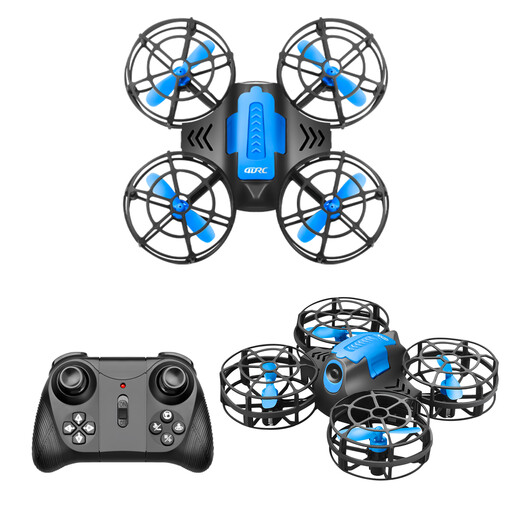
Why this choice suits this profile : One-touch take-off, altitude hold and headless mode make those first flights easier, particularly when the activity is shared between parent and child.
The product page mentions two batteries and around 12 minutes of battery life, reducing breaks compared with a model supplied with just one battery.
10 × 10 × 5 cm format, 2.4 GHz signal and a stated range of around 100 metres.
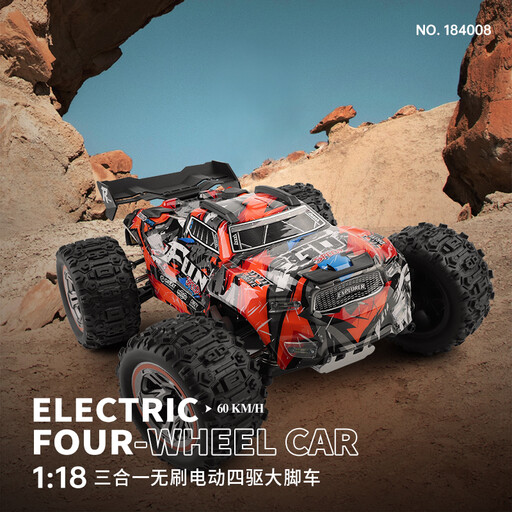
Why this choice suits this profile : This vehicle is aimed at teenagers and users already familiar with RC cars who are looking for several driving configurations and a model capable of venturing outdoors.
Its 4×4 drive and oil-filled shock absorbers are better equipped for uneven terrain than a car intended solely for indoor use.
3-in-1 design, brushless motor, metal chassis and stated suitability for grass, soil, sand or tarmac.
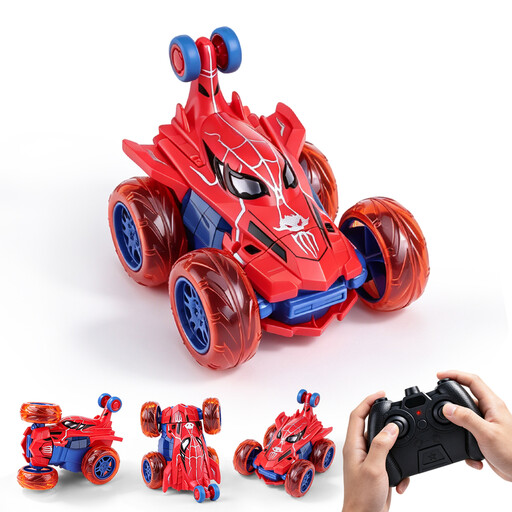
Why this choice suits this profile : Its illuminated wheels, rotations and ability to drive on sand, grass or roads will appeal to children who enjoy visual, action-packed play.
The built-in 3.7 V battery and USB cable are included. However, you will need two AA batteries for the remote control.
2.4 GHz control, automatic demonstration, all-terrain driving and multicoloured lighting effects.
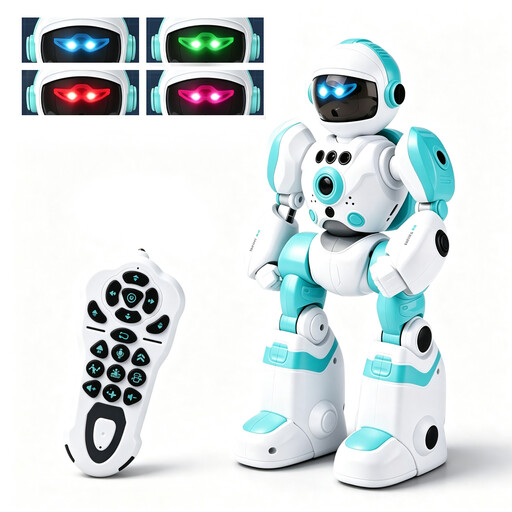
Why this choice suits this profile : This educational remote-controlled robot combines remote controls, gesture detection, voice recording and action programming.
It is not focused solely on speed or stunts: programming and voice interactions create even more ways to play.
Four-colour LED eyes, obstacle avoidance, music and a rechargeable 3.7 V, 200 mAh battery.
We have put together a complete, real-time updated list of products that meet these demanding selection criteria and European safety requirements.
The FACEGLE FX-41B, for example, is presented as an indoor model with RGB lighting, three speeds and one-touch take-off and landing. The metal-bodied helicopter has a coaxial dual-rotor system, two speeds and a rechargeable battery. In both cases, the toy should be used in a clear space, in accordance with the warnings on the product page.
A model with simplified start-up, adjustable speed and a stabilisation function reduces the amount of control required during those first sessions. For a first purchase, a car with forward-reverse and left-right controls will often be more accessible than a drone requiring you to manage altitude and direction at the same time.
The budget does not end with the price shown. You may need to add batteries for the remote control if they are not included, as well as a possible spare battery. A rechargeable remote-controlled toy with a USB cable means you do not need to buy batteries for the vehicle, but it must always be charged in accordance with the instructions.
Wipe electronic components with a dry cloth, avoid water and regularly check the wheels, propellers, connectors and screws. If recommended in the instructions, store the battery separately and never leave a rechargeable battery charging unattended. Choosing terrain suited to the toy and the child’s age also helps prevent unnecessary impacts.