
Livraison le jour même ou le lendemain

Qualité garantie

Débloquez vos offres de bienvenue: Livraison GRATUITE | Jusqu'à -80 % | 30 jours d'essai gratuits à JoyPlus
Téléchargez l'application
A remote-controlled toy for children can make an excellent gift, provided you choose a model suited to their age, the space available and their level of experience. Between promises of spectacular stunts, advertised battery life and particularly flattering photos, some essential details can easily be overlooked.
Before buying a remote-controlled car for children, a drone or a robot, three potential pitfalls deserve a closer look.
Product listings generally provide an indicative battery life. However, this varies depending on speed, tricks performed, the toy’s weight and the temperature. If only one battery is supplied, the device may also be unusable throughout the entire charging period.
To enjoy longer play sessions, a rechargeable remote-controlled toy with a removable battery or supplied with two batteries is often more practical. Also check whether a USB cable is included and whether the remote control requires separate batteries.
A four-wheel-drive all-terrain RC car or a drone offering several flight modes can be great fun, but difficult for a young child to master. Conversely, a model that is too basic may quickly lose an older child’s interest.
The recommended age shown on the packaging is a useful starting point, not an absolute rule. The child’s coordination, patience and whether an adult is present during the first few uses are equally important.
LED lights, sounds and automatic functions immediately catch the eye, but they do not guarantee lasting interest. With a remote-controlled stunt car, the quality of the wheels, the strength of the bodywork and its ability to carry on after overturning are often more important than its appearance.
An RC toy with LED lights can be a good choice for playing in a dimly lit room. However, make sure the light effects do not overshadow the essentials: range, smooth controls, durability and ease of maintenance.
A vehicle intended for a 3-year-old will not meet the same expectations as a model designed for a teenager. For younger children, choose a simple remote control, moderate speed and ground-based operation. Where the warning specifies it, small parts, propellers and battery compartments must be kept out of reach of children under 3 years old.
A remote-controlled drone for beginners requires additional precautions. Automatic altitude hold, one-touch take-off and headless mode can make those first flying sessions easier. To reduce the risk of collisions, begin indoors in a clear, open space. Propellers must never be brought near the face, hair or loose clothing.
Do not focus solely on the word “rechargeable”. Instead, compare the following information:
For example, the 4DRC mini drone advertises approximately 12 minutes of battery life, a modular battery and an approximate range of 100 metres. The 4DRC children’s RC plane claims approximately 15 minutes, two batteries and an advertised range of around 300 metres. These figures should be treated as information taken from the product listing, rather than guaranteed usage times in every situation.
An all-terrain RC car should be chosen according to the terrain you actually have available. Grass, gravel, sand, tiled floors and carpets place different demands on the wheels. Independent drive wheels and impact-resistant bodywork make outdoor use easier, but no toy is designed to withstand repeated drops from a great height.
After each use, remove any dirt accumulated on the wheels and check the connectors, screws and battery compartment. For electronic devices, a soft, dry cloth is generally sufficient. Never immerse a toy in water unless the instructions explicitly allow it. Even a model described as amphibious should be charged away from any source of water and dried in accordance with the instructions.
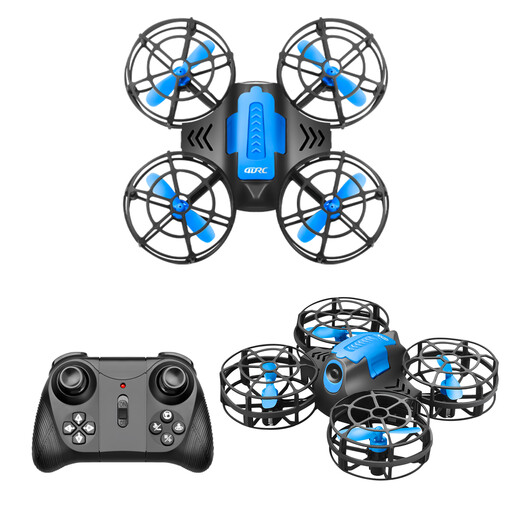
Why this choice suits this profile : Its compact size, automatic altitude hold and one-touch take-off make it an appealing option for learning to fly, under adult supervision.
The listing mentions two batteries, so you can avoid having to cut a session short. The advertised range is approximately 100 metres.
Altitude hold, headless mode, 360° flips and modular battery.
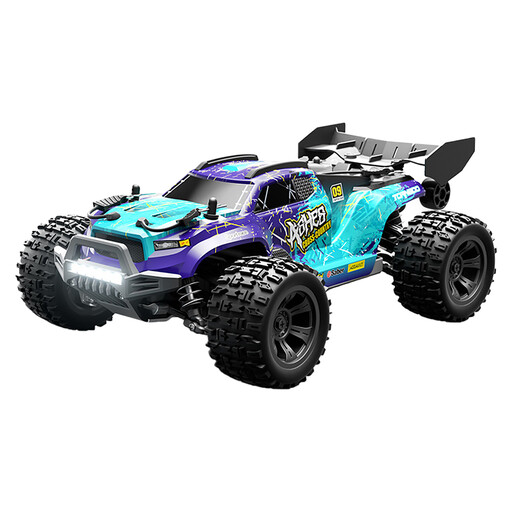
Why this choice suits this profile : Its all-terrain design is better suited to teenagers and users looking for greater power during outdoor trips.
The listing specifies two rechargeable batteries, independent suspension and non-slip rubber tyres.
Four-wheel drive, aluminium alloy chassis, front lighting and advertised 7.4 V lithium battery.
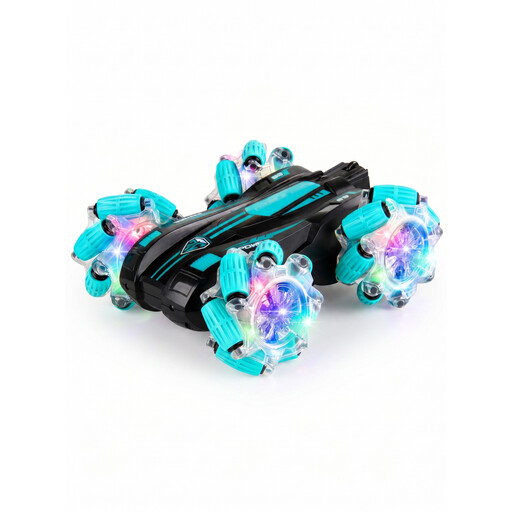
Why this choice suits this profile : This remote-controlled stunt car is designed for children who want to perform flips, drifts and spins on different types of surface.
It can be driven on both sides, so you do not need to turn the vehicle over manually after a stunt. The listing also mentions an ABS body and reinforced wheels.
Four-wheel drive, 9 cm Mecanum wheels, sideways movement, 360° rotation and multicolour lighting.
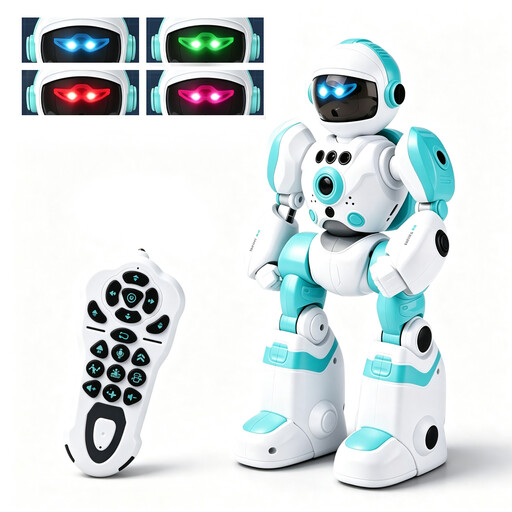
Why this choice suits this profile : This remote-controlled robot focuses on gestures, voice commands, dancing and action programming rather than speed.
It does not rely solely on fast driving or the need for a large outdoor space. Gesture controls and programmable sequences add variety to play.
2.4 GHz remote control, gesture detection, voice recording, multicolour LED eyes and included 3.7 V lithium battery.
We have brought together a complete, real-time updated selection of products that meet these demanding criteria and European safety requirements.
Before placing your order, always check the instructions, recommended age, exact contents of the box, any batteries not included and the safety guidance. The CE marking and the contact details of the manufacturer or responsible person in the European Union must also appear on the packaging or in the product documentation.
A car with forward, reverse, left and right controls is generally easier to master than a drone. For a flying device, look for automatic altitude hold, one-touch take-off and a stable flight mode. The first sessions should take place in a clear, open space under adult supervision.
It depends on the model and how intensively it is used. Some product listings state approximately 12 to 15 minutes for drones, and up to 20 to 40 minutes for certain drift cars. These figures are indicative only. When an additional battery is supplied, it allows you to extend play sessions without waiting for the battery to recharge.
LEDs improve visibility and add an appealing visual effect, particularly for indoor play or at dusk. However, they should not distract you from the remote control’s range, wheel durability, charging requirements and recommended age. For a long-lasting purchase, it is better to compare all these criteria rather than focusing solely on the lighting.