
Livraison le jour même ou le lendemain

Qualité garantie

Débloquez vos offres de bienvenue: Livraison GRATUITE | Jusqu'à -80 % | 30 jours d'essai gratuits à JoyPlus
Téléchargez l'application
A remote-controlled car for children can keep little ones entertained for hours, both indoors and outdoors. However, it’s important to look beyond promises of 360° spins, colourful lights and impressive speeds on product pages. To avoid disappointment, focus on the recommended age, the type of terrain, the power supply and how easy the controls are to use.
An RC car that can spin on the spot or perform stunts is bound to catch the eye. But a 360° spin doesn’t guarantee that the vehicle will move easily over grass, gravel or a thick carpet. Wheel diameter, ground clearance and the drivetrain are still the features that make the real difference.
Some cars are described as rechargeable even though their remote control still runs on AA or AAA batteries. You therefore need to distinguish between the vehicle’s battery and the controller’s power supply. Also check whether a USB cable is included and whether the battery capacity is clearly stated.
A remote-controlled car designed for a child aged 3 to 5 won’t meet the same needs as a gesture-controlled model intended for children aged 8 and over. Fast or bulky vehicles can be difficult to control in a flat. As for warnings about small parts, they are there for a reason and shouldn’t be ignored.
A 4-wheel-drive remote-controlled car sends power to all four wheels. This setup makes starting, climbing and performing certain stunts easier, but it doesn’t turn the toy into a genuine all-terrain vehicle.
When choosing an all-terrain radio-controlled car, look in particular at:
Mecanum wheels on some models allow sideways or diagonal movement. It’s a fun feature that offers a different experience from a classic RC car, although it usually takes a few minutes to get used to.
The 2.4 GHz remote control has become standard on modern radio-controlled toys. It generally allows several vehicles to be used at the same time without noticeable interference, subject to the manufacturer’s specifications.
A gesture-controlled RC car comes with a watch or wristband fitted with a motion sensor. By tilting their hand, the child steers the vehicle. The system is fun to use, but a button-operated remote control remains valuable for learning to follow a precise route. A model offering both control methods provides greater freedom.
A rechargeable remote-controlled car means you won’t need to replace the vehicle’s batteries regularly. Check the voltage, stated capacity, included cable and charging instructions. Batteries may still be required for the remote control.
Coloured LEDs improve visibility during games in the evening and give a bright LED RC car a particularly appealing look. However, they don’t remove the need to play in a clear, properly lit space.
The age shown on the product page should always take priority over the toy’s appearance. The Spider RC model is listed as suitable for children aged 4 to 12 and carries a warning for children under 3. The unicorn car also highlights a risk related to small parts. Adult supervision is strongly recommended when playing outdoors, particularly near stairs, roads or water.
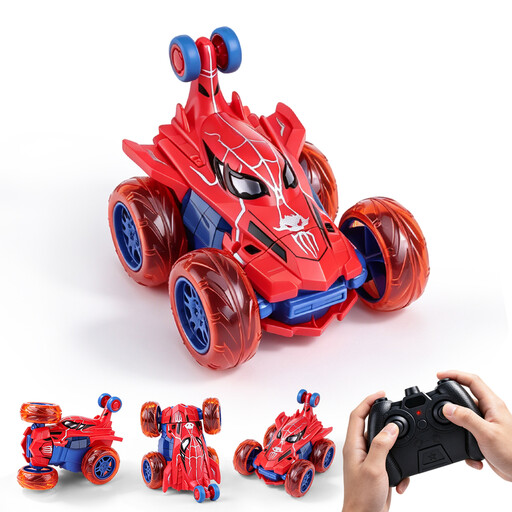
Why this choice suits this profile : Designed with stunts in mind, this model makes a great first RC car for playing on floors, tiles, grass or sand. The vehicle is listed as suitable for children aged 4 to 12.
The 3.7 V battery and USB cable are clearly mentioned on the product page. However, the remote control requires 2 AA batteries, which are not included.
360° rotation, multicoloured LED wheels, automatic demonstration mode and four-wheel drive.
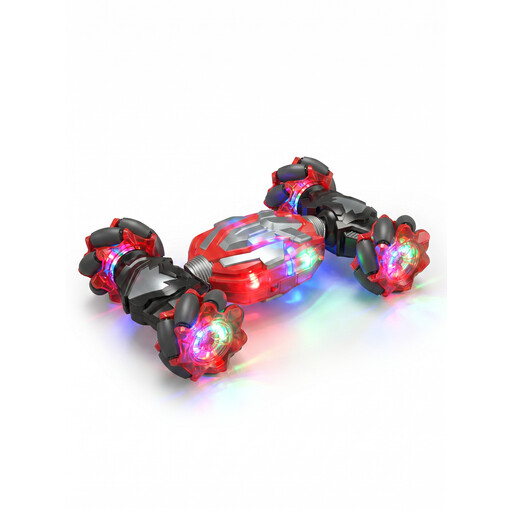
Why this choice suits this profile : Its transformable chassis and dual controls are ideal for children who want to perform one stunt after another and vary their routes.
The narrow mode makes it easier to pass through small spaces, while the wide mode improves stability on uneven terrain.
Mecanum wheels, double-sided driving, sideways movement, 360° rotation and a gravity-sensor watch controller.
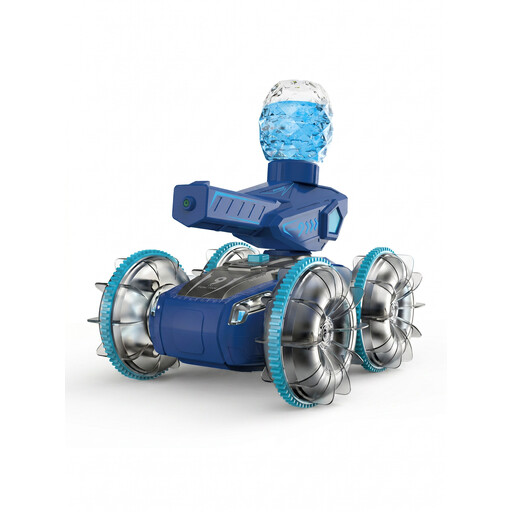
Why this choice suits this profile : This amphibious radio-controlled tank is ideal for families with outdoor space who want a toy that can move over land and through shallow water.
The product page states that it has a waterproof structure, but it must still be used within the specified conditions. Cleaning it after every contact with water is also essential.
Driving on land and in water, water jet, manual or gesture control, LED lighting and on-the-spot rotation.
We’ve put together a complete, up-to-date selection of products that meet these demanding criteria and European safety standards.
For a birthday present, the theme can also help guide your choice. Unicorn models are sure to delight fans of magical worlds, while a dinosaur vehicle with sounds and lights will appeal more to children who enjoy figures and imaginative play. However, these toys won’t replace a classic RC car for children who are primarily looking for driving and stunts.
It depends on the speed, weight, dimensions and type of controls. Check the manufacturer’s recommended age, along with the warnings shown on the product page. For children under 3, avoid models with small parts or an overly complicated remote control.
It can reduce the cost of batteries for the vehicle, particularly if the child plays frequently. However, the remote control may run on AA or AAA batteries. Check the box contents before buying and make sure you have a cable or charger compatible with the manufacturer’s recommendations.
No, unless the product page clearly states that it is waterproof or amphibious. A standard all-terrain car is generally designed for grass, sand, gravel or concrete, but not for submersion. Even an amphibious model should only be used in shallow water, under adult supervision, and then dried thoroughly.