
Livraison le jour même ou le lendemain

Qualité garantie

Débloquez vos offres de bienvenue: Livraison GRATUITE | Jusqu'à -80 % | 30 jours d'essai gratuits à JoyPlus
Téléchargez l'application
A remote control car, a drone or a radio-controlled robot can make an excellent gift. But behind the spectacular photos and promises of stunts, there are sometimes a few real constraints to consider: limited battery life, an unintuitive remote control, or a model that is too powerful for the child’s age.
Before buying a remote control toy as a gift for a child, it is worth checking three criteria that are often overlooked.
360° rotation, sideways drifting, driving on both sides, gesture control or automatic demonstration: these features can be great fun. But an overloaded remote control can confuse a beginner. For a first purchase, choose a 2.4 GHz remote with clearly labelled buttons and, if possible, a demonstration mode.
A child discovering a stunt RC car can then learn the movements gradually, rather than being left in charge of a vehicle that is difficult to control.
A 4x4 radio-controlled car generally handles obstacles better than a two-wheel-drive model. That does not mean it is comfortable everywhere. Check the wheel size, ground clearance, protection against debris and the manufacturer’s recommendations.
A car advertised as waterproof cannot be submerged in a swimming pool or a deep puddle. The product description should specify the type of water exposure that is permitted.
Some RC toys use batteries for the remote control, even when the vehicle has a built-in battery. Also check whether the charging cable is included, how many batteries are supplied and how long they take to recharge.
After each session, remove any debris stuck in the wheels, check the fixings and clean the electronic parts with a soft, dry cloth. Drones and planes should never be used near the face, hair or fragile objects.
For a child under 3, avoid toys with small parts, accessible magnets or components that could come loose. For a drone or RC plane, adult supervision is essential, even with a teenager who is just starting out.
Make sure you can find instructions in English, the manufacturer’s contact details or the responsible person in the European Union, as well as the usage warnings. The CE mark must appear on the product where regulations require it, but that does not replace reading the instructions carefully.
A removable battery can sometimes extend a session by using a second module. The 4DRC mini drone claims around 12 minutes of battery life and uses a modular battery, while the 4DRC RC plane promises around 15 minutes and comes with two batteries. These figures are indicative: wind, stunts and the playing surface can reduce battery life.
For a rechargeable RC toy, also check whether the USB cable is included and whether the remote control batteries need to be bought separately.
2.4 GHz technology is very common on radio-controlled toys and generally allows several devices to be used together, depending on the conditions. The 4DRC beginner drone claims a range of around 100 metres, compared with around 300 metres for the 4DRC plane. These distances are only possible in an open space with supervision.
For indoor play, choose a compact, slow and protected device. Outdoors, an RC car with LED lights or an off-road model will be easier to spot, especially at the end of the day.
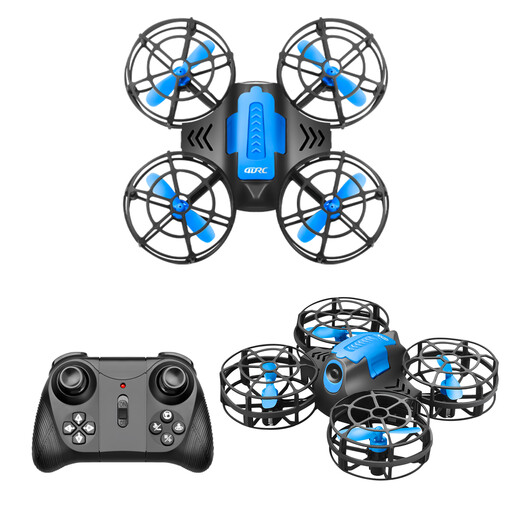
Why this choice is relevant: Its compact size and one-touch take-off make it easy to discover flying for the first time, in an open space with adult supervision.
The automatic altitude hold simplifies the first manoeuvres. The claimed battery life of around 12 minutes also helps you organise play sessions better.
Modular battery, 2.4 GHz signal, claimed range of around 100 metres and 360° stunts.
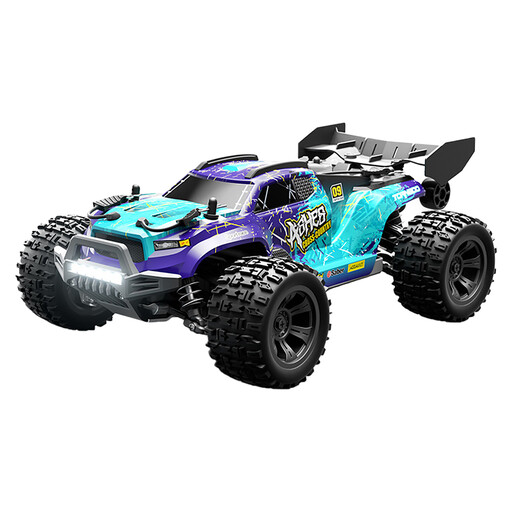
Why this choice is relevant: This model is aimed at teenagers aged 14 and over, as well as users looking for a more technical driving experience on rough terrain.
The recommended age and stated motorisation prevent it from being mistaken for a car intended for young children.
Four-wheel drive, aluminium alloy chassis, independent suspension, two rechargeable batteries and LED headlights.
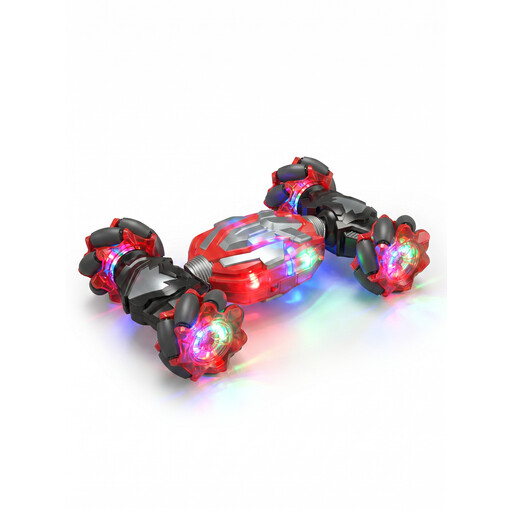
Why this choice is relevant: Its omnidirectional wheels and two control modes are ideal for children aged 8 and over who want to perform stunts one after another.
Driving on both sides and independent wheels reduce interruptions after a flip or on uneven ground.
Four-wheel drive, gravity sensor watch-style controller, sideways drifting, obstacle climbing and LED lighting.
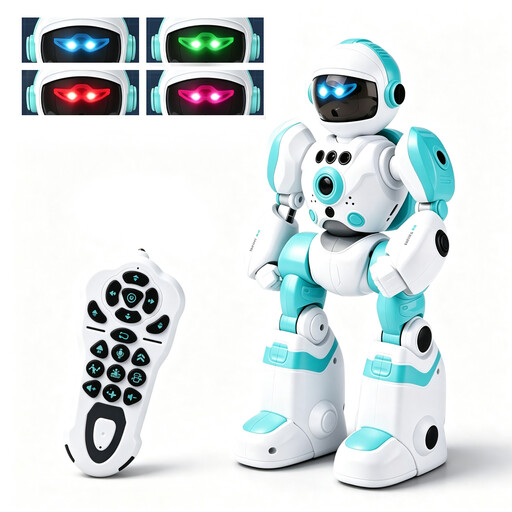
Why this choice is relevant: This robot will appeal to children who enjoy interaction, music and programming movements, rather than those looking for speed.
Its functions are based on interaction and gestures: there is no need to buy a fast vehicle for a child who prefers role-play.
Gesture and remote control, voice recording, four-colour LED eyes and programmable sequences. Use under supervision from 3 years old.
We have put together a comprehensive, real-time updated selection of products that meet these selection criteria and European safety requirements.
A small RC car with a simple remote control is often a good place to start. For a remote-controlled drone intended for a novice, choose one with automatic altitude hold, one-touch take-off and propeller guards. For an RC plane for a child, look for a lightweight structure, an adjustable speed mode and use in an open area.
It depends on the model and how it is used. The specifications usually give an estimate, often between 12 and 15 minutes for some flying devices. Stunts, LED lights and difficult terrain put more strain on the battery. A second battery can reduce the wait between sessions, provided it is compatible with the toy.
No. Check the manufacturer’s specific recommendations before exposing the car to water, sand or mud. Even an off-road model should be dried and cleaned after use. For a child, choose an open space away from traffic, stairs and unsupervised water sources.