
Livraison le jour même ou le lendemain

Qualité garantie

Débloquez vos offres de bienvenue: Livraison GRATUITE | Jusqu'à -80 % | 30 jours d'essai gratuits à JoyPlus
Téléchargez l'application
Turning on a lamp tucked behind a sofa, managing Christmas lights without braving the cold, or simply making daily life easier for someone with reduced mobility: in many situations, the remote control outlet is the simplest and most effective solution. Unlike complex home automation systems, it requires no installation, Wi-Fi setup, or special technical skills.
This guide is designed to help you choose the outlet with a remote control that best suits your needs. We'll review the essential criteria to check and present a selection of reliable products to help you turn on a device remotely with complete ease.
Before making a decision, there are a few technical points to consider to ensure the product perfectly matches your intended use.
Most models operate using radio frequency (RF), typically on the 433.92?MHz band. Their main advantage: this technology passes through walls and furniture. A long-range radio-controlled outlet can reach up to 30?metres in open areas, which is more than enough for most homes. This is a key criterion if you plan to control a device from another room or even from outside.
For use outside the home (garden, balcony, terrace), you must opt for an outdoor remote control outlet. Check for an IP44 rating or higher. This standard guarantees that the outlet is protected against water splashes and solid objects larger than 1?mm, making it suitable for moderate weather conditions.
Ease of use is the guiding principle for this type of product. Choose an outlet that doesn't require Wi-Fi that is pre-programmed and therefore ready to use out of the box. Some models feature a self-learning function that makes it very easy to add extra outlets or remotes. A programmable outlet with a remote can also offer advanced features, such as grouped on/off control for multiple devices.
Our editorial team has scoured the market to find the most reliable and practical models. Here is our selection.
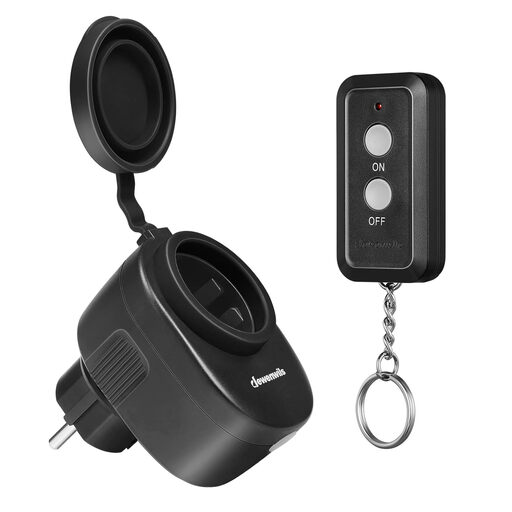
Why this model stands out: Specifically designed for outdoor use, its IP44 certification ensures resistance to dust and water splashes. It's a must-have for garden lighting, pond pumps, or holiday decorations. Since it's pre-programmed, installation is instant: just plug it in, and you're all set!
Advantages:
Who is it for? Anyone who wants to remotely control their outdoor equipment (patio lighting, string lights, fountains) without worrying about the weather.
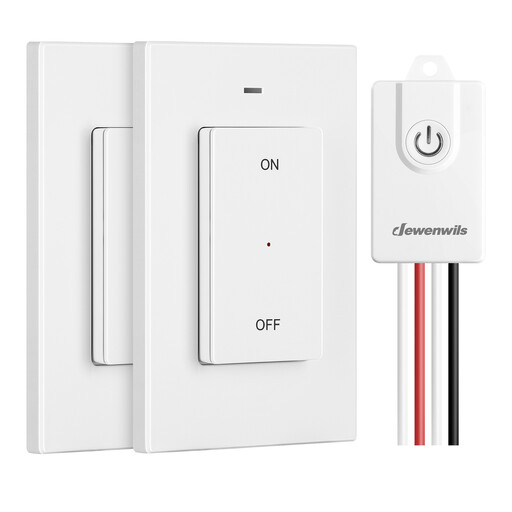
Why this model stands out: This wireless switch offers incredible flexibility. Instead of a classic remote, it takes the form of a wall switch that can be mounted anywhere without any wiring. Its control unit is magnetic and detachable, allowing it to be used as a portable remote to keep on hand.
Advantages:
Who is it for? The perfect solution for renters or anyone who wants to add a switch (in a hallway, garage, or bedroom) without undertaking major work. It's also a clever gadget for controlling a bedside lamp from the room's entrance.
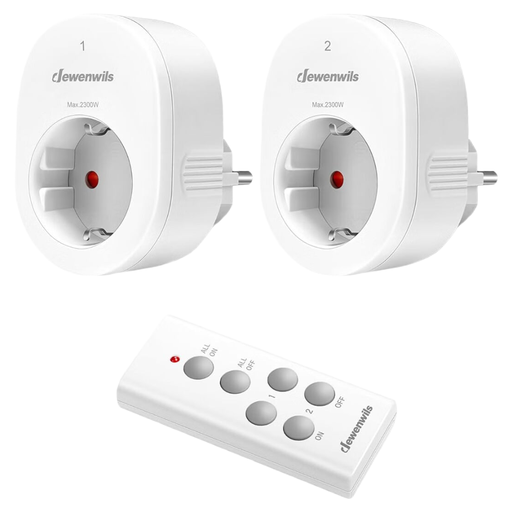
Why this model stands out: This two-outlet set with a remote is an excellent, budget-friendly, and expandable starting point for controlling multiple devices. The system is pre-programmed and includes a self-learning function to pair it with other outlets of the same model. The compact remote includes a particularly convenient "All Off" button for daily use.
Advantages:
Who is it for? Perfect for those who want to start controlling multiple lights or devices in one area (living room, office) and appreciate the ability to expand their system later.
If our selection doesn't exactly meet your needs, or if you require other accessories to fine-tune your electrical setup, feel free to explore our catalogue.
Explore our full range of cable management and electrical accessories
It uses radio frequency (RF) technology. The remote emits a radio signal on a specific frequency (usually 433.92?MHz) that is picked up by the receiver built into the outlet. This signal triggers the internal switch to turn the connected appliance on or off. All of this happens without needing an internet connection.
The range varies depending on the model and environment, but it is typically 30 metres in open areas (without obstacles). Thick concrete walls or metal interference can reduce this distance, but the RF signal is designed to pass through most common household obstacles, such as plaster walls, doors, and furniture.
Yes, many models are expandable. They have a "learning" or "syncing" function that allows you to pair new outlets with an existing remote, or vice versa. This lets you create a custom system with a single remote controlling multiple devices, either individually or as a group. Be sure to check for this feature on the product page before purchasing.