What to look for
Start with how often you prepare coffee and which drinks you serve, then compare the consumables, footprint and maintenance tasks you are prepared to take on.
| Priority |
What to check |
Your needs |
| Simplicity and space |
Type of portioned preparation, actual dimensions, tank capacity and number of consecutive cups. |
I want to prepare espresso quickly without juggling lots of settings or taking up too much worktop space. |
| Running costs |
Type of capsule or pod accepted, beans or ground coffee, water filter, descaler and cleaning products required. |
I want to avoid a machine that is inexpensive to buy generating excessive recurring household costs later. UFC-Que Choisir says that capsules can increase the overall bill and that the calculation also depends on how often the machine is used. |
| Drinks and control |
Available drink sizes, whether you can use ground coffee or beans, available settings and any milk system. |
I am looking for a machine suited to the drinks I actually prepare : a short espresso, a longer coffee or a milky recipe. |
| Maintenance |
Descaling alerts, access to the coffee-grounds container and drip tray, cleaning the brewing unit, steam wand or milk system. |
I want a realistic rinsing, cleaning and descaling routine suited to the water in my home and the number of coffees prepared. |
Machines available on Joybuy
Joybuy options covering soft-pod, capsule and bean-to-cup machines for regular espresso use at home.
 Image unavailable
Philips EP2230/10 Series 2200 LatteGo black
An option with a grinder for a household that regularly prepares espresso, coffee and cappuccino.
1.8 L tank, 275 g bean hopper, preparation of two cups, 12 grind settings and three temperature settings.
The removable brewing unit, detachable LatteGo system and guided descaling make routine maintenance easier, but the milk system and brewing unit still need cleaning. The AquaClean filter is listed as compatible ; check whether it is supplied with the machine.
Joybuy
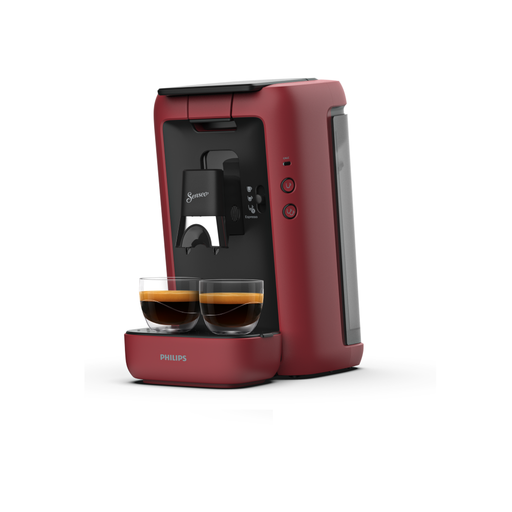 Image unavailable
Philips Senseo Maestro CSA260/91 intense red
A soft-pod machine designed to minimise adjustments when preparing drinks every day.
1.2 L tank, preparation of one or two cups, long, intense and espresso recipes, with memorisable volume and intensity settings.
The advertised preparation time is under 45 seconds for one cup and under 75 seconds for two cups. Check which SENSEO pod format is accepted and the descaling procedure specified for this model.
Joybuy
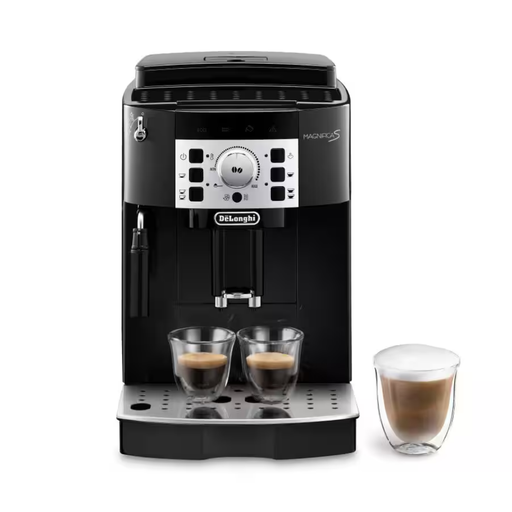 Image unavailable
De’Longhi Magnifica S ECAM22.140.B black
An automatic machine with a grinder for several regular espressos and occasional cappuccinos.
Integrated grinder, suitable for beans or ground coffee, 1.8 L tank, preparation of two cups, steam wand and descaling programme with alerts.
The coffee-grounds container, steam wand and drip tray require regular maintenance. Check the dimensions and weight before allocating space on your worktop.
Joybuy
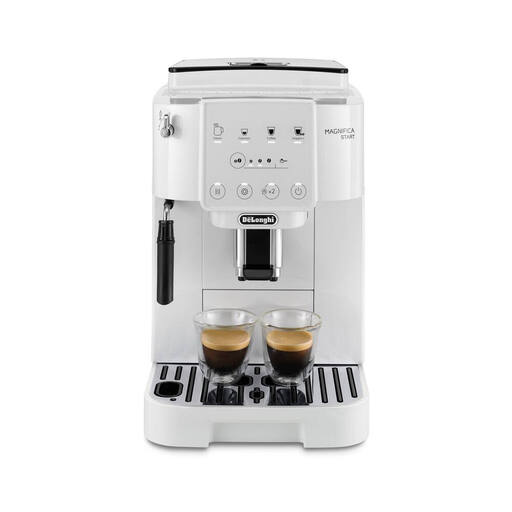 Image unavailable
De’Longhi Magnifica Start ECAM220.21.WW white
A bean-to-cup machine designed for households wanting straightforward recipes and several coffees one after another.
Three direct recipes, 250 g grinder with 13 settings, removable 1.8 L tank, coffee-grounds container for 14 coffees and simultaneous preparation of two cups.
The adjustable steam wand lets you prepare milky drinks manually and must be cleaned after use. Check the 440 mm depth against your worktop.
Joybuy
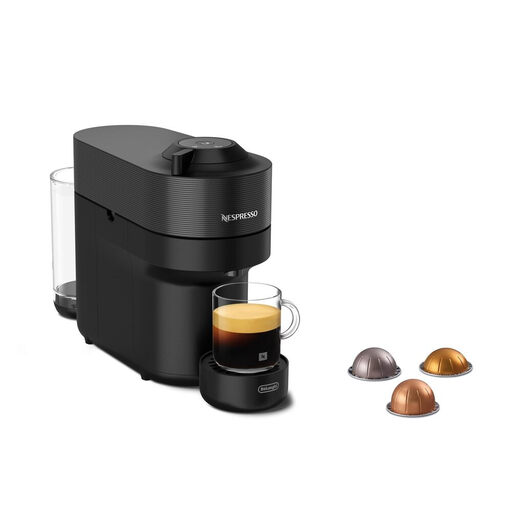 Image unavailable
Nespresso Vertuo Pop ENV90.B black
A compact capsule machine for quick drinks with minimal technical input.
Five sizes from 25 to 230 ml, one-button operation, capsule recognition, automatic ejection, eight-capsule container and 0.6 L tank.
Its dimensions are 136 × 426 × 250 mm. The 0.6 L tank may need refilling more often when preparing several larger drinks, and the machine uses Nespresso Vertuo capsules.
Joybuy
Frequently asked questions
Can coffee capsules be sorted for recycling in France ?
Yes. For aluminium or plastic capsules, ADEME advises using the recycling bin, bag or container for paper and packaging. For paper capsules, check the material and the relevant local guidance, particularly for composting or food-waste collection.
How often should an espresso machine be descaled ?
There is no single schedule for every model. UFC-Que Choisir gives an average of descaling every two to three months, depending on water hardness and frequency of use ; for its traditional espresso machines, De’Longhi recommends monthly or every two months in very hard water, and every three to six months in soft water. Always prioritise your model’s alert and instructions.
Can you ignore the descaling alert or use vinegar ?
No : an alert means you should follow the procedure specified by the manufacturer. Nespresso warns that vinegar can damage the machine, while De’Longhi states that using an unsuitable descaler or incorrect procedure may cause faults not covered by its warranty.
What should you do with an old electric coffee machine when replacing it in France ?
A coffee machine falls under the waste electrical and electronic equipment collection scheme. In France, when buying an equivalent new appliance, the retailer must offer to take back the old equipment free of charge under the conditions set out in the Environmental Code, including for distance sales. Check the take-back arrangements when placing your order or arranging delivery.


