Buying priorities
First compare the appliances that match the way you actually use them, then check the measurements relevant to each category. ADEME guidance and the European Commission’s energy-label information help you compare appliances with similar functions and capacities.
| Priority |
What to check |
Your needs |
| Identify which appliance to examine |
For refrigeration, compare kWh/year across similar capacities and compartments. For dishwashing and cooking, relate consumption to the number of cycles and your actual frequency of use. |
I want to start with the appliance that has the biggest impact in my kitchen, without replacing every appliance indiscriminately. |
| Compare on an equivalent basis |
Dishwasher: kWh per 100 Eco cycles, place settings, water per cycle and duration. Refrigeration: kWh/year and capacities. Oven: kWh/cycle according to the mode used and capacity in litres. |
I need to be able to compare appliances that provide the same service and whose capacity suits my household. |
| Match capacity to how you use it |
Choose the useful refrigeration capacity you need, check how full the appliance is and use the dishwasher’s Eco programme, and make sure your cookware is compatible before switching to induction. |
I would rather avoid an oversized appliance or features I will not use, and check first whether a change in usage is enough. |
Brand guidance
There is no content to display in this section.
Joybuy products for this topic
Joybuy options covering refrigeration, dishwashing and cooking hobs as part of this decision.
 Image unavailable
CHiQ JR263LGE 262 L fridge freezer
Worth considering for a household looking for a moderately sized fridge freezer.
Advertised capacity: 187 L refrigerator and 75 L freezer; advertised consumption: 215 kWh/year. Width: 54 cm; height: 176 cm.
The Low Frost freezer requires manual defrosting approximately once or twice a year. Make sure the installation environment stays between 16 and 38 °C and that the 70/30 split suits your storage needs.
Joybuy
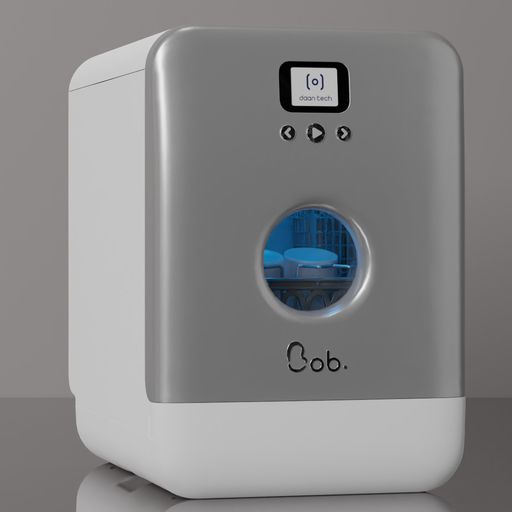 Image unavailable
Bob Mini Dishwasher compact dishwasher for 3 place settings
Suitable for a small amount of washing-up when space is limited.
Advertised capacity: 3 place settings, up to 16 items; dimensions: 49 × 34 × 49 cm. Advertised consumption is 0.39 kWh and 2.9 L per cycle.
Install it near a power socket, water inlet and waste outlet. Check the Eco programme’s kWh/100 cycles, duration and water per cycle before comparing it with a standard dishwasher.
Joybuy
 Image unavailable
Haier HTW5618ENMG 360 L fridge freezer
Worth considering if your household needs plenty of storage space.
Advertised capacity: 235 L refrigerator and 125 L freezer; advertised consumption: 271 kWh/year. Dimensions: 185 cm high, 59.5 cm wide and 66.7 cm deep.
The 360 L format should match your actual storage needs. Compare its annual consumption with that of a similar-capacity appliance and check the available installation space.
Joybuy
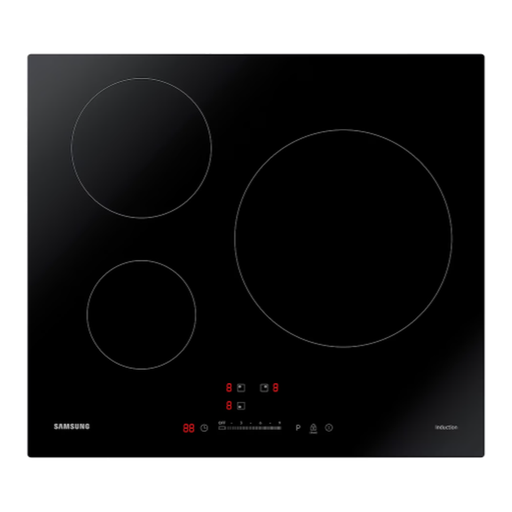 Image unavailable
Samsung NZ63M3707AK 3-zone induction hob 7200 W
Worth considering if you are replacing an existing hob in a kitchen ready for built-in installation.
Three zones, touch controls, residual-heat indicators and child lock. Required cut-out: 560 × 490 mm; advertised power: 7200 W.
This hob requires ferromagnetic cookware and a dedicated circuit installed by a qualified electrician. Hobs do not have a European energy label comparable with an oven’s.
Joybuy
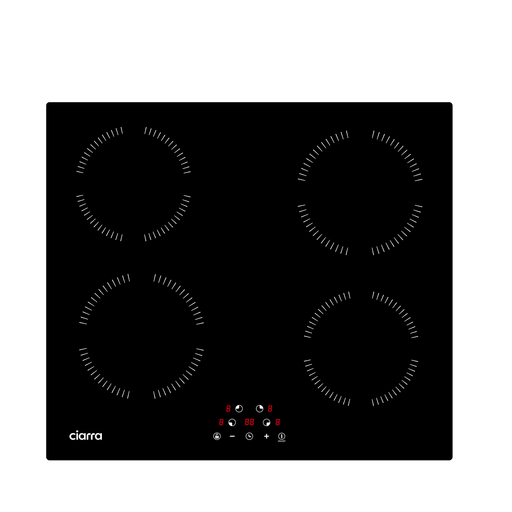 Image unavailable
CIARRA CABBIH4-A built-in 4-zone induction hob
Could suit a household that cooks with several pans at the same time.
Four independent zones, nine power levels, pan detection and individual timers. Required cut-out: 560 × 490 mm; advertised supply: 220–240 V with a 32 A fuse.
Check cabinet ventilation, the electrical circuit and the compatibility of magnetic pans before installation.
Joybuy
Frequently asked questions
Which kitchen appliance should you examine first to reduce electricity use?
There is no universal order: start with the appliance that uses the most energy in your actual household. In ADEME’s guidance, refrigeration is among the main kitchen energy uses because it operates 24 hours a day; a fridge freezer is listed at 315 kWh/year and a freezer at 300 kWh/year in this reference scenario. These figures do not predict your personal bill.
Can you directly compare the energy rating of a fridge with that of a dishwasher?
No. According to the European Commission, a refrigeration label includes details such as kWh/year and capacity, while a dishwasher label shows kWh per 100 Eco cycles, capacity, water per cycle and duration. First compare appliances with the same function and a suitable capacity.
Does an induction hob have an energy label like an oven?
No. The European Commission states that there is no energy-labelling requirement for hobs, whereas ovens have a label showing consumption per cycle according to the cooking mode and capacity. So check the hob technology, your cookware and the installation requirements.
Is the dishwasher’s Eco programme still worthwhile if it takes longer?
Yes. It provides the benchmark for comparing the stated consumption. ADEME indicates that the Eco programme is often the reference programme and the most economical in terms of water and electricity; compare appliances on this basis and run them fully loaded without pre-rinsing when suitable for your dishes.
Should you replace an appliance that is still working?
Not automatically. Check its type, capacity, condition, stated or measured consumption and how often you use it. For refrigeration, a newer, larger model or one with additional features may increase consumption; for dishwashers and ovens, the programme, load and frequency of use also affect the result.


