If you’re looking for a sweet biscuit with a verified reduction in sugars, look for the claim ‘reduced in sugars’ and check the sugar content per 100 g and per portion too. A cracker or crispbread can work for a coffee break you put together yourself, but its sugar content alone doesn’t establish that it is ‘reduced in sugars’; check the salt content and what you add on top as well. If you avoid sweeteners, check the ingredients even when a biscuit says ‘sugar-free’.
Who are these choices for?
If you want to enjoy a sweet biscuit with your coffee
If you’re looking to cut down on sugars compared with a similar biscuit, the ‘reduced in sugars’ claim gives you a useful starting point. Then compare the ‘of which sugars’ line and the portion you plan to eat.
If you want to avoid sweeteners
A recipe reduced in sugars is not necessarily sugar-free. If avoiding sweeteners is also a priority, read the ingredients list rather than relying on the sugar content shown on the pack.
If you want a wholegrain recipe
If wholegrains and fibre matter for your break, compare them across products without overlooking the declared sugar content.
What should you compare?
To choose between a sweet biscuit reduced in sugars and a break built around crispbread, start with the recipe you’d like to eat, then check the label on the specific product.
| What matters to you |
What to check |
Who might find this useful? |
| Reduced sugars |
The exact claim and the ‘of which sugars’ line per 100 g and per portion; if a reduction is claimed, check how it compares with a similar product. |
I want a sweet biscuit with my coffee and need to be able to compare its sugar content with that of a similar biscuit. Around 42% of consumers would put this measurable reduction first. |
| Sweeteners |
The ingredients list, including whether it contains maltitol, and any polyols listed in the nutrition information. |
I’d like to have a biscuit with my coffee, but prefer to avoid sweeteners, even if the recipe still contains sugars. Around 33% of consumers would prioritise the absence of sweeteners. |
| Grains, fibre and portion size |
The proportion of wholegrains, fibre per 100 g and the amount in a portion. |
For this break, I look first at wholegrains, fibre or a portion that’s easy to measure, while keeping an eye on sugars. Around 25% of consumers would be guided mainly by these factors. |
Common mix-ups to avoid
-
Assuming ‘reduced in sugars’ means ‘sugar-free’
In the European Union, the European Commission states that a reduction claim means at least 30% less than a similar product. So the biscuit may still contain sugars.
Check the exact claim, then look at the ‘of which sugars’ line per 100 g and the amount in your portion.
-
Assuming a low-sugar cracker is a biscuit reduced in sugars
A declared sugar value alone doesn’t prove that the product has less sugar than a similar one. According to its Joybuy product page, LU Cracotte wheat crispbread contains 7.9 g of sugars and 1.7 g of salt per 100 g; toppings also count towards the break you put together.
If you choose crispbread, compare its sugar and salt content, then take into account what you put on top.
-
Looking at the sugar figure without checking the ingredients
According to Gerblé, its Gerblé cocoa chip cookie contains 0 g of sugars and 26 g of polyols per 100 g. Its recipe contains maltitol.
If you avoid sweeteners, check the ingredients list before choosing a product labelled ‘sugar-free’.
-
Comparing packs without checking portion sizes
Individually wrapped packs can make it easier to keep track of how much you have with your coffee, but values per 100 g don’t tell you on their own what you eat during your break.
Compare the contents of one portion with the amount you plan to eat. Auchan presents its Less Sugar cocoa-orange biscuits in four 32.5 g portions.
Brands to know
These products illustrate different recipes: a biscuit reduced in sugars, a sugar-free biscuit containing polyols, and crispbread. The information below relates to the products mentioned, not to each brand’s full range.
AUCHAN LESS SUGAR
Auchan describes its Less Sugar range as reduced in sugars compared with the market average for plain biscuits, and as containing no sweeteners.
- For its cocoa-orange biscuits, Auchan states that they contain 12 g of sugars per 100 g and 3.8 g per 32.5 g portion.
- Auchan’s comparison does not mean ‘sugar-free’. This product contains wheat, milk and eggs.
Gerblé
The products mentioned show the difference between a ‘sugar-free’ cookie containing polyols and an organic wholemeal wheat shortbread biscuit described as reduced in sugars.
- Gerblé states that its cocoa chip cookie contains 0 g of sugars and 26 g of polyols per 100 g. The product information for its organic wholemeal wheat shortbread biscuit, published by Auchan, states that it contains 7.5 g of fibre per 100 g.
- The cookie contains maltitol. The shortbread biscuit contains 17 g of sugars per 100 g: its wholegrains and fibre don’t replace the need to check this figure.
Carrefour Bio
Carrefour offers organic wholegrain oat biscuits labelled ‘reduced in sugars’.
- Carrefour’s product information states that this product contains 41.7% wholegrain oat flakes.
- To compare it with another biscuit, check the ‘of which sugars’ line, the ingredients and the allergen information on the pack.
LU Cracotte
Original LU Cracotte wheat crispbread is made to be topped, rather than being a sweet biscuit marketed as reduced in sugars.
- Its Joybuy product page states that it contains 7.9 g of sugars per 100 g, a figure worth checking if you’re building your break around crispbread.
- The same product page states that it contains 1.7 g of salt per 100 g. Its sugar content does not prove a reduction compared with a similar product.
Joybuy products for a coffee break you can customise
These two products could suit a coffee break with crispbread or a savoury biscuit. If you’re specifically looking for a sweet biscuit ‘reduced in sugars’, check the claim and what it is compared with on the product you choose.
 Image unavailable
KRISPROLLS Swedish wholemeal biscuits with no added sugars, 425 g
Worth considering if you’d rather have crispbread with toppings than a sweet biscuit with your coffee. ‘No added sugars’ does not mean ‘reduced in sugars’: if a reduction is what you’re looking for, check the comparison stated on the label. The product information for this item lists wheat and barley; check the ingredients if you need to avoid them.
View on Joybuy
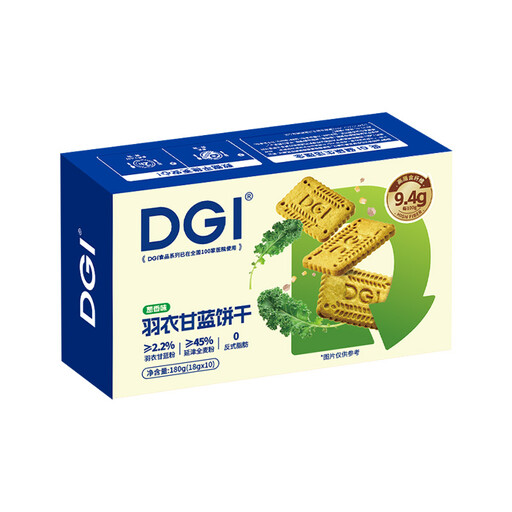 Image unavailable
DGI Kale Cookies with spring onion flavour, 180 g
This savoury spring onion product can be compared with crispbread as an accompaniment to coffee. It contains maltitol, so bear this in mind before buying if you avoid sweeteners. The product information also warns that excessive consumption may have a laxative effect; check the portion size and the information on the pack.
View on Joybuy
Frequently asked questions
What does ‘reduced in sugars’ mean on a biscuit?
According to the European Commission’s guidance on nutrition claims in the European Union, the reduction must be at least 30% compared with a similar product. This doesn’t mean ‘sugar-free’: also check the amount per 100 g and compare it with your portion.
Do ‘no added sugars’ and ‘sugar-free’ mean the same thing?
No. Anses notes that ‘no added sugars’ does not mean a product contains no sugars at all. If sweeteners matter to you, check the ingredients in a ‘sugar-free’ biscuit too: according to Gerblé, its cocoa chip cookie contains maltitol.
How can I check for allergens before choosing?
Read the ingredients and any ‘may contain’ warnings for the specific product you’re considering. The products mentioned here include information about wheat, milk or eggs, or possible traces of other allergens. Don’t assume that the ingredients in one biscuit apply to a brand’s entire range.


