People keeping an eye on sugar
If sugar content guides your choice of post-exercise snack, compare the ‘of which sugars’ figure per 100 g rather than relying on the claim on the front of the jar.


To choose a reduced-sugar spread after exercise, start by comparing the sugar content per 100 g, then check the energy, fat and ingredients. ‘No added sugars’ does not mean ‘sugar-free’. A spread is just one part of your snack, and the amount you eat and the other foods you choose matter too.
If sugar content guides your choice of post-exercise snack, compare the ‘of which sugars’ figure per 100 g rather than relying on the claim on the front of the jar.
If you eat the spread with other foods, consider the portion you use and the nutritional values of the whole snack. Don’t assume the spread has a recovery benefit.
If certain ingredients affect your choice, check the exact jar for nuts, milk, soya, sweeteners and any warnings about possible traces.
When choosing a spread to eat after exercise, sugar content alone won’t tell you which recipe is right for you. Also consider the portion you have in mind and the ingredients list.
| What matters | What to check | Who is this for? |
|---|---|---|
| Sugar content | Compare the ‘of which sugars’ figure per 100 g and distinguish ‘reduced sugar’ from ‘no added sugars’. | If I want to limit the sugar in my post-exercise spread, I need a figure that I can compare across jars. Around 42% of consumers put sugar content at the top of their list of concerns. |
| Its place in your snack | Check the energy, fat and protein per 100 g, then consider how much you plan to eat. | When I have other foods after a workout, I want to know how much of my snack the spread will make up. This is the top priority for around 33% of consumers. |
| Ingredients and storage | Check the exact jar for allergens, possible traces, sweeteners and storage instructions once opened. | If a recipe contains an ingredient I need to avoid, its composition matters more to my choice than its other features. Ingredients and storage conditions are the priority for around 25% of consumers. |
Auchan’s product listings give sugar content of 8.1 g and 8.5 g per 100 g for Karéléa and Lucien Georgelin spreads respectively, despite describing them as having ‘no added sugars’.
Compare the ‘of which sugars’ figure on the jars, then take into account how much you plan to eat.
Auchan’s product listings show that Dukanella contains 404 kcal, Karéléa 476 kcal and Lucien Georgelin 433 kcal per 100 g. So a claim about sugar alone doesn’t tell you how much energy the recipe provides.
Compare the energy, fat, sugars and protein on the same per-100 g basis.
Auchan’s Dukanella listing includes maltitol, while its Karéléa listing gives a polyol content of 44 g per 100 g. The recipes shown may also contain hazelnuts, milk or soya, or carry warnings about possible traces of other nuts.
If these ingredients affect your choice, check the ingredients list and allergen information on the exact jar.
According to Santé publique France, displaying Nutri-Score is voluntary. If it appears on a jar, it doesn’t replace the nutrition information or ingredients list.
If it’s shown, use it as an extra guide when comparing similar products, then check the details that matter to you.
Auchan’s listing features a 350 g chocolate and hazelnut spread and claims it contains 37% less sugar than the average spread on the market.
For its 220 g Dukanella, Auchan’s listing describes a hazelnut and cocoa spread with no added sugars and gives it a Nutri-Score of A.
Auchan’s listing features a 750 g hazelnut and cocoa spread with no added sugars.
For its 280 g spread made with French hazelnuts and cocoa, with no added sugars, Auchan’s listing gives 8.5 g of sugars and 10 g of protein per 100 g.
This peanut butter could be considered as a spread for a post-exercise snack. It isn’t a chocolate and hazelnut spread, and its product name doesn’t carry a ‘reduced sugar’ claim. Check the product’s nutrition information and ingredients before comparing it with the recipes above.
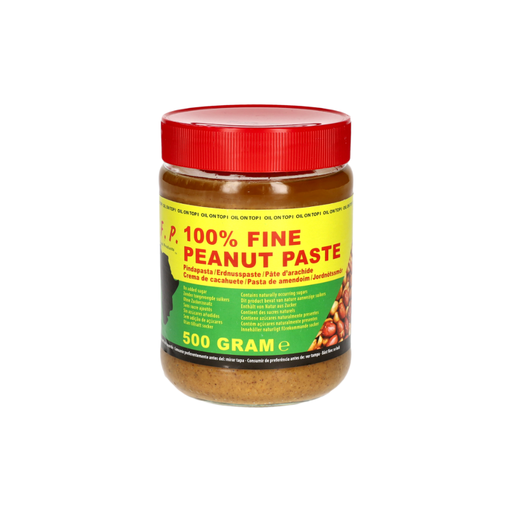 Image unavailable
Consider this if you’d prefer peanut butter rather than a chocolate and hazelnut spread with your snack. The jar contains 500 g. Before choosing your portion, check its label for sugars, energy, fat and ingredients. This product contains peanuts.
No. Santé publique France says that displaying it is voluntary; the EU regulation on consumer information covers nutrition declarations. If a jar carries the logo, also check its nutrition information and ingredients.
No. Auchan’s listings give sugar content of 8.1 g and 8.5 g per 100 g for Karéléa and Lucien Georgelin respectively, despite this claim. To compare two jars, check their ‘of which sugars’ figures on the same basis.
Don’t rely on it alone to meet all your needs after a workout. Consider how much you eat and what else is in your snack, and don’t assume a recipe will aid recovery just because it contains protein.
Read the ingredients list on the exact jar if allergens or sweeteners affect your choice. Auchan’s listings for the recipes featured here mention ingredients such as hazelnuts, milk, soya or maltitol, depending on the product. Some products may also contain traces of other nuts.
Follow the instructions for the specific product you buy. Auchan’s listing for Jardin Bio étic says not to refrigerate the jar and recommends consuming it within a month of opening. Its listing for Lucien Georgelin gives a 30-day period after opening.